
The British-Built Islander Is Back: The Engineering Reality of Reshoring Aircraft Production
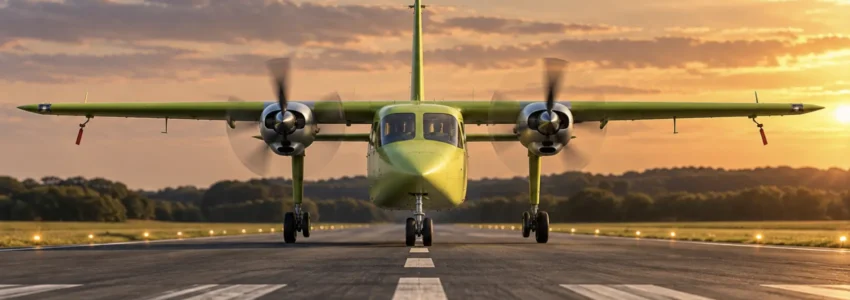
The first Islander to pass through Britten-Norman’s reshored production line at Bembridge entered its ground-test programme in August 2026. Although the return of a fully UK-assembled Islander is a notable moment for British aviation, the more important story concerns the manufacturing capability behind the aircraft.
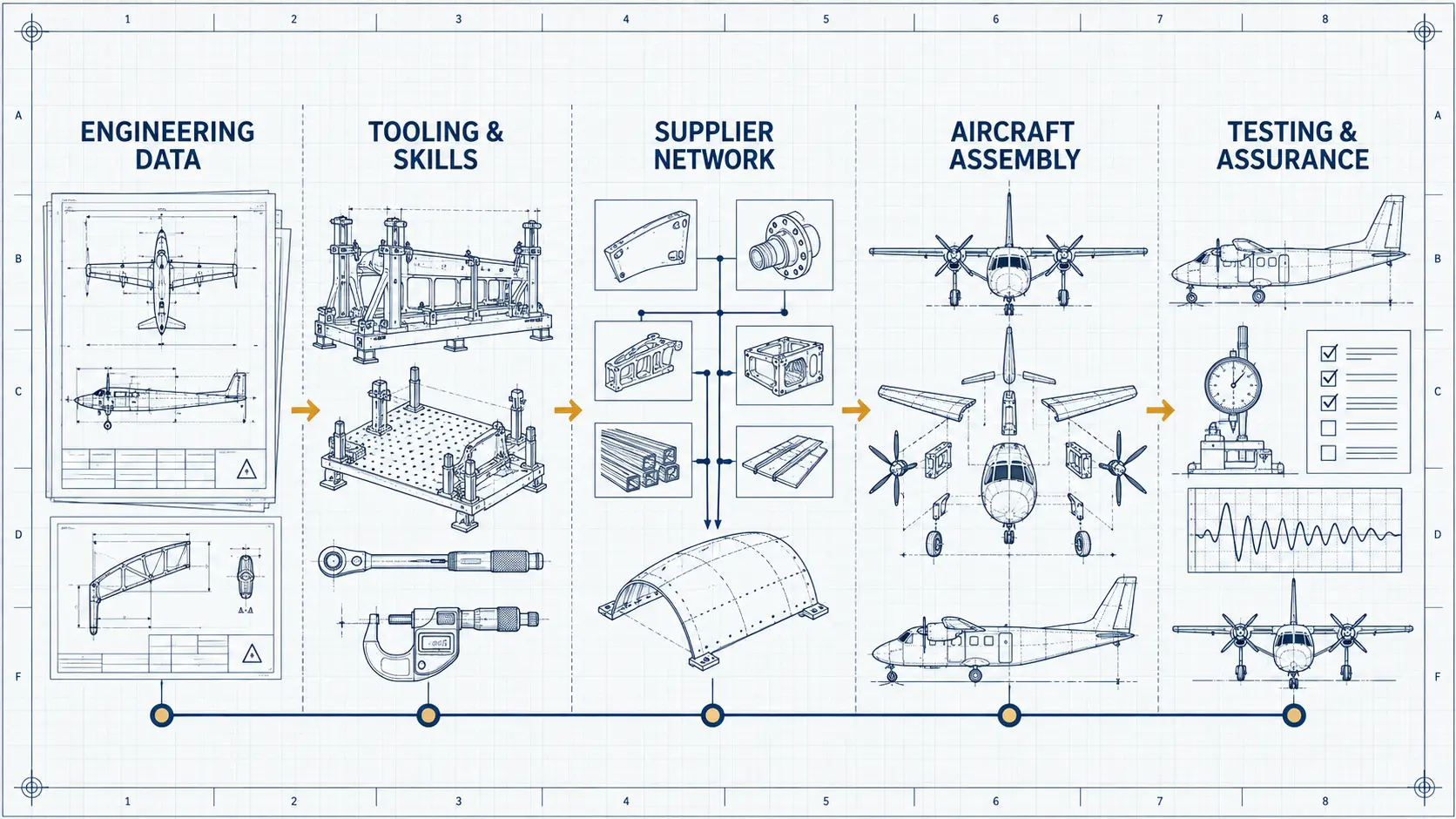
Bringing complex aircraft manufacturing back to the UK involves considerably more than relocating an assembly line. Production depends on controlled engineering information, specialist knowledge, suitable tooling, skilled people and a network of suppliers capable of delivering compatible parts and systems.
The Islander therefore provides a useful case study in what reshoring means at factory level. Its progress from component manufacture through assembly and into testing illustrates how industrial capability must be reconstructed as a connected system before a British production line can produce dependable aircraft repeatedly.
What Reshoring Aircraft Production Actually Means
Reshoring is often described simply as bringing work back from overseas, but that description overlooks much of the practical engineering involved. A manufacturing operation is not defined solely by its building or machinery; it also depends on processes, production sequences, supplier relationships and the knowledge needed to turn engineering information into a finished product.
In the Islander’s case, Britten-Norman said the first aircraft from its reshored UK production line had begun ground testing. The company described the milestone as the return of complete civil Islander manufacturing to the United Kingdom following a period in which major assemblies were produced overseas before final assembly took place in the UK.
That distinction matters because the programme did not introduce aircraft assembly to Britain for the first time. Instead, it brought a greater portion of the manufacturing sequence into the Bembridge operation, allowing the aircraft to be assembled through the reshored line rather than arriving as major overseas-built assemblies for UK final assembly.
It is also important to interpret “fully UK-built” carefully. The available information confirms where the aircraft was assembled through the production line, but it does not establish that every material, system or bought-in component was manufactured in Britain. Reshoring complete production and achieving entirely domestic component sourcing are not necessarily the same thing.
An Aircraft is a Manufacturing System, Not a Single Product
An aircraft may appear to be one finished product at roll-out, but the manufacturing operation behind it must bring numerous components, systems and interfaces together in the correct sequence. Progress depends not only on producing individual parts, but also on ensuring that each stage supports the work that follows.
Before the Islander was rolled out, Britten-Norman reported the installation of its engines, propellers, cowlings, electrical systems, brakes, flight-control surfaces and associated mechanisms. These publicly identified elements provide a visible indication of the coordination involved as an aircraft moves from structural build towards a complete, testable assembly.
The published production sequence also shows how individual milestones formed part of a larger programme. Britten-Norman confirmed 75% structural completion in June 2026, followed by the successful application of electrical power on 29 July and roll-out at Bembridge on 30 July.
None of these events stands alone. Structural work must reach the right point before systems can be installed, while installed systems must be sufficiently complete before power can be applied and the aircraft can progress into testing. A delay, quality problem or information error in one area can affect several later activities.
This is why reshoring an aircraft cannot be understood as moving a single assembly task. The production system must coordinate physical components, engineering requirements, people, suppliers and assurance activities across the entire build.
Production Knowledge Has To Be Rebuilt As Well
Machinery and factory space are visible evidence of manufacturing investment, but production also depends on controlled engineering information and practical knowledge. Tooling, fixtures, work instructions and drawings must remain aligned with the product so that outdated or incompatible requirements do not enter the build.
Experienced employees also carry knowledge that may not be captured completely in formal documents, including how operations connect and where problems are likely to emerge. Rebuilding production capability therefore involves developing people as well as installing equipment.
Britten-Norman reported that its Bembridge line was supported by investment in new machinery, tooling and facilities. The company also said its workforce had grown by more than 40% since production was reshored. These facts do not reveal every detail of the transfer, but they demonstrate that the return of manufacturing required investment in both physical capability and personnel.
The Supply Chain Has To Move With the Factory
Returning more aircraft manufacturing to Britain changes where important production activities take place, but it does not necessarily relocate every supplier or component source.
Major Islander assemblies were previously manufactured overseas before UK final assembly. The available information does not disclose where every component is now produced, so the reshored line should not be interpreted as an exclusively domestic supply chain.
A resilient approach may combine UK manufacturing with qualified international suppliers. What matters is whether those relationships support controlled production, dependable availability and the accurate communication of engineering changes. Successful reshoring therefore depends on deciding which capabilities should return and how the remaining supplier network will operate as part of one manufacturing system.
Why Specialist Aerospace Production Makes Reshoring Particularly Revealing
Specialist aircraft manufacturing differs from high-volume automotive production because it can place greater emphasis on flexibility, skilled work and the coordination of relatively small numbers of complex products.
This makes production knowledge particularly valuable. Machinery provides capacity, but trained people interpret engineering information, manage variation and connect the formal product definition with the physical realities of manufacture and assembly. Specialist suppliers must also understand the technical requirements and support changing schedules or configurations without sacrificing control.
The Islander is therefore relevant beyond aerospace. Manufacturers in other high-value or high-mix sectors face similar questions when reshoring: which knowledge must be recovered, which capabilities require investment and how can the new system produce more than one successful unit?
Ground Testing is Where Manufacturing Meets Assurance
An aircraft’s roll-out creates a visible production milestone, but it does not mean that the manufacturing and assurance journey is finished. The completed physical assembly must still progress through the checks and testing required before it can move towards customer delivery.
After its roll-out, the Bembridge-built Islander entered its ground-test programme. The aircraft subsequently completed its maiden flight from Bembridge Airport on 3 September 2026 and entered its flight-test programme.
Once flight testing is complete, the aircraft is expected to move into the final stages of preparation before delivery to the Falkland Islands Government Air Service, commonly abbreviated to FIGAS.
The permitted sources do not provide the detailed ground-test procedures, so it would be inappropriate to speculate about individual checks or results. What the sequence does show is that production continues into a structured assurance phase after the aircraft appears physically complete.
Ground testing is therefore the point at which assembled manufacturing output begins its formal progression towards flight. The milestone connects the work completed inside the factory with the evidence needed to move the aircraft into the next stage of its programme.
One Aircraft is Not Yet a Production System
Completing the first aircraft through a reshored line is significant, but long-term manufacturing capability depends on repeatability. A production system must retain knowledge, maintain control and coordinate resources so that the next aircraft can follow without requiring the organisation to reconstruct the process each time.
Britten-Norman reported that a second airframe was already progressing through the line behind the first. Components for follow-on aircraft were also in manufacture, while the company said it was working to establish a continuous production cadence at Bembridge.
These details move the story beyond a single completed aircraft. Repeatable production depends on tooling, facilities, employees and suppliers supporting successive builds while maintaining control over information and changing requirements.
A one-off product proves that the work is possible. An established production line must demonstrate that the capability can be sustained.
What The Islander Means For Aircraft Manufacturing in the UK
The Islander’s return to complete manufacture at Bembridge provides a tangible example of aircraft manufacturing in the UK becoming more vertically connected. Activities that had previously been divided between overseas major-assembly production and UK final assembly are now being brought together through the reshored line.
Domestic production does not automatically become cheaper, faster or more resilient. Those outcomes depend on whether the manufacturer has rebuilt the necessary knowledge, capacity, supplier network and process control. Machinery must be supported by suitable tooling, accurate engineering information and skilled employees, while suppliers must remain aligned with the build programme.
This principle extends across aviation and the wider field of precision engineering in aerospace manufacturing. Any manufacturer bringing complex work home must look past the headline location change and consider how the complete manufacturing environment will operate. The real task is to restore the connections between design intent, practical production, assurance and repeatable delivery.
Made in Britain is Ultimately a Capability Statement
The return of complete Islander manufacturing to Bembridge represents more than a British address on a finished aircraft. Its progression through structural completion, power-on, roll-out, ground testing and first flight shows people, equipment, tooling and production knowledge being converted into physical capability.
The second airframe and follow-on components now matter because they connect that achievement with repeat production. Successful reshoring should therefore be judged not only by where a product is assembled, but by whether the manufacturing system can deliver it consistently. In that sense, “Made in Britain” is a capability statement rather than simply a description of location.
Recent Comments