
Archives

Precision Engineering

14 Aug 2026
Integrated engineering processes showing waterjet cutting, 5-axis machining, metal fabrication, busbar manufacture and finishing.

Why Complex Components Rarely Rely on One Manufacturing Process

A finished engineering component may look simple. The route taken to manufacture it often is not.

A plate may begin on a waterjet cutting machine before moving into CNC machining. A fabricated assembly can require cutting, welding, machining and finishing. An electrical component may need accurate profiling followed by plating to achieve the required conductivity and protection.

That is why modern subcontract engineering is increasingly about combining the right processes, rather than finding one machine capable of doing everything.

At PRV Engineering, those processes include hydro-abrasive waterjet cutting, CNC turning and milling, 5-axis machining, metal fabrication, welding, busbar manufacture and specialist finishing.

So, what are they actually used for?

17 Mar 2026
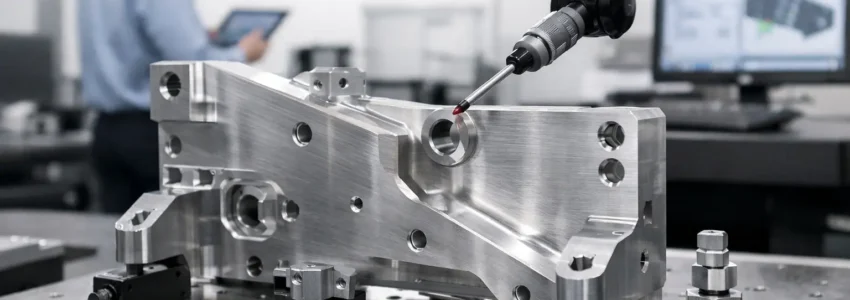
Precision inspection of a machined aerospace component using a coordinate measuring machine to verify engineering tolerances.

How Engineering Tolerances Affect Performance, Safety and Reliability

Engineering tolerances are often treated as a detail on a drawing, but in reality they define whether a component performs as intended once it leaves the machine.

Every engineered system relies on controlled variation. No component is manufactured to a perfect dimension, so tolerances exist to define the acceptable limits within which parts can function correctly. When those limits are exceeded, even slightly, the consequences can range from reduced efficiency to complete system failure.

In many industries, tolerance issues are not immediately visible. Components may assemble correctly, pass initial inspection and even operate for a period of time before problems begin to emerge. This makes poor or inconsistent engineering tolerances one of the more difficult issues to diagnose in complex systems.

4 Jun 2025
UK semiconductor industry

From Chips to Ships: Onshore Microchip Manufacturing 

The UK semiconductor industry is undergoing a seismic shift. No longer content to rely solely on overseas production, the country is making a strategic move to strengthen domestic microchip manufacturing. This push is not just about economic growth; it’s a matter of national security, resilience, and future-proofing the UK’s role in global technology supply chains.

18 Mar 2025
UK Manufacturing | Precision Engineering

Why Precision Engineering Matters in UK Manufacturing

The UK’s manufacturing sector is undergoing a transformation, driven by technological advancements, sustainability efforts, and increasing demand for high-quality production. However, as highlighted in our recent article on UK Manufacturing Policies, some of these shifts come with significant challenges, including high energy costs and regulatory pressures. So, how does precision engineering fit into this evolving landscape? Is it the key to overcoming policy-driven obstacles, or does it face similar hurdles?

22 Jun 2023

Recent Comments

    Events

    September 2026
    M T W T F S S
     123456
    78910111213
    14151617181920
    21222324252627
    282930