Archives

Engineering

10 Jul 2026
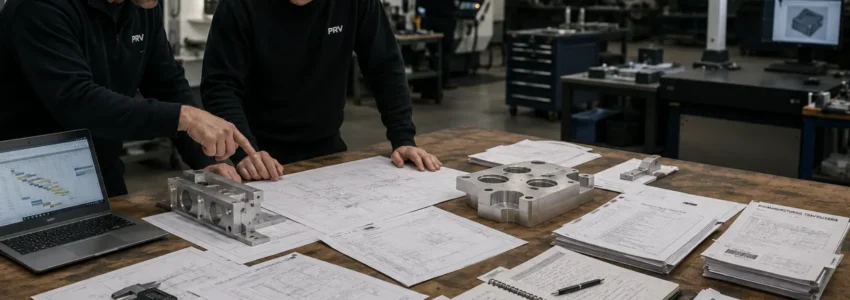
Engineers reviewing a component design while precision machining begins, illustrating how early manufacturing decisions influence cost, quality and production efficiency.

Manufacturing Is Becoming More Complex. Your Supply Chain Shouldn’t Be

An engineering supply chain is only as strong as the connections between the companies involved.

That might sound obvious, yet many manufacturing projects become more difficult not because of the component being produced, but because every stage of production is handled by a different supplier. One company cuts the material, another machines it, another fabricates it, while finishing, coating and inspection take place elsewhere.

Each supplier may do an excellent job but the real challenge lies in everything that happens between them.

Every handover introduces another opportunity for delays, miscommunication or quality issues. Drawings are transferred, components are packaged and transported, production schedules are coordinated and specifications are interpreted by another team. None of these activities adds value to the finished component, but all consume time and introduce risk.

As manufacturing projects become more sophisticated, many organisations are beginning to question whether managing an increasingly fragmented supply chain still makes commercial sense.


10 Jun 2026
Formula 1 car, fighter aircraft, data centre and industrial robot highlighting the precision engineered components that support modern technology.

Why The Smallest Components Keep Modern Industry Moving

Aircraft, defence vehicles, power infrastructure, industrial machinery and advanced manufacturing systems all rely on precision engineered components. Yet the most important parts are often the ones nobody notices.

While attention is naturally drawn to engines, software, robotics and advanced electronics, it is frequently a bracket, busbar, housing, mounting system or machined component that determines whether a system performs reliably for years or fails prematurely.

Formula 1 cars, fighter aircraft and modern data centres may represent the cutting edge of engineering, but their success often depends on components hidden beneath panels, inside enclosures or deep within complex assemblies.

Because while advanced technology attracts attention, precision engineered components often determine whether it actually works.

23 Apr 2026
Abstract editorial collage showing a precision-engineered metal component in focus with subtle background elements representing global supply chains and manufacturing complexity

What’s Driving the Return of Engineering Work to the UK

For years, the logic behind offshoring engineering work was straightforward. If you wanted to reduce costs, you moved production overseas. Lower labour costs, larger-scale facilities, and established supply chains made it an easy decision for many organisations.

That model worked well, until the cracks started to show.

More recently, a shift has been taking place. Engineering work that once moved abroad is now coming back to the UK. Not as a reaction, but as a practical response to how projects are actually delivered today.

17 Apr 2026
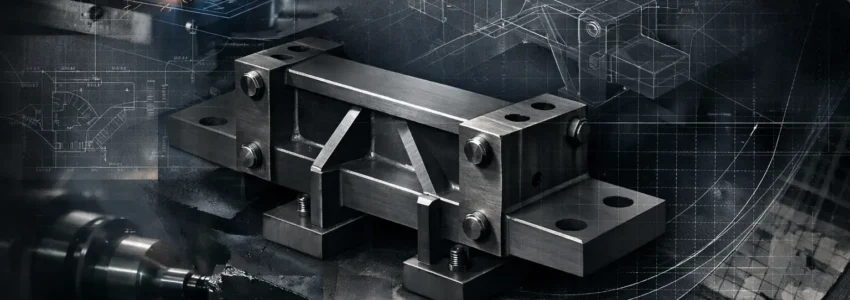
Abstract collage of precision-engineered components with subtle blueprint overlays and geometric linework, representing hidden processes behind reliable engineering

Why the Best Engineering Is Often Invisible

Some engineering gets attention because it looks futuristic, dramatic, or headline-worthy. A new supercar. A hypersonic aircraft. A fully automated factory. These are the projects that attract attention and headlines.

But most real engineering value doesn’t look like that.
It’s quieter. Less visible. And often only recognised when something goes wrong.

5 Feb 2026
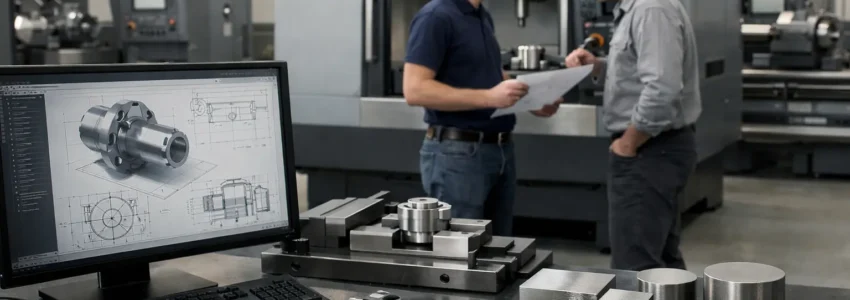
Senior engineers reviewing technical drawings inside a large industrial facility, representing high-stakes engineering decision-making in complex projects.

What’s Quietly Changing in Engineering Decision-Making in 2026

Engineering decision-making rarely changes overnight. Instead, it evolves gradually, shaped by delivery pressure, accumulated experience, and real-world project outcomes rather than by trend reports or industry announcements.

Yet across UK engineering and industrial projects, something is clearly shifting. Conversations that once centred on speed, price and capacity are quietly being replaced by different concerns. Not because buyers are explicitly changing strategy, but because the environment around them has changed.

What follows is not a prediction, nor a trends piece. It is an observation of how engineering decision-making is being recalibrated in practice.

2 Jan 2026
Editorial image representing the continuity of engineering project and early decision-making in manufacturing

Why Early-Year Decisions Quietly Shape Engineering Projects

January often feels like a clean slate. Calendars reset, inboxes refill, and teams return with fresh momentum. But in reality, engineering projects rarely restart in January. They continue, carrying forward design decisions, lead times, procurement choices, and unresolved constraints from the previous year.

What does change at the start of the year is decision-making. Suppliers are reviewed. Assumptions are refreshed. Shortlists are quietly adjusted. And those early-year choices can have a disproportionate impact on how engineering projects perform months later.

This article looks at why January decisions matter, where engineering projects typically drift off course, and how early clarity reduces downstream risk without resorting to clichés or over-simplification.

19 Aug 2025

Is the AI Impact on Engineering Jobs a Threat or an Opportunity?

The AI impact on engineering jobs is no longer a distant theory, it’s happening right now. As artificial intelligence becomes more embedded in design tools, data analysis, and documentation processes, engineers across disciplines are asking: is this the next leap forward or a warning sign of displacement?

With real-world data from Microsoft’s Copilot study now shedding light on how AI is actually being used in engineering workflows, it’s clear that the conversation has shifted from hype to hard evidence. The challenge isn’t whether engineers will be replaced—but how their roles will evolve.

4 Jul 2025
Engineering Mistakes That Changed The World

How Engineering Mistakes Powered Progress—and What We Learned

When we think of engineering, we often think of precision, calculation, and reliability. But what happens when things go wrong? Surprisingly, some of the world’s biggest engineering mistakes have paved the way for groundbreaking discoveries or served as vital lessons that improved safety and innovation. This article explores some of the most famous engineering mistakes that changed the world—for better or worse.

11 Mar 2025
UK Manufacturing Policies

Navigating the Impact of UK Manufacturing Policies on Industry

UK manufacturing policies directly influence the health of British industries, impacting sectors from automotive and aerospace to defence and energy. With the government pushing forward on ambitious targets such as achieving Net Zero emissions by 2050, manufacturers across the UK are feeling both the opportunities and pressures from these regulatory changes.

18 Jul 2024

The integration of Artificial Intelligence (AI) in engineering is revolutionising the industry, offering innovative solutions to complex problems and driving efficiency across various sectors. As we move into 2024 and beyond, AI in engineering is set to transform processes, enhance productivity, and pave the way for groundbreaking advancements. This article takes a closer look at the current trends, applications, challenges, and future prospects of Artificial Intelligence in engineering.

Recent Comments

    Events

    July 2026
    M T W T F S S
     12345
    6789101112
    13141516171819
    20212223242526
    2728293031