
Why the Best Engineering Is Often Invisible
Some engineering gets attention because it looks futuristic, dramatic, or headline-worthy. A new supercar. A hypersonic aircraft. A fully automated factory. These are the projects that attract attention and headlines.
But most real engineering value doesn’t look like that.
It’s quieter. Less visible. And often only recognised when something goes wrong.
The Work That Prevents Problems
In practice, the most important engineering work is often the kind that prevents issues rather than creates excitement.
- It’s the bracket that fits first time without adjustment.
- The fabricated structure that holds its form under load.
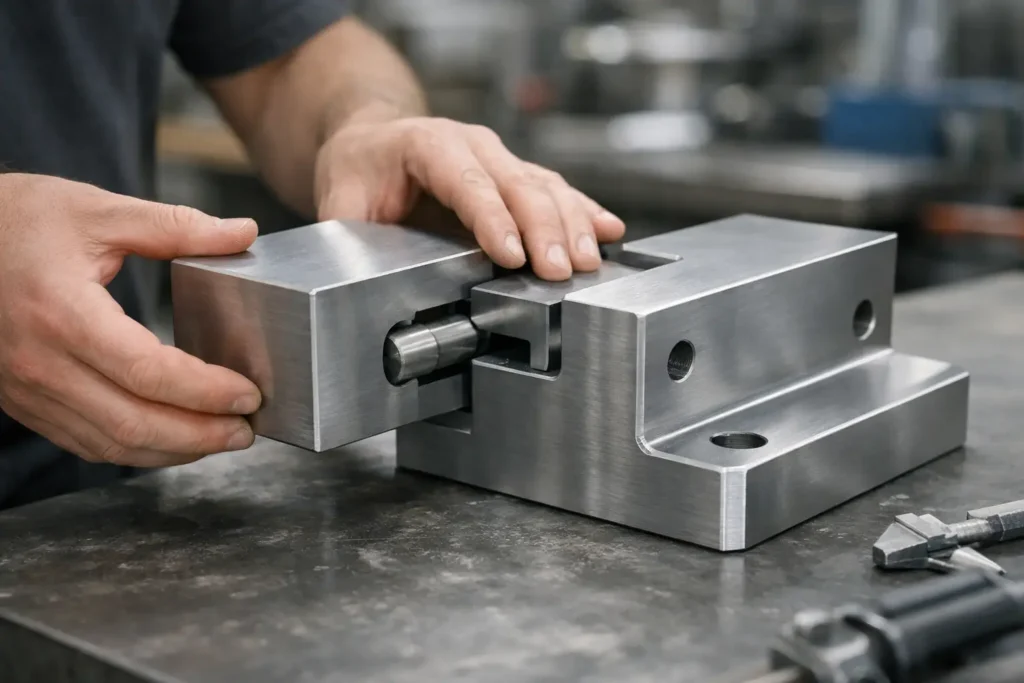
- A machined component that meets tolerance without rework.
- The surface finish that protects against corrosion years after installation.
None of these things stand out when they’re done properly. They simply work.
But when they don’t, the consequences are immediate.
Delays. Rework. Failed inspections. Missed deadlines. Increased costs. In some sectors, even safety risks.
That’s why the real value of engineering is often measured not by what happens, but by what doesn’t.
Reliability Is Built Early, Not Fixed Later
One of the biggest misconceptions in engineering projects is that problems can be corrected later in the process.
In reality, most issues are introduced early, during cutting, machining, fabrication, or finishing, and only become visible much later during assembly or installation.
- A small deviation in tolerance can affect alignment.
- Poor material handling can affect performance under load.
- Inconsistent finishing can lead to premature corrosion.
By the time these problems are discovered, they are significantly more expensive and time-consuming to resolve. This is why process control from the outset matters so much.
The Cost of Getting It Wrong
The financial impact of poor execution in engineering is often underestimated.
According to the UK’s Office for National Statistics, manufacturing remains a major contributor to the UK economy, where productivity and output reliability directly affect performance across multiple industries.
In this environment, even small inefficiencies or failures can scale quickly across projects and supply chains.
- Rework adds cost.
- Delays affect delivery schedules.
- Inconsistencies reduce confidence.
And in sectors like defence, rail, energy, and infrastructure, the margin for error is often minimal.
Where Engineering Value Really Comes From
It’s easy to focus on innovation, new technologies, or advanced materials. These are important, but they are only part of the picture.
What consistently delivers value in real-world projects is:
- Accuracy in machining
- Consistency in fabrication
- Control in finishing processes
- Clear communication between teams
- Alignment between design and manufacturing
For example, precision processes such as PRV Engineering 5-axis machining services ensure components meet exact specifications, reducing the risk of downstream issues.
Similarly, processes like PRV Engineering hydro-abrasive waterjet cutting services help maintain material integrity from the start, avoiding distortion that can affect later stages.
Finishing processes such as coating and surface treatment also play a critical role in long-term durability particularly in harsh or exposed environments.
Individually, these processes may seem routine. Together, they determine whether a project runs smoothly or becomes a problem.
Complexity Is Increasing, So Are Expectations
Modern engineering projects are becoming more complex with more materials, more processes, more compliance requirements
and more stakeholders,
As complexity increases, the importance of getting the fundamentals right increases with it. There is less room for error. Less tolerance for rework. Less flexibility in delivery timelines.
This makes reliability, consistency, and process alignment more important than ever.
The Reality for Engineering Decision-Makers
For project managers, procurement teams, and directors, the challenge is not just finding a supplier who can “do the job”.
It’s finding one who can:
- Deliver consistently
- Maintain quality across multiple processes
- Reduce risk rather than introduce it
- Align with project requirements from the start
Because in practice, the success of a project is rarely defined by one major decision.
It is defined by how well hundreds of smaller decisions are executed along the way.
In the End, It Comes Down to This
The most valuable engineering work rarely attracts attention. It doesn’t need to. Its impact is seen in smooth installations, reliable performance, and projects that deliver without unnecessary complications.
In many ways, the best outcome is the one where nothing unexpected happens.
No rework. No delays. No failures. Just a project that runs as it should.
That is what good engineering looks like. And more often than not, it’s invisible.
Recent Comments