

What’s Driving the Return of Engineering Work to the UK
For years, the logic behind offshoring engineering work was straightforward. If you wanted to reduce costs, you moved production overseas. Lower labour costs, larger-scale facilities, and established supply chains made it an easy decision for many organisations.
That model worked well, until the cracks started to show.
More recently, a shift has been taking place. Engineering work that once moved abroad is now coming back to the UK. Not as a reaction, but as a practical response to how projects are actually delivered today.
Why Work Moved Offshore in the First Place
The original drivers behind offshoring were difficult to ignore.
- Lower labour costs made production significantly cheaper
- Larger facilities allowed for higher volumes and scalability
- Established global supply chains made sourcing materials and components easier
For many businesses, the cost difference was substantial. Using offshore locations with lower labour costs allowed companies to reduce operating expenses across a range of functions, particularly in manufacturing and production environments, as highlighted in this overview of offshoring trends.
At the same time, globalisation made it easier to coordinate production across multiple regions. Improvements in logistics, shipping, and communication meant that distance was less of a barrier than it had been in the past.
For large-scale or cost-sensitive projects, the savings often outweighed the risks. Lead times were predictable, quality could be managed at volume, and supply chains were relatively stable, even though they were complex.
In that environment, offshoring wasn’t just an option. For many organisations, it became the default approach.
What’s Changed, and Why Now?
The conditions that once made offshoring attractive have become far less dependable.
Over the past few years, long supply chains have become harder to manage, less flexible, and more exposed to disruption. Lead times have stretched, transport costs have fluctuated, and quality issues are more difficult to resolve when production is taking place further from the teams responsible for design, oversight, and delivery.
At the same time, project expectations have increased. Components are more complex, materials are more specialised, and the cost of getting something wrong is much higher than it used to be.
Why Reliability Now Matters More Than Cost
That shift matters in a manufacturing economy of real scale. According to the Office for National Statistics, the total value of UK manufacturers’ product sales was £452.2 billion in 2024, underlining how significant manufacturing output remains to the wider economy.
In that environment, reliability, responsiveness, and control are becoming more valuable than the headline savings that once justified moving work abroad.
What has changed is not just the supply chain itself, but the level of risk companies are willing to accept within it.
Why Companies Are Bringing Work Back
As a result, many organisations are rethinking where their engineering work is carried out.
Bringing work back to the UK offers clear advantages:
- Greater control over production and timelines
- Improved reliability and consistency
- Faster communication between teams
- Increased speed when changes are required
This is particularly important in sectors where precision and accountability are critical. As explored in this article on material traceability in engineering projects, visibility across processes is becoming essential, not optional.
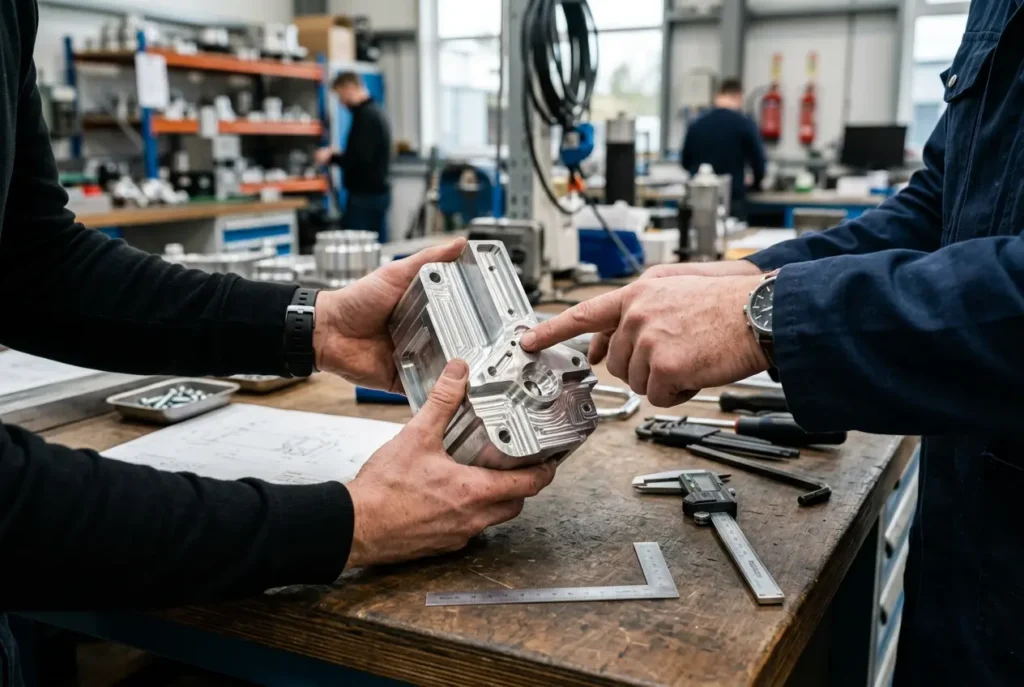
The Challenge: Engineering Capacity & Capability
While the shift back to UK-based engineering makes sense, it introduces its own challenges.
Not every supplier has the capability to deliver complex, multi-stage work.
- Some specialise in a single process
- Others lack the capacity to handle larger or more complex projects
- Many still operate in fragmented supply chains
This creates pressure on companies to find partners who can do more than just one part of the job.
There is increasing demand for suppliers who can support multiple stages of production; from cutting and machining through to fabrication and finishing, while maintaining consistency throughout.
Processes such as hydro-abrasive waterjet cutting services demonstrate how early-stage decisions can influence everything that follows, particularly when material integrity and precision are critical.
What This Means for Engineering Projects
For engineering projects, this shift changes how work is planned and delivered.
There is a stronger focus on:
- Collaboration between teams and suppliers
- Faster turnaround times without compromising quality
- Reducing risk across the entire production process
At the same time, expectations on UK suppliers are increasing. Companies are looking for partners who can deliver consistently and integrate seamlessly into project timelines.
This is particularly relevant in high-performance sectors, where early-stage processes, such as those discussed in waterjet cutting in defence manufacturing, can have a direct impact on long-term reliability.
Access to integrated capabilities is becoming more important, particularly where consistency across machining, fabrication, and finishing is required.
Finishing processes, including coating and surface treatment, also play a critical role in durability and lifecycle performance.
A Shift That’s Likely to Continue
This is not a complete reversal of global manufacturing. Offshore production will still have its place. But the balance is changing.
More organisations are prioritising control, reliability, and responsiveness, especially for complex or high-risk projects.
The shift isn’t really about cost anymore, it’s about control, reliability and certainty. As engineering projects become more complex, those factors are only becoming more important.
Recent Comments