
Monthly Archives

October 2026

30 Oct 2026
Silver Jaguar Type 01 electric grand tourer beside an industrial wall.

Jaguar Enters a New Electric Era

A new Jaguar has always invited scrutiny, particularly when its appearance challenges expectations of what the marque should be. With the Jaguar Type 01, however, the questions extend well beyond the styling. Its arrival also brings attention to the engineering, factories and manufacturing skills behind a new British electric grand tourer.

Unveiled in New York in October 2026, Type 01 combines ambitious performance claims with a planned UK production programme. For enthusiasts, the immediate attraction is a powerful four-door GT; for British automotive manufacturing, the interest lies in turning that vehicle into a repeatable production reality.

That journey deserves attention alongside the acceleration figures. Developing a new car means bringing design, propulsion, body manufacture and assembly together, with each decision carrying implications for the people and processes further down the production chain.

23 Oct 2026

New Tesla Roadster: The Engineering Behind the Spectacle

A car driving up a steep ramp is an unusual opening to a vehicle launch, even before it turns upside down and becomes airborne. Tesla’s demonstration on 15 October 2026 gave the new Tesla Roadster an entrance few conventional performance cars could match, combining electric propulsion with cold-gas thrusters and a suction system intended to generate substantial downforce.

The event at a SpaceX facility in Texas arrived almost nine years after Tesla first presented its earlier second-generation concept. This time, the company demonstrated a substantially different proposition, with configurations ranging from a two-seat performance car to a single-seat version capable of brief airborne manoeuvres.

Musk’s stated production target is 2028, although buyers still have no firm delivery commitment. For UK readers, the presence of a reservation page also leaves important questions about price, steering configuration and legal availability unanswered.

The spectacle deserves attention, but so does the engineering behind it. Demonstrating an extraordinary manoeuvre establishes that something can work under particular conditions; producing customer vehicles requires that performance to sit alongside consistent manufacturing, durability and clear operating limits. Those demands will determine how much of the Roadster’s ambition reaches its eventual owners.

16 Oct 2026
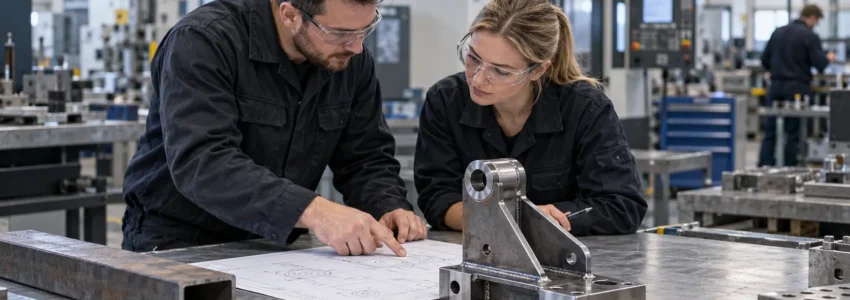
Engineers reviewing a technical drawing beside a fabricated and machined steel assembly.

Why Choose PRV Engineering for Complex Manufacturing Projects?

A manufacturing project can involve several capable suppliers and still be difficult to control. The cutting contractor completes its work, the machine shop has a different production slot and the finishing specialist needs the component before it can confirm delivery. Each company manages its own operation, while the customer remains responsible for making the whole route work.

For engineering managers, procurement teams and project directors, choosing an engineering subcontractor in the UK therefore involves more than comparing individual capabilities. The wider question is how much coordination the project will require, where responsibility sits and whether the manufacturing route can be managed without consuming more internal time than the business can reasonably spare.

8 Oct 2026
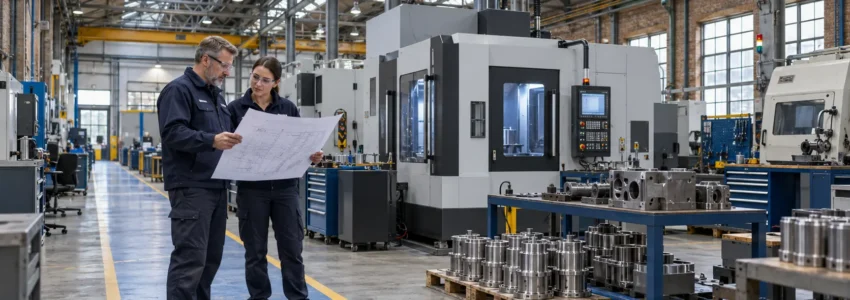
Engineers reviewing a factory layout beside CNC machinery in an existing industrial building.

How Existing Factories Are Being Rebuilt for Advanced Manufacturing

Britain’s next manufacturing era will not necessarily begin with an empty plot and a completely new factory. Some of the capacity needed for future aircraft, propulsion systems and complex components is being developed at established sites, where investment is changing what can be made and how production is organised.

For UK advanced manufacturing, this raises a practical question: how do you turn an existing industrial site into a facility capable of delivering different work reliably? A new machine may provide an essential operation, but its value depends on the environment around it, from component handling and operator knowledge to inspection and production planning.

Airbus’s Broughton conversion and Rolls-Royce’s investment programme illustrate different aspects of that transition, while Isembard’s London factory offers another perspective on bringing manufacturing and its supporting functions together.

1 Oct 2026
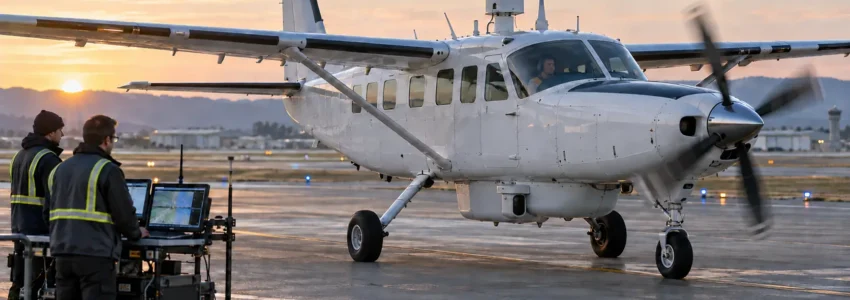
Autonomy-equipped utility aircraft taxis while engineers monitor the flight and a safety pilot remains onboard.

What Joby’s 3,199-Mile Flight Reveals About Autonomous Aircraft Technology

A converted Cessna Caravan has completed a 3,199-mile journey across the United States without its onboard safety pilot making a single control input. According to Joby Aviation, the aircraft handled taxiing, take-off, route navigation and landing autonomously as it travelled from California to North Carolina.

The achievement needs some careful qualification. This was a multi-leg journey rather than a single nonstop flight, a safety pilot remained in the cockpit and teams supervised the operation remotely. Describing it simply as a “pilotless flight” would therefore give the wrong impression, even though the aircraft itself reportedly controlled every phase of the journey.

The engineering importance lies beyond the headline distance. The demonstration shows how autonomous aircraft technology must connect sensors, software, communications and physical flight controls while operating through changing weather, airports and airspace environments.

It also raises a larger question: what does it take to convert a proven aircraft platform into an autonomous operating system without losing the reliability, traceability and human oversight expected in aviation?

Recent Comments

    Events

    October 2026
    M T W T F S S
     1234
    567891011
    12131415161718
    19202122232425
    262728293031