

Monthly Archives

September 2026

18 Sep 2026
AI illustration showing the aircraft manufacturing supply chain, from raw materials and precision machining through fabrication and assembly to a completed twin-engine aircraft like the Islander.

The British-Built Islander Is Back: The Engineering Reality of Reshoring Aircraft Production

The first Islander to pass through Britten-Norman’s reshored production line at Bembridge entered its ground-test programme in August 2026. Although the return of a fully UK-assembled Islander is a notable moment for British aviation, the more important story concerns the manufacturing capability behind the aircraft.

Bringing complex aircraft manufacturing back to the UK involves considerably more than relocating an assembly line. Production depends on controlled engineering information, specialist knowledge, suitable tooling, skilled people and a network of suppliers capable of delivering compatible parts and systems.

The Islander therefore provides a useful case study in what reshoring means at factory level. Its progress from component manufacture through assembly and into testing illustrates how industrial capability must be reconstructed as a connected system before a British production line can produce dependable aircraft repeatedly.
11 Sep 2026
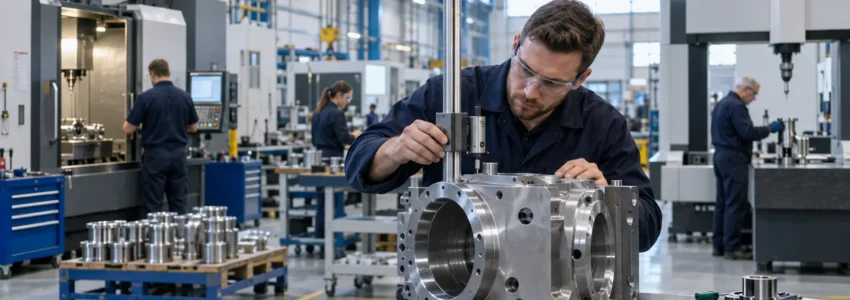
Engineer inspecting a precision-machined metal component in a modern UK manufacturing facility.

Britain Is Rebuilding Defence Manufacturing. Can the Supply Chain Keep Up?

Jobs supported by defence expenditure in UK weapons and ammunition manufacturing rose by 51% in 2024/25, according to figures published by the Ministry of Defence.

The MOD’s estimates also point to a wider year-on-year increase of 26,000 defence-supported roles across UK industry. That broader figure includes direct manufacturing employment and indirect jobs throughout the supply chain.

These numbers suggest growing industrial activity, but they also raise a more difficult question. Does the UK defence manufacturing supply chain have the depth, capability and control needed to meet the demand now being placed upon it?

Increased expenditure only becomes useful capability when equipment can be engineered, manufactured, integrated, inspected, tested and delivered. That work extends far beyond major defence contractors. It depends on direct suppliers, subcontractors and specialist engineering businesses working together.

Available production capacity will matter as demand grows. But capacity without repeatability, traceability, documentation and dependable delivery will not be enough.

4 Sep 2026
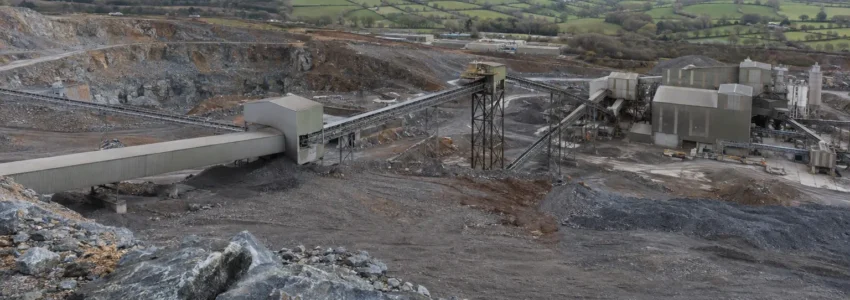
Mineral processing site beside an open quarry in the British countryside.

Why UK Tungsten Supply Matters: The Engineering Behind Britain’s £71m Critical Minerals Bet

A mine on the outskirts of Plymouth is becoming part of a much larger conversation about Britain’s industrial resilience. On 25 August 2026, the National Wealth Fund announced an investment of up to £71 million in Tungsten West. The funding is intended to support the restart of the Hemerdon tungsten and tin mine in South Devon and help establish a secure domestic source of a material used across several strategically important industries.

The intervention raises an obvious question: why is the UK tungsten supply important enough to justify Government backing on this scale?

The answer reaches far beyond the mine itself. Tungsten is associated with manufacturing, high-technology supply chains, aerospace, defence, electronics and next-generation energy. That means access to it is not merely a mining concern. It is also an engineering, procurement and industrial-capability issue.

Hemerdon will not make the UK self-sufficient in tungsten, nor will reopening a mine automatically create a complete domestic supply chain. However, the project illustrates why access to critical materials has moved much closer to the centre of manufacturing strategy.

Recent Comments

    Events

    September 2026
    M T W T F S S
     123456
    78910111213
    14151617181920
    21222324252627
    282930