
What Joby’s 3,199-Mile Flight Reveals About Autonomous Aircraft Technology
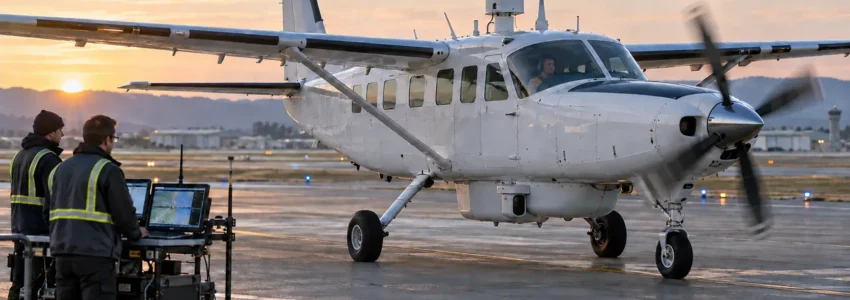
A converted Cessna Caravan has completed a 3,199-mile journey across the United States without its onboard safety pilot making a single control input. According to Joby Aviation, the aircraft handled taxiing, take-off, route navigation and landing autonomously as it travelled from California to North Carolina.
The achievement needs some careful qualification. This was a multi-leg journey rather than a single nonstop flight, a safety pilot remained in the cockpit and teams supervised the operation remotely. Describing it simply as a “pilotless flight” would therefore give the wrong impression, even though the aircraft itself reportedly controlled every phase of the journey.
The engineering importance lies beyond the headline distance. The demonstration shows how autonomous aircraft technology must connect sensors, software, communications and physical flight controls while operating through changing weather, airports and airspace environments.
It also raises a larger question: what does it take to convert a proven aircraft platform into an autonomous operating system without losing the reliability, traceability and human oversight expected in aviation?
Recent Comments