Yearly Archives

2026

3 Jun 2026
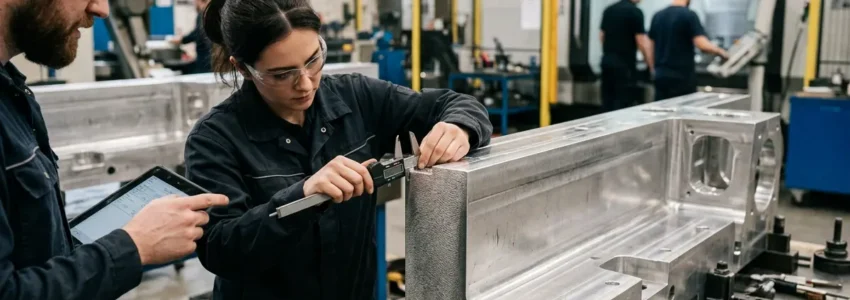
Engineers inspecting a large aluminium gigacast vehicle underbody structure inside an advanced automotive manufacturing facility, with precision measurement equipment and a high-pressure die-casting cell visible in the background. The image highlights the role of gigacasting in simplifying vehicle production by replacing numerous individual components with a single structural casting.

Why Carmakers Are Replacing Hundreds Of Parts With Just One

There’s no denying modern cars are becoming increasingly complex. New vehicles contain thousands of components, miles of wiring, advanced electronics, structural reinforcements, safety systems and manufacturing processes that would have seemed unimaginable only a few decades ago.

Yet some of the world’s largest automotive manufacturers are pursuing a surprisingly simple idea. Instead of building a vehicle structure from hundreds of individual components, why not manufacture large sections of it as a single part?

That question sits at the heart of one of the most significant developments in automotive engineering today: gigacasting.

28 May 2026
Engineers developing a Formula 1-inspired performance car chassis inside an advanced automotive engineering facility.

From The Racetrack To The Road: How Formula 1 Technology Shapes Modern Cars

For most people, Formula 1 exists in a completely separate world from everyday driving.

The cars are faster, lower, louder and engineered to extremes that appear almost impossible to apply to a production vehicle. Yet many of the technologies now considered normal in modern road cars either originated in Formula 1 or were accelerated by it.

Paddle-shift gearboxes, hybrid systems, advanced aerodynamics, carbon fibre structures and energy recovery technologies all spent years being developed under Formula 1’s intense engineering environment before finding their way into production vehicles.

What makes Formula 1 particularly interesting is that it no longer functions purely as motorsport. It has become one of the automotive industry’s most advanced research and development laboratories.

The performance figures attract the attention. The engineering transfer behind them is arguably the more important story.

22 May 2026
Engineers inspecting advanced carbon fibre and titanium components during hypercar development.

From the Bugatti Tourbillon to the McLaren W1: The Manufacturing Challenge Behind Modern Hypercars

Modern hypercars have become some of the most ambitious engineering projects ever attempted.

When Bugatti unveiled the Tourbillon, attention naturally focused on its naturally aspirated 8.3-litre V16 and 1,800-horsepower hybrid powertrain. Ferrari’s new F80 and McLaren’s W1 generated similar excitement, each showcasing a different approach to performance, electrification and lightweight design.

What makes these cars fascinating isn’t simply how fast they are.

Modern hypercars reveal how dramatically manufacturing has evolved. Advanced materials, hybrid systems, aerodynamic complexity and increasingly demanding tolerances are forcing engineers to solve challenges that barely existed a decade ago.

The performance figures grab the headlines. The manufacturing behind them is just as impressive.

14 May 2026
Editorial-style manufacturing scene showing humanoid robotics integrated into a modern industrial environment alongside traditional engineering and precision-machined components

Could Humanoid Robots Change the Future of Engineering and Manufacturing?

Humanoid robots have moved from science fiction into real-world manufacturing discussions surprisingly quickly.

Over the past year, videos of walking, lifting, and task-performing robots from companies like Tesla and Figure AI have generated huge attention online. Some see them as the next industrial revolution. Others see them as expensive demonstrations that are still far from practical use.

The reality is probably somewhere in the middle.

Humanoid robots are advancing rapidly, and manufacturing companies are paying attention. But while the technology is impressive, there is still a significant gap between controlled demonstrations and large-scale industrial adoption.

8 May 2026
Arrangement of different engineering materials including aluminium and steel components on a dark surface, highlighting variations in texture, finish and material properties

What This Supposed Aluminium Discovery Means for Engineering Materials

A recent wave of headlines suggests that aluminium, one of the most widely used engineering materials, could begin replacing expensive metals like platinum and palladium in certain applications.

On the surface, that sounds like a major breakthrough. Lower costs. More accessible materials. New possibilities for manufacturing.
But as with most developments in engineering, the reality is more nuanced.

Let’s take a closer look.

1 May 2026
Close-up of a direct carbon fuel cell system showing carbon input and internal electrochemical energy conversion components

Rethinking How We Use Carbon in Modern Energy Systems

For over a century, coal has been synonymous with combustion.
Burn it. Heat water. Spin turbines and generate electricity.

It’s a system that has powered industrial growth for generations, but it’s also fundamentally inefficient. At every stage of that process, energy is lost through heat, friction, and mechanical conversion.

Now, a new line of research, particularly emerging from China, is challenging that model. Instead of burning coal in the traditional sense, engineers are exploring ways to convert carbon’s chemical energy directly into electricity using electrochemical systems.

At first glance, it sounds like a radical departure. In reality, it’s something far more interesting.

23 Apr 2026
Abstract editorial collage showing a precision-engineered metal component in focus with subtle background elements representing global supply chains and manufacturing complexity

What’s Driving the Return of Engineering Work to the UK

For years, the logic behind offshoring engineering work was straightforward. If you wanted to reduce costs, you moved production overseas. Lower labour costs, larger-scale facilities, and established supply chains made it an easy decision for many organisations.

That model worked well, until the cracks started to show.

More recently, a shift has been taking place. Engineering work that once moved abroad is now coming back to the UK. Not as a reaction, but as a practical response to how projects are actually delivered today.

17 Apr 2026
Abstract collage of precision-engineered components with subtle blueprint overlays and geometric linework, representing hidden processes behind reliable engineering

Why the Best Engineering Is Often Invisible

Some engineering gets attention because it looks futuristic, dramatic, or headline-worthy. A new supercar. A hypersonic aircraft. A fully automated factory. These are the projects that attract attention and headlines.

But most real engineering value doesn’t look like that.
It’s quieter. Less visible. And often only recognised when something goes wrong.

9 Apr 2026
Armour-grade steel component in a defence engineering facility with traceability tag and industrial scanner in use

Material Traceability in Engineering: The Centre of Project Risk and Compliance

Material traceability in engineering refers to the ability to track and verify the origin, composition, and processing history of materials used throughout a project. It is no longer a documentation exercise; it is a core requirement for compliance, quality assurance, and operational accountability.

Across sectors such as defence, energy, transport, and infrastructure, traceability in engineering is becoming a baseline expectation rather than a value-added feature. Regulatory pressure, supply chain complexity, and the consequences of failure have shifted traceability from a back-office function to a critical part of project delivery.

For decision-makers, this change is not theoretical. It directly affects supplier selection, project timelines, and long-term liability.

1 Apr 2026
Hydro-abrasive waterjet cutting thick armour-grade steel plate in a defence engineering facility, with partially assembled armoured vehicle structure in the background

How Waterjet Cutting Services Support Modern Defence Engineering

Waterjet cutting services have become increasingly important in defence-related engineering because they eliminate one of the most common and underestimated risks in manufacturing: heat-induced material distortion. For contractors, project directors and procurement teams, this has direct implications for reliability, compliance, and long-term cost.

In defence manufacturing, the margin for error is effectively zero. Components are expected to perform under extreme conditions, over long operational lifecycles, and often within tightly controlled tolerances. In this environment, the choice of cutting process is not just a production decision but a performance decision.

Recent Comments

    Events

    August 2026
    M T W T F S S
     12
    3456789
    10111213141516
    17181920212223
    24252627282930
    31