
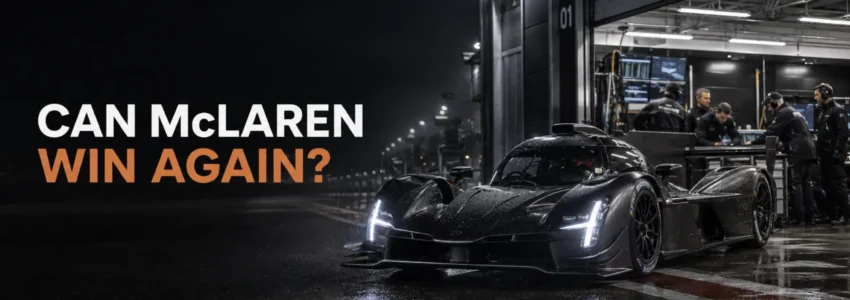
Can McLaren Win Le Mans Again?
McLaren will return to the top class of the 24 Hours of Le Mans in 2027, more than three decades after the F1 GTR won at its first attempt.
This time, it will race the MCL-HY, a purpose-built hybrid prototype created for the FIA World Endurance Championship. The car combines a carbon fibre monocoque, a twin-turbocharged V6 and a hybrid motor-generator system producing up to 520kW, or 707PS, at the rear axle.
Those figures are impressive. Le Mans, however, is rarely decided by one specification. The winning car must remain quick, efficient and dependable for an entire day and night.
Why The McLaren Le Mans Return Matters
McLaren’s return is part of a wider ambition to compete at the highest level across Formula 1, IndyCar and endurance racing.
The company has already won motorsport’s unofficial Triple Crown: the Monaco Grand Prix, the Indianapolis 500 and the 24 Hours of Le Mans. Returning with the MCL-HY gives McLaren another opportunity to pursue success across all three disciplines.
When the programme was announced in April 2025, McLaren Racing CEO Zak Brown reduced the message to two words:
“We’re back.”
The 1995 Victory Changed Expectations
McLaren’s only previous top-class Le Mans campaign created an unusually difficult benchmark.
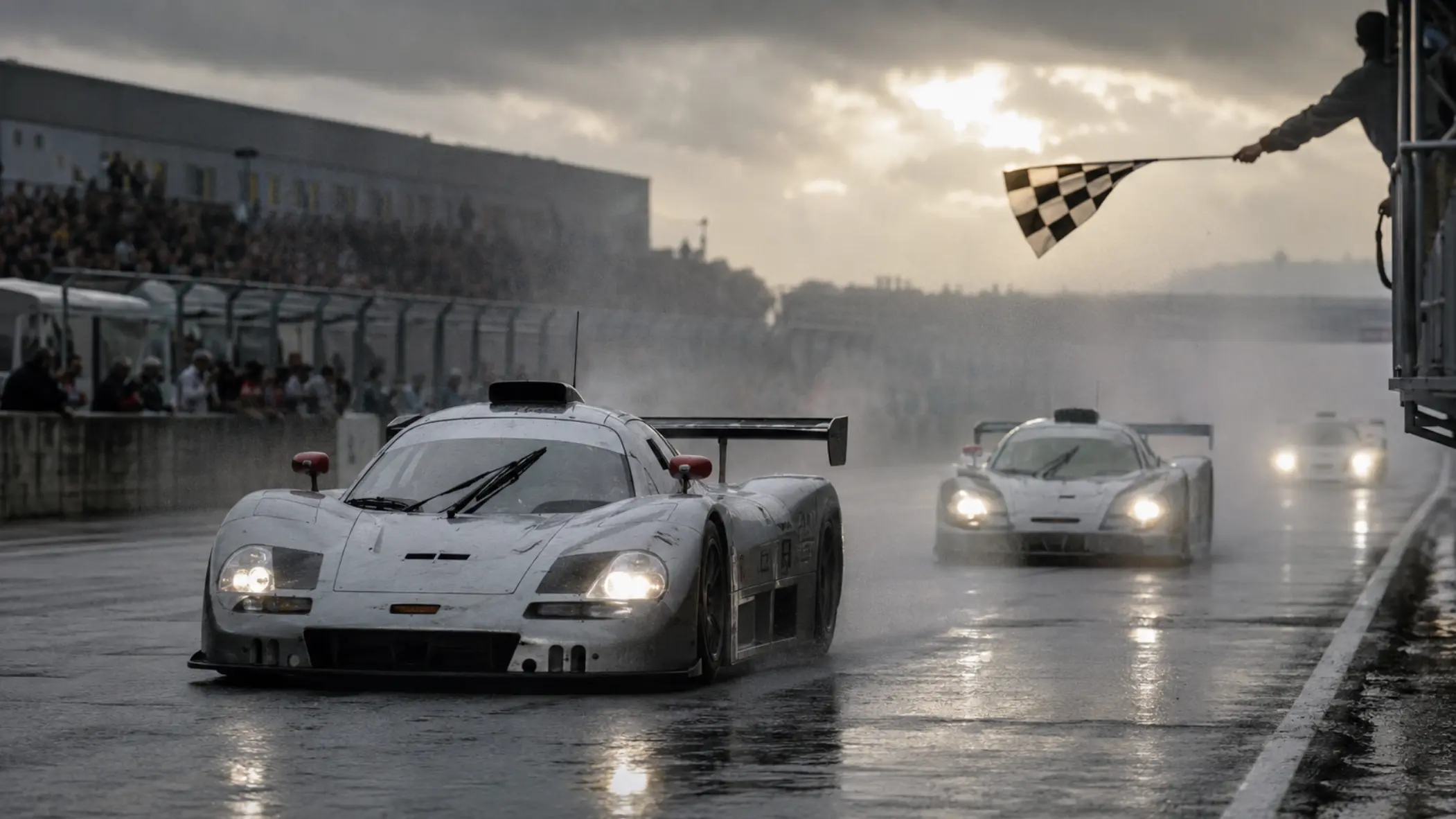
In 1995, the road-car-derived F1 GTR won on its debut. Yannick Dalmas, JJ Lehto and Masanori Sekiya took the overall victory in wet conditions, while four other McLarens reached the finish. Three of those cars also placed inside the top five.
That achievement became part of McLaren folklore. It also means the 2027 programme will be compared with one of the most celebrated first attempts in endurance racing history.
What Is The McLaren MCL-HY?
The MCL-HY has been developed to the LMDh regulations used in the FIA World Endurance Championship and North American IMSA racing.
Dallara is producing the carbon fibre chassis, while McLaren has developed the design and twin-turbocharged V6 powertrain. Standardised hybrid hardware is used under the regulations, and the car must meet a minimum weight of 1,030kg.
McLaren says the MCL-HY has been designed to balance outright speed with the efficiency required for long-distance competition.
Why McLaren’s Le Mans Return Needs More Than Speed
A car built only for maximum pace may place too much stress on its engine, gearbox, brakes or tyres.
A car designed too conservatively may finish reliably but lack the speed to challenge for victory.
Endurance racing sits between those extremes. Cooling improves reliability but adds weight. Stronger components may last longer but can increase mass. Tighter packaging may help aerodynamics while making heat management and repairs more difficult.
Every performance gain has to be judged against what it costs elsewhere in the car.
Testing Behind The McLaren Le Mans Return
The MCL-HY completed its first runs in May 2026 and is now progressing through an extensive development programme before homologation.
McLaren needs to understand more than lap time. Engineers will examine temperatures, wear, vibration, energy use and how the car responds after repeated braking, acceleration and kerb strikes.
Some faults appear immediately. Others develop gradually as parts heat, cool and move thousands of times.
McLaren has described the plan as “a rigorous testing programme” running throughout 2026.
What McLaren Engineers Look For During Testing
Testing also reveals practical problems that computer models cannot always predict.
Can technicians reach a damaged component quickly? Can it be removed without dismantling unrelated systems? Is an electrical connection accessible when the car is hot? Will a replacement part fit without adjustment?
These questions are less dramatic than horsepower or top speed, but they can decide a race.
A minor fault need not cause retirement. If it keeps the car in the garage for half an hour, the realistic chance of victory may already be gone.
McLaren’s Le Mans Rivals Have A Head Start
McLaren will enter a category containing manufacturers with recent Hypercar experience, including Ferrari, Toyota, BMW, Cadillac and Peugeot.
Those teams already understand their cars across different circuits, temperatures and race conditions. They have years of data, established procedures and technicians who have dealt with real failures under pressure.
Team Principal James Barclay has openly recognised that McLaren’s competitors hold a “significant headstart”.
The first season will therefore be about learning quickly and creating a programme capable of challenging for podiums and victories.
Why Le Mans Exposes Weak Components
The Circuit de la Sarthe combines permanent track with sections of public road. Its long straights, heavy braking zones and changing surfaces place very different loads on a car.
Those loads are repeated hundreds of times across 24 hours.
Cars run through daytime heat, cooler night temperatures, traffic, debris and changing weather. Drivers attack kerbs and sometimes leave the ideal racing line to pass slower competitors.
A small weakness that remains hidden during a short run has far more time to develop into a serious problem.
The Small Parts Behind McLaren’s Le Mans Return
The engine, aerodynamics and hybrid system naturally attract attention. Reliability often depends on far less visible components.
Brackets, fasteners, seals, electrical connections, housings, pipes and mounting points all have specific jobs. One small failure can stop a much larger system.
A component does not have to break completely to cause trouble. Movement can affect alignment. A poor electrical contact can create resistance and heat. An insecure mounting can place extra stress on nearby pipes or wiring.
Le Mans gives these small inconsistencies enough time to become impossible to ignore.
Why Serviceability Matters At Le Mans
Endurance cars must be designed for the garage as well as the circuit.
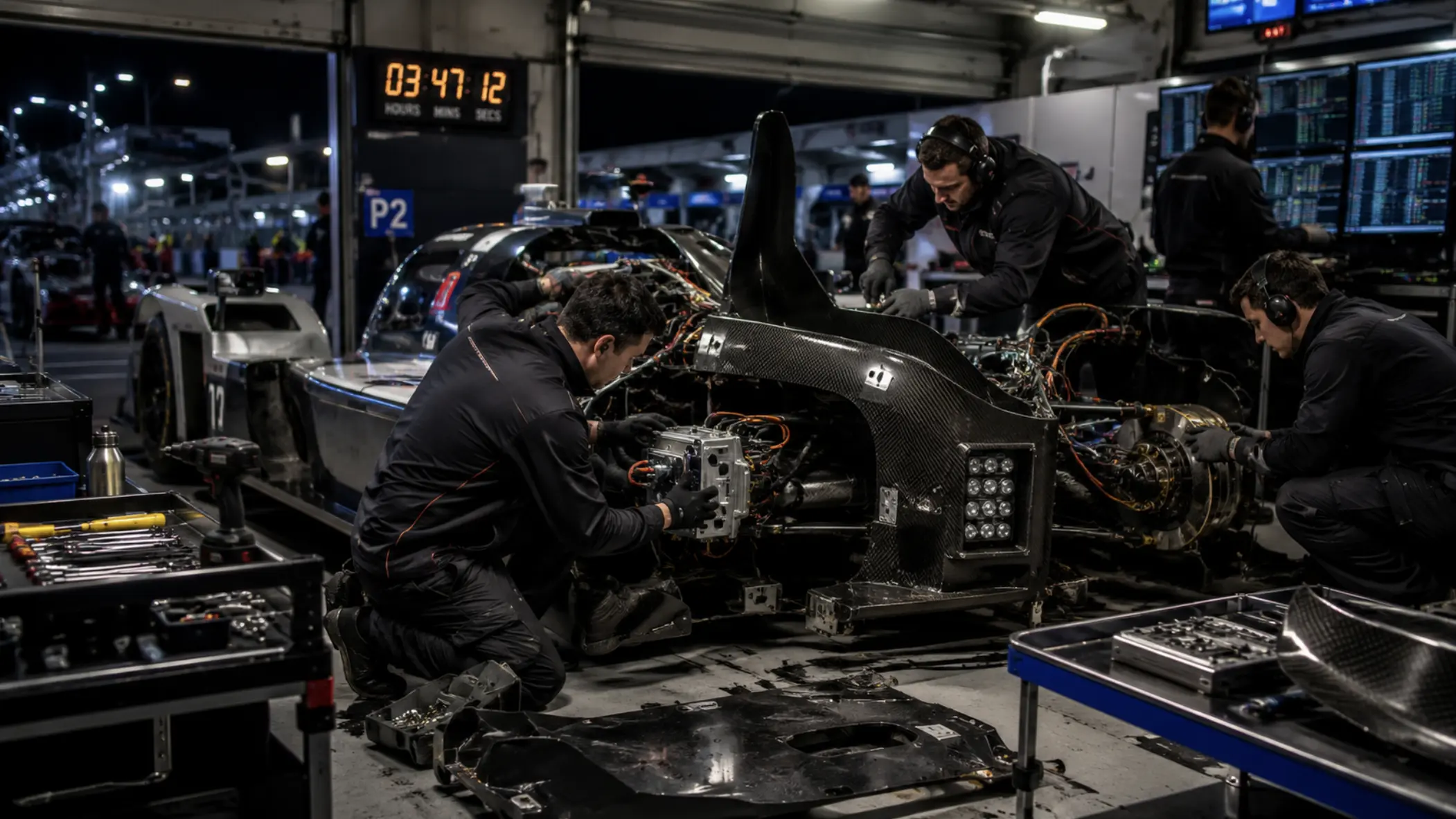
A reliable component may still create difficulties if technicians cannot reach it. A repair that should take five minutes can become a lengthy stop when bodywork, cooling equipment and electrical connections must first be removed.
Fasteners need to be accessible. Replacement assemblies should fit correctly without modification. Faults must be easy to identify. At three in the morning, with the car losing laps, practical design decisions matter as much as theoretical performance.
Manufacturing Consistency Supports Reliability
Two parts made to the same drawing should fit and behave in the same way.
When one needs adjustment, wears differently or responds unpredictably under load, engineers have another variable to investigate. Variation can affect alignment, electrical contact, component life and repair time.
Manufacturing consistency removes some of that uncertainty. The aim is not to make every part unnecessarily complicated or expensive. It is to ensure that each component repeatedly performs the job expected of it, even when conditions become difficult.
In endurance racing, predictable engineering supports predictable performance.
What The McLaren Le Mans Return Reveals About Engineering
The McLaren Le Mans return is a motorsport story, but the principles extend well beyond racing.
Rail components must withstand repeated use and vibration. Defence equipment may operate in harsh and unpredictable environments. Aerospace programmes require tight control over materials, production and inspection.
Automotive, energy, construction and marine projects bring their own combinations of load, heat, wear and corrosion. The applications differ, but the expectation remains familiar: the finished product must continue working as intended.
Where PRV Engineering Fits Into The Wider Picture
PRV Engineering works across automotive and motorsport, defence, aerospace, rail, energy, construction and wider industrial engineering.
PRV is not involved in the McLaren MCL-HY programme. The relevance lies in the broader discipline required when materials, manufacturing stages and individual components must work together reliably.
PRV’s wide in-house capability also provides a clearer view of how one stage affects the next. Fewer handovers can mean better communication, greater consistency and less opportunity for important details to be lost between suppliers.
Can McLaren Win Le Mans Again?
McLaren has the heritage, resources and ambition to become a serious Le Mans contender.
The MCL-HY must first complete its test programme and then face some of the most experienced manufacturers in endurance racing. It needs the pace to compete, the efficiency to remain in contention and the reliability to survive an entire day and night.
Repeating the 1995 victory at the first attempt would be remarkable. Building a programme capable of winning consistently may be the more meaningful achievement.
At Le Mans, outright speed creates an opportunity. Reliability keeps it alive.
Source Article And Further Reading
The main manufacturer source is McLaren Racing’s official article, McLaren’s 2027 FIA World Endurance Championship Hypercar Revealed.
Additional information was taken from McLaren Racing’s testing updates, its interview with James Barclay and official historical coverage published by the 24 Hours of Le Mans.
This article is original PRV Engineering editorial commentary. McLaren, Goodwood or Le Mans photography should not be reproduced without first confirming the applicable image usage rights.
Recent Comments