Tag Archives: advanced manufacturing

25 Sep 2026
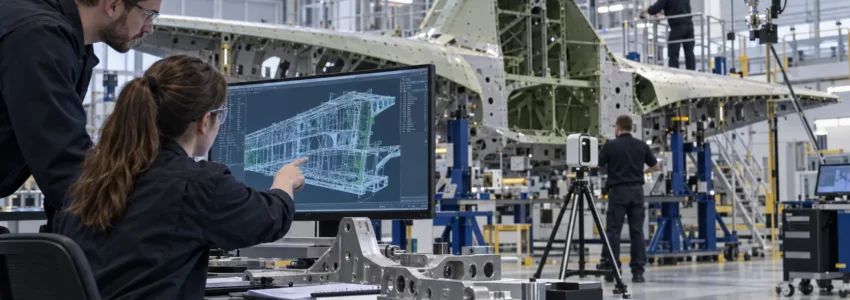
Aerospace engineers compare a digital aircraft structure model with manufactured components in an assembly facility.

How Britain’s Next Fighter Is Changing the Way Complex Engineering Is Manufactured

The latest investment in Britain’s future combat-air capability is not only funding the development of a new aircraft. It is also supporting a different engineering model in which design, testing, production and through-life support are connected through shared digital information.

On 22 July 2026, the Ministry of Defence announced a £708 million contract extension to accelerate the development of advanced technologies for the UK’s Future Combat Air System or FCAS. The wider system will include the next-generation aircraft being developed by the UK, Italy and Japan through the Global Combat Air Programme known as GCAP.

The distinction matters because FCAS describes the UK’s broader future combat-air capability, while GCAP is the international programme responsible for developing its core aircraft platform. Together, they provide a useful case study in how Future Combat Air System manufacturing could connect digital engineering with physical production.

The central question is therefore bigger than how the aircraft will perform. If it is engineered digitally from the outset, what changes in the factories, supplier networks and physical processes required to manufacture it?
4 Sep 2026
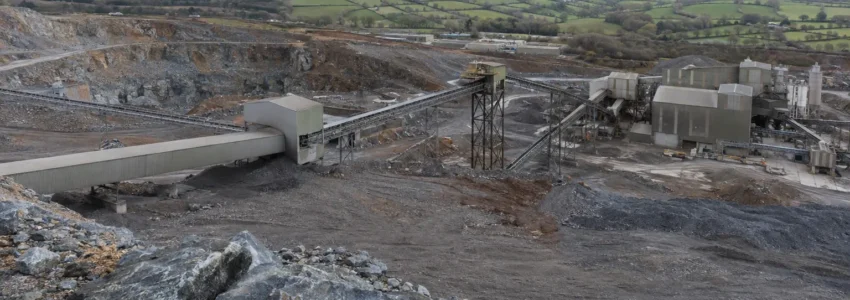
Mineral processing site beside an open quarry in the British countryside.

Why UK Tungsten Supply Matters: The Engineering Behind Britain’s £71m Critical Minerals Bet

A mine on the outskirts of Plymouth is becoming part of a much larger conversation about Britain’s industrial resilience. On 25 August 2026, the National Wealth Fund announced an investment of up to £71 million in Tungsten West. The funding is intended to support the restart of the Hemerdon tungsten and tin mine in South Devon and help establish a secure domestic source of a material used across several strategically important industries.

The intervention raises an obvious question: why is the UK tungsten supply important enough to justify Government backing on this scale?

The answer reaches far beyond the mine itself. Tungsten is associated with manufacturing, high-technology supply chains, aerospace, defence, electronics and next-generation energy. That means access to it is not merely a mining concern. It is also an engineering, procurement and industrial-capability issue.

Hemerdon will not make the UK self-sufficient in tungsten, nor will reopening a mine automatically create a complete domestic supply chain. However, the project illustrates why access to critical materials has moved much closer to the centre of manufacturing strategy.

27 Aug 2026
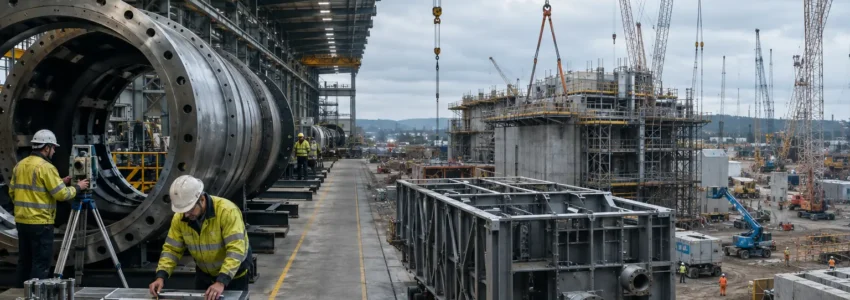
Engineers inspect large manufactured components before modular installation at an energy construction site.

What Will It Take to Build Britain’s Next Generation of Nuclear Power?

Britain’s plans for a new generation of nuclear power are beginning to take shape. At the centre of the programme are small modular reactors, or SMRs: nuclear power stations designed around standardised, modular components that can be manufactured in factories before being transported for assembly on site.

Rolls-Royce SMR was selected as the UK programme’s preferred technology partner in June 2025. In April 2026, Great British Energy – Nuclear, known as GBE-N, signed a contract with the company to begin technology and site-specific design work, regulatory engagement and planning.

The initial three-unit project is planned for Wylfa on Ynys Môn. However, important stages remain, including a future Final Investment Decision. It is therefore more accurate to describe Wylfa as a planned project than as one already moving into construction.

Much of the public discussion around UK small modular reactors naturally focuses on energy security and generating capacity. But the programme is also a manufacturing story. Its success will depend on whether complex components can be produced repeatedly, inspected thoroughly and delivered with the consistency and supporting evidence that major nuclear projects require.

2 Jul 2026
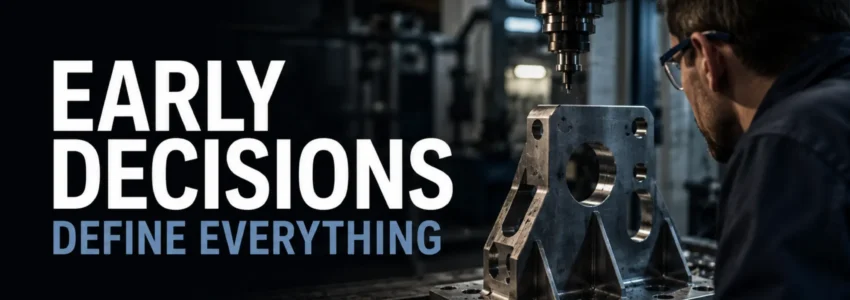
Engineer reviewing a precision aluminium component alongside CNC machining equipment, illustrating how early manufacturing decisions influence production quality.

Every Precision Component Has A Starting Point

Waterjet cutting is often viewed as a manufacturing process in its own right. In reality, it’s frequently the beginning of a much larger engineering journey.

Whether a component is destined for a defence vehicle, an electrical power system or a piece of industrial machinery, the first manufacturing decision can influence everything that follows. Material selection, production efficiency, machining time and even the long-term performance of the finished component are often shaped long before the first hole is drilled or the final surface is machined.

That’s why experienced engineering teams don’t simply ask how a component should be manufactured. They consider the entire production workflow from the outset, selecting manufacturing processes that work together rather than in isolation.

Waterjet cutting has become an important part of that approach. Far more than simply cutting material to shape, it often creates the starting point from which every subsequent manufacturing operation becomes more efficient.

10 Jun 2026
Formula 1 car, fighter aircraft, data centre and industrial robot highlighting the precision engineered components that support modern technology.

Why The Smallest Components Keep Modern Industry Moving

Aircraft, defence vehicles, power infrastructure, industrial machinery and advanced manufacturing systems all rely on precision engineered components. Yet the most important parts are often the ones nobody notices.

While attention is naturally drawn to engines, software, robotics and advanced electronics, it is frequently a bracket, busbar, housing, mounting system or machined component that determines whether a system performs reliably for years or fails prematurely.

Formula 1 cars, fighter aircraft and modern data centres may represent the cutting edge of engineering, but their success often depends on components hidden beneath panels, inside enclosures or deep within complex assemblies.

Because while advanced technology attracts attention, precision engineered components often determine whether it actually works.

29 Apr 2024

The introduction of abrasive waterjet cutting into the manufacturing industry marked a pivotal advancement in how materials are processed. This technology, distinguished by its precision and efficiency, offers a non-thermal, water-driven method to cut a wide range of materials, from metals to composites, without altering their intrinsic properties.

Recent Comments

    Events

    November 2026
    M T W T F S S
     1
    2345678
    9101112131415
    16171819202122
    23242526272829
    30