Archives

Aerospace

1 Oct 2026
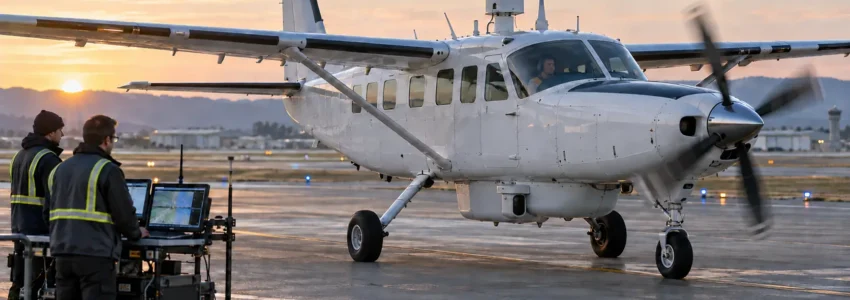
Autonomy-equipped utility aircraft taxis while engineers monitor the flight and a safety pilot remains onboard.

What Joby’s 3,199-Mile Flight Reveals About Autonomous Aircraft Technology

A converted Cessna Caravan has completed a 3,199-mile journey across the United States without its onboard safety pilot making a single control input. According to Joby Aviation, the aircraft handled taxiing, take-off, route navigation and landing autonomously as it travelled from California to North Carolina.

The achievement needs some careful qualification. This was a multi-leg journey rather than a single nonstop flight, a safety pilot remained in the cockpit and teams supervised the operation remotely. Describing it simply as a “pilotless flight” would therefore give the wrong impression, even though the aircraft itself reportedly controlled every phase of the journey.

The engineering importance lies beyond the headline distance. The demonstration shows how autonomous aircraft technology must connect sensors, software, communications and physical flight controls while operating through changing weather, airports and airspace environments.

It also raises a larger question: what does it take to convert a proven aircraft platform into an autonomous operating system without losing the reliability, traceability and human oversight expected in aviation?
25 Sep 2026
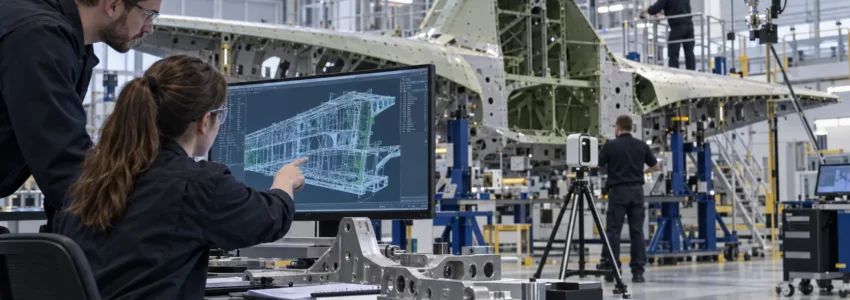
Aerospace engineers compare a digital aircraft structure model with manufactured components in an assembly facility.

How Britain’s Next Fighter Is Changing the Way Complex Engineering Is Manufactured

The latest investment in Britain’s future combat-air capability is not only funding the development of a new aircraft. It is also supporting a different engineering model in which design, testing, production and through-life support are connected through shared digital information.

On 22 July 2026, the Ministry of Defence announced a £708 million contract extension to accelerate the development of advanced technologies for the UK’s Future Combat Air System or FCAS. The wider system will include the next-generation aircraft being developed by the UK, Italy and Japan through the Global Combat Air Programme known as GCAP.

The distinction matters because FCAS describes the UK’s broader future combat-air capability, while GCAP is the international programme responsible for developing its core aircraft platform. Together, they provide a useful case study in how Future Combat Air System manufacturing could connect digital engineering with physical production.

The central question is therefore bigger than how the aircraft will perform. If it is engineered digitally from the outset, what changes in the factories, supplier networks and physical processes required to manufacture it?

18 Sep 2026
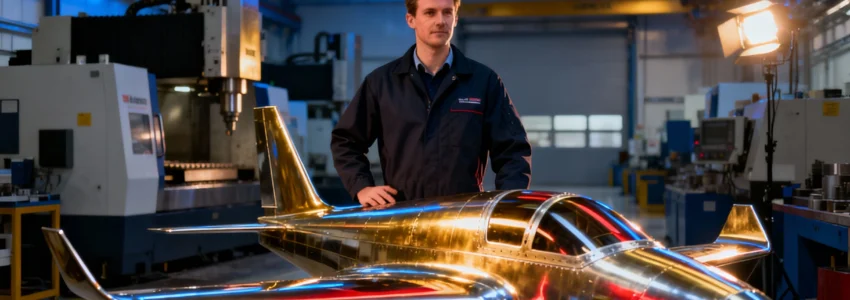
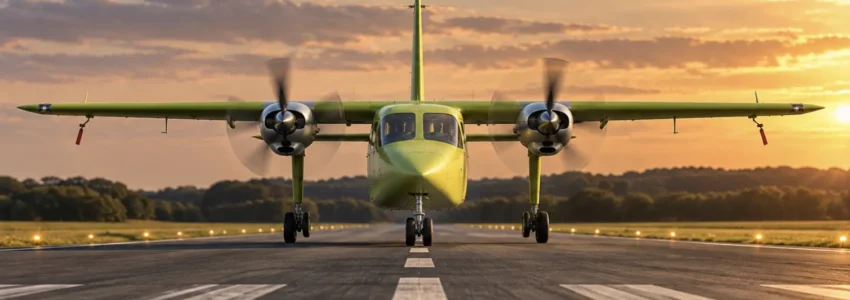
AI illustration showing the aircraft manufacturing supply chain, from raw materials and precision machining through fabrication and assembly to a completed twin-engine aircraft like the Islander.

The British-Built Islander Is Back: The Engineering Reality of Reshoring Aircraft Production

The first Islander to pass through Britten-Norman’s reshored production line at Bembridge entered its ground-test programme in August 2026. Although the return of a fully UK-assembled Islander is a notable moment for British aviation, the more important story concerns the manufacturing capability behind the aircraft.

Bringing complex aircraft manufacturing back to the UK involves considerably more than relocating an assembly line. Production depends on controlled engineering information, specialist knowledge, suitable tooling, skilled people and a network of suppliers capable of delivering compatible parts and systems.

The Islander therefore provides a useful case study in what reshoring means at factory level. Its progress from component manufacture through assembly and into testing illustrates how industrial capability must be reconstructed as a connected system before a British production line can produce dependable aircraft repeatedly.

6 Aug 2026

Could the JetZero Z4 Change the Shape of Commercial Aviation?

A brief comment underneath a recent PRV Engineering post caught our attention and led us to explore the JetZero Z4:

“Our plans at Archon are similar.”

It came from Archon Aerospace, a company publicly developing its own unconventional flying-wing aircraft concepts.

The original post concerned the JetZero Z4, a proposed 250-passenger blended wing body aircraft. JetZero says the aircraft could travel up to 5,000 nautical miles while using as much as 50% less fuel per passenger mile than comparable conventional aircraft.

Those figures remain development targets rather than proven airline performance. However, the programme is beginning to attract the investment, government support and airline involvement needed to move beyond the concept stage.

That is what makes the Z4 worth following.

Note: The featured image used with this article is an AI-generated concept illustration of a blended-wing aircraft and is not an official JetZero rendering.

24 Jul 2026
Modern passenger aircraft with folded outer wing sections on an airport apron at sunset, illustrating how longer wings could improve efficiency while remaining compatible with existing airports.

Could Folding Wings Solve Aviation’s Wingspan Problem?

Aircraft wings are getting a second look.

For years, the basic challenge in commercial aviation has been clear. Airlines want aircraft that burn less fuel, produce lower emissions and operate more efficiently over long distances. One of the most effective ways to improve that efficiency is to use longer, slimmer wings.

The problem is that airports were not built for unlimited wingspan.

That is why folding aircraft wings are back in the conversation. They offer a way to give aircraft more aerodynamic efficiency in the air without making them too wide for existing gates, taxiways and ground operations.

12 Mar 2026
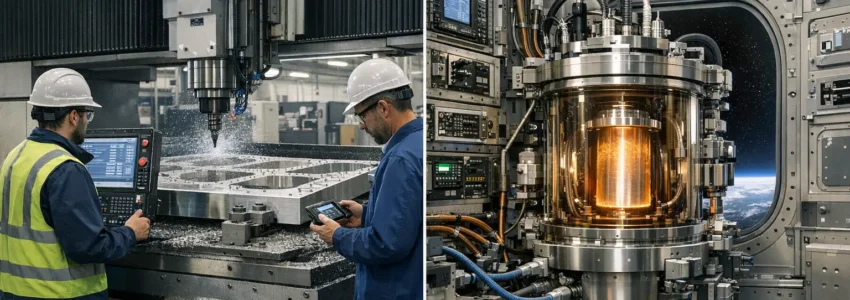
Split-scene image showing safe aerospace CNC machining on Earth and a realistic orbital semiconductor manufacturing module in low Earth orbit.

Microgravity Is Changing Advanced Materials in Space Manufacturing

Space manufacturing is rapidly moving from theoretical research into a serious engineering discussion.

For most of the space age, manufacturing has taken place almost entirely on Earth. Satellites, spacecraft components and instruments are designed, machined and assembled in terrestrial facilities before being launched into orbit.

But engineers are beginning to question whether some materials might actually be produced more effectively in space.

In microgravity environments, liquids behave differently, crystal structures can form more uniformly and impurities do not settle in the same way they do under Earth’s gravity. These changes may allow scientists and aerospace engineers to manufacture certain materials with properties that are difficult to achieve in conventional factories.

What once sounded like science fiction is now becoming a practical area of aerospace engineering research.

12 Nov 2025
Aerospace engineer beside a precision-machined component symbolising UK subcontractor expertise.

The Future of Aerospace Subcontractors in Europe’s Shifting Industry

The European aerospace sector is entering a transformative phase. Recent announcements such as the joint venture between Airbus, Leonardo and Thales underline a clear shift in how the industry will operate.

For aerospace subcontractors, this isn’t just a story about large OEMs; it signals a change in supply-chain dynamics, capability expectations and project scale. UK engineering companies that offer precision machining, large-format machining, deep-hole drilling, and complex fabrication will find new opportunities if they adapt.

23 Sep 2025
3I/ATLAS speeding across the solar system toward a vortex in deep space

What We Know (and What We Don’t) About 3I/ATLAS

The universe occasionally throws us a curveball and in the case of 3I/ATLAS, that curve is coming from outside our solar system.

Officially classified as the third known interstellar object ever detected, 3I/ATLAS is hurtling through space on a hyperbolic path that confirms one thing for certain: it’s not from around here. So, what can it be?

At PRV Engineering, we’re not astronomers or a space agency, but we do support the aerospace sector with high-precision engineering and fabrication. And when interstellar anomalies like this hit the headlines, it’s not just science fiction fans who pay attention but also engineers, physicists, and futurists alike.

So, what is 3I/ATLAS? Here’s what we know, what we don’t, and the theories (mainstream, speculative, and wild) that surround this cosmic visitor.

8 Jan 2025

Precision aerospace engineering has become a cornerstone in modern aviation, especially as the industry confronts growing demand for speed, reliability and sustainability. Aircraft manufacturers are exploring supersonic and hypersonic flight concepts, while airlines seek more efficient fleets. Meanwhile, passengers want shorter travel times and enhanced safety. In this article, we’ll explore how this specialised field supports aerospace manufacturing, the role of rapid prototyping, the creation of precision aerospace parts and trends in aviation engineering. We’ll also highlight the role of PRV Engineering in this fascinating sector.

2 Jan 2025
Concept Art of Supersonic Travel

Supersonic Travel: The Next Leap in Aerospace Innovation

Supersonic travel is making a remarkable comeback, with recent breakthroughs in detonation engine technology paving the way for faster, more efficient, and cost-effective high-speed aviation. Imagine flying from Beijing to New York in just two hours; the future envisioned by China’s aerospace sector. These advancements promise not only to redefine global transportation but also to drive significant progress in aerospace engineering advancements.

Recent Comments

    Events

    November 2026
    M T W T F S S
     1
    2345678
    9101112131415
    16171819202122
    23242526272829
    30