
From The Racetrack To The Road: How Formula 1 Technology Shapes Modern Cars
For most people, Formula 1 exists in a completely separate world from everyday driving.
The cars are faster, lower, louder and engineered to extremes that appear almost impossible to apply to a production vehicle. Yet many of the technologies now considered normal in modern road cars either originated in Formula 1 or were accelerated by it.
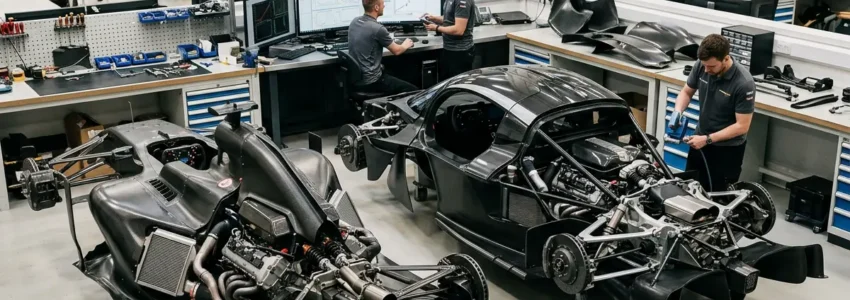
Paddle-shift gearboxes, hybrid systems, advanced aerodynamics, carbon fibre structures and energy recovery technologies all spent years being developed under Formula 1’s intense engineering environment before finding their way into production vehicles.
What makes Formula 1 particularly interesting is that it no longer functions purely as motorsport. It has become one of the automotive industry’s most advanced research and development laboratories.
The performance figures attract the attention. The engineering transfer behind them is arguably the more important story.
Formula 1 Technology Became A Materials Laboratory
Modern Formula 1 cars are built using materials and manufacturing techniques that would have seemed excessive in road cars only a couple of decades ago.
Carbon fibre now forms the structural foundation of every Formula 1 chassis because it delivers exceptional strength while remaining extremely lightweight. Titanium is widely used throughout suspension systems and fasteners, while advanced alloys help manage the enormous heat generated by modern hybrid powertrains.
Many of these same materials now appear throughout high-performance road cars.
Manufacturers such as McLaren, Ferrari and Aston Martin have all embraced carbon fibre monocoque construction within their flagship vehicles, not simply because it sounds impressive, but because reducing weight remains one of the most effective ways to improve performance, efficiency and handling simultaneously.
Why Lightweight Engineering Matters
Weight reduction affects almost every aspect of vehicle performance.
Lighter vehicles require less braking force, improve acceleration, reduce tyre wear and place less strain on suspension systems. In electric vehicles, reducing weight also helps extend range and improve efficiency.
This is one reason lightweight engineering has become increasingly important across the wider automotive industry, particularly as hybrid and electric powertrains introduce additional battery weight.
Producing lightweight structures consistently, however, introduces manufacturing challenges of its own. Carbon fibre components, specialist alloys and complex assemblies all require extremely precise manufacturing and inspection processes.
Formula 1 accelerated many of those developments because performance gains were measured in milliseconds rather than percentages.
Hybrid Systems Arrived Earlier Than Most People Realise
When Formula 1 introduced Kinetic Energy Recovery Systems (KERS) in 2009, many people viewed the technology as an unusual motorsport experiment.
In reality, it became an early demonstration of how hybrid performance systems would eventually evolve throughout the automotive industry.
Modern Formula 1 power units now recover energy from braking and exhaust heat before redeploying it to improve performance and efficiency. Although road cars operate under very different conditions, the underlying engineering principles remain remarkably similar.
Vehicles such as the Ferrari SF90 Stradale, McLaren P1 and Porsche 918 Spyder all demonstrated how hybrid systems could enhance performance rather than simply reduce emissions.
Even mainstream manufacturers now use increasingly sophisticated energy recovery systems to improve fuel economy and drivability. The influence of Formula 1 technology is no longer limited to supercars.
Formula 1 Technology Changed Vehicle Aerodynamics
Aerodynamics has become one of the defining engineering battlegrounds within modern automotive development.
In Formula 1, airflow management influences everything from cornering grip to cooling performance and tyre behaviour. Teams spend enormous amounts of time using Computational Fluid Dynamics (CFD), wind tunnel testing and simulation software to gain even the smallest aerodynamic advantage.
Those same principles increasingly influence road cars.
Active aerodynamic systems now appear on many performance vehicles, adjusting airflow depending on speed, braking or cornering conditions. Cooling management has also become far more sophisticated as manufacturers balance aerodynamic efficiency with the thermal demands created by hybrid systems and increasingly powerful engines.

Aerodynamics Now Influence Efficiency As Much As Speed
One of the most important shifts within modern automotive engineering is that aerodynamics are no longer purely about top speed.
Reducing drag improves efficiency, extends EV range and lowers fuel consumption. Even relatively small aerodynamic improvements can produce meaningful gains when applied across large production volumes.
This is why technologies originally refined within Formula 1 often become relevant far beyond motorsport.
What begins as a performance advantage on the racetrack frequently evolves into a commercial engineering advantage for production vehicles.
We explored a similar shift in our recent article examining what today’s modern hypercars reveal about manufacturing, which highlighted how advanced engineering and production capability increasingly shape the future of automotive development.
Formula 1 Technology Also Changed Manufacturing
The transfer of Formula 1 technology into road cars extends far beyond visible features or performance systems.
Many of the manufacturing methods used throughout high-performance automotive engineering were heavily influenced by motorsport development.
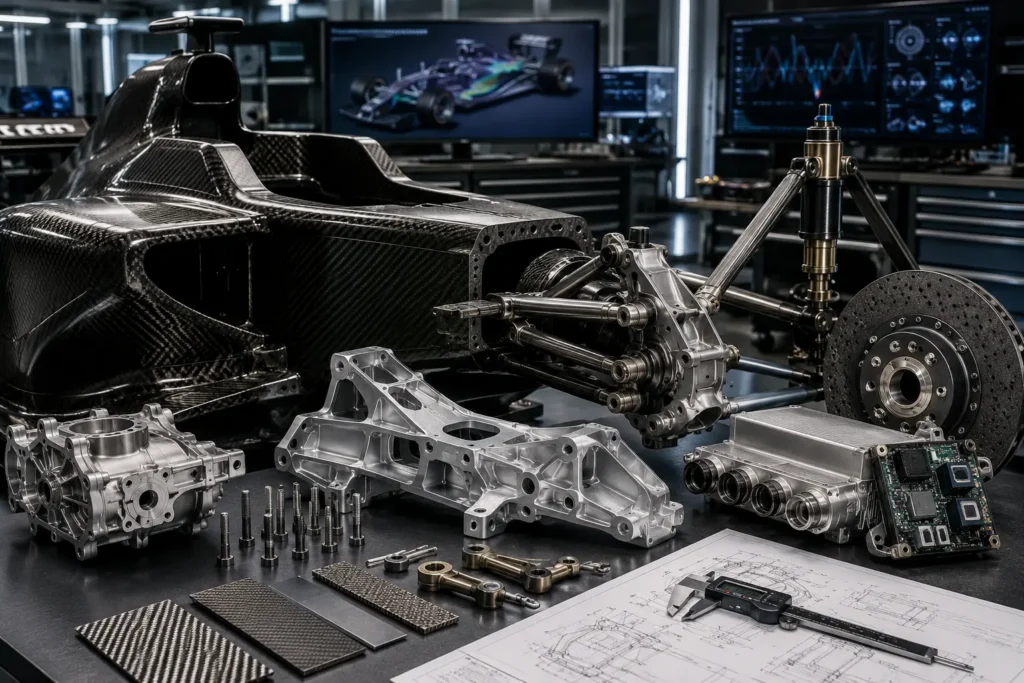
Rapid prototyping, advanced simulation, precision machining and composite manufacturing all became more sophisticated because Formula 1 teams demanded faster development cycles and increasingly precise production capability.
Precision Manufacturing Became Critical
Modern Formula 1 components operate under enormous mechanical and thermal loads. Even small manufacturing inconsistencies can affect reliability, aerodynamics or performance.
As a result, motorsport accelerated the adoption of extremely accurate manufacturing processes, including advanced CNC machining, waterjet cutting, metrology systems and digital inspection workflows.
Those same standards increasingly appear throughout sectors where precision and repeatability matter equally, including aerospace, defence and specialist automotive manufacturing.
PRV Engineering operates within industries where these requirements are often standard rather than exceptional, particularly when working with complex materials, tight tolerances and high-spec engineering applications.
Formula 1 Technology Is Quietly Influencing Electric Vehicles
One of the more interesting developments in recent years is how Formula 1 technology has started influencing electric vehicle engineering as well.
Battery cooling, thermal management and energy efficiency have become critical engineering priorities throughout EV development. Formula 1 teams have spent years refining ways to manage temperature, energy deployment and system efficiency under extreme conditions.
Many of those lessons are now highly relevant to road-going electric vehicles.
The overlap is becoming increasingly visible as manufacturers attempt to improve battery performance, charging efficiency and vehicle range without dramatically increasing weight.
Thermal Management Is Becoming Increasingly Important
Heat management now influences everything from battery longevity to charging performance and power delivery.
Modern engineering increasingly depends on controlling heat efficiently across motors, batteries, electronics and structural components. This challenge affects both Formula 1 teams and road car manufacturers, albeit at very different scales.
Manufacturing processes also play an important role here.
Certain materials and components require cutting methods that avoid introducing additional heat into the material itself. Processes such as hydro-abrasive waterjet cutting are often used where preserving material integrity is important because they avoid creating a heat-affected zone during processing.
As vehicles become more complex, the relationship between engineering performance and manufacturing precision continues to grow stronger.
Formula 1 Engineering Is Reaching More Cars Than Ever Before
There was once a clear separation between motorsport engineering and production vehicles.
That gap is shrinking.
Advanced driver displays, hybrid systems, lightweight materials, active suspension technologies and increasingly sophisticated software systems are appearing across vehicles at almost every price point.
The pace of technology transfer is also accelerating because digital simulation, manufacturing capability and supply chain integration have improved dramatically over the last decade.
From Motorsport To Mainstream Manufacturing
What starts in Formula 1 rarely stays there permanently.
Many technologies initially developed for competitive advantage eventually become commercially valuable elsewhere. Carbon fibre, paddle-shift systems and energy recovery technology all followed similar paths from specialist motorsport applications into wider automotive production.
We explored a similar manufacturing shift in our article examining the world’s first single-cast EV chassis, which highlighted how rapidly vehicle manufacturing methods continue evolving.
Formula 1 remains one of the few environments where engineers can pursue performance with relatively few compromises. The technologies developed there inevitably influence the wider industry over time.
More Than Just Motorsport
Formula 1 is often described as the pinnacle of motorsport. Increasingly, it also represents the forefront of automotive engineering development.
The influence of Formula 1 technology now extends far beyond racing itself. Materials, hybrid systems, aerodynamics, thermal management and manufacturing techniques developed under competitive pressure continue shaping the vehicles people drive every day.
Most drivers will never own a Formula 1 car. Many already use technology that exists because Formula 1 engineers spent decades trying to make racing cars faster, lighter and more efficient.
That transfer of engineering knowledge may ultimately become one of the sport’s most significant achievements.
Recent Comments