Why Carmakers Are Replacing Hundreds Of Parts With Just One
There’s no denying modern cars are becoming increasingly complex. New vehicles contain thousands of components, miles of wiring, advanced electronics, structural reinforcements, safety systems and manufacturing processes that would have seemed unimaginable only a few decades ago.
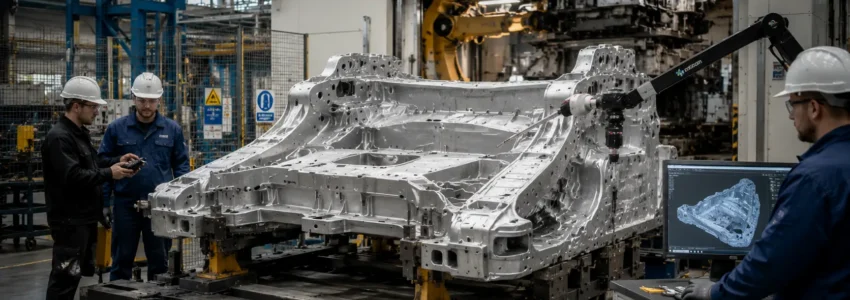
Yet some of the world’s largest automotive manufacturers are pursuing a surprisingly simple idea. Instead of building a vehicle structure from hundreds of individual components, why not manufacture large sections of it as a single part?
That question sits at the heart of one of the most significant developments in automotive engineering today: gigacasting.
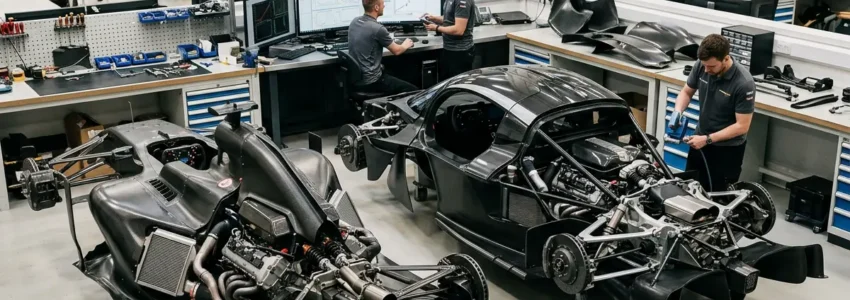
From The Racetrack To The Road: How Formula 1 Technology Shapes Modern Cars
For most people, Formula 1 exists in a completely separate world from everyday driving.
The cars are faster, lower, louder and engineered to extremes that appear almost impossible to apply to a production vehicle. Yet many of the technologies now considered normal in modern road cars either originated in Formula 1 or were accelerated by it.
Paddle-shift gearboxes, hybrid systems, advanced aerodynamics, carbon fibre structures and energy recovery technologies all spent years being developed under Formula 1’s intense engineering environment before finding their way into production vehicles.
What makes Formula 1 particularly interesting is that it no longer functions purely as motorsport. It has become one of the automotive industry’s most advanced research and development laboratories.
The performance figures attract the attention. The engineering transfer behind them is arguably the more important story.
From the Bugatti Tourbillon to the McLaren W1: The Manufacturing Challenge Behind Modern Hypercars
Modern hypercars have become some of the most ambitious engineering projects ever attempted.
When Bugatti unveiled the Tourbillon, attention naturally focused on its naturally aspirated 8.3-litre V16 and 1,800-horsepower hybrid powertrain. Ferrari’s new F80 and McLaren’s W1 generated similar excitement, each showcasing a different approach to performance, electrification and lightweight design.
What makes these cars fascinating isn’t simply how fast they are.
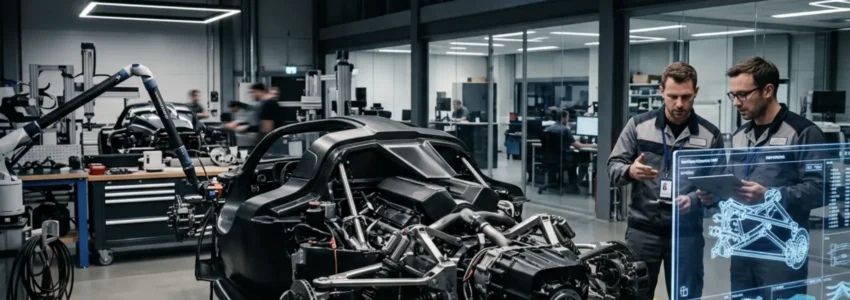
Modern hypercars reveal how dramatically manufacturing has evolved. Advanced materials, hybrid systems, aerodynamic complexity and increasingly demanding tolerances are forcing engineers to solve challenges that barely existed a decade ago.
The performance figures grab the headlines. The manufacturing behind them is just as impressive.
How China Is Reshaping Aluminium Automotive Engineering With a One-Piece EV Frame
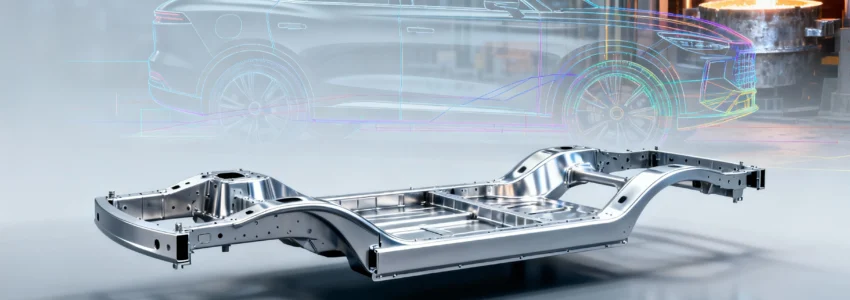
China has just taken a major leap forward in aluminium automotive engineering. Hantek, a specialist in lightweight aluminium chassis systems, has developed the world’s first true one-piece aluminium EV frame; a breakthrough already making waves across the global automotive industry.
This innovation, recently highlighted by Interesting Engineering in 2025, is not simply another incremental upgrade. It fundamentally changes how electric vehicles can be designed, manufactured, strengthened and scaled. (Source: Interesting Engineering)
The technology debuts in BYD’s flagship SUV, the Yangwang U8L, marking a new chapter in smart automotive design—and giving China a significant engineering advantage.
Are Modular Kit Cars the Future of Automotive Engineering?
The idea of kit cars isn’t new, but how it’s being reimagined by companies like Toyota might just be revolutionary.
Once a niche favourite among hobbyists and car lovers, car building kits are now stepping into the spotlight. Toyota is taking the concept mainstream with a bold new idea: modular car kits that buyers can assemble themselves; either at home or in local workshops. It’s a blend of personalisation, sustainability, and next-gen engineering.
And this isn’t just about style or savings. It’s about rethinking production itself.
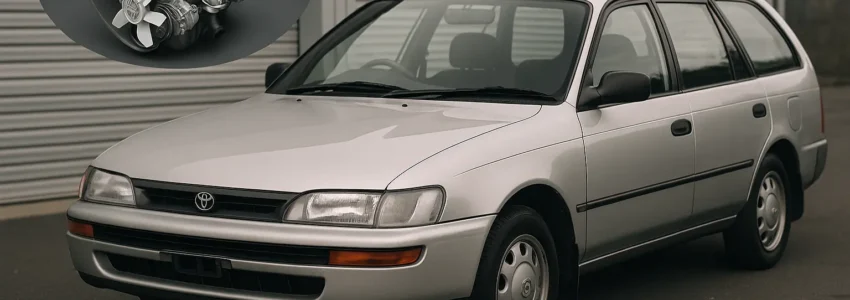
Automotive Engineering at Its Best: The 1-Million Mile Corolla
In a world where planned obsolescence often wins out over durability, one humble Toyota Corolla has defied the odds—and the odometer. This is a story of exceptional automotive engineering, maintenance, and longevity.
The realm of material science is constantly evolving, playing a crucial role in the future of industries like aerospace engineering and automotive manufacturing. From the development of new materials to the improvement of existing ones, material science has contributed significantly to advancements in various industries such as healthcare, energy, transportation, and electronics. In this article, we will explore some of the key innovations in material science that are driving future growth.
In the intricate machinery of the UK’s engineering sector, Automotive Powder Coating emerges as a vital cog, integral to the industry’s functionality and success. This innovative process has rapidly become a cornerstone in the manufacturing and finishing of automotive components, playing a pivotal role in enhancing both the performance and aesthetics of vehicles.
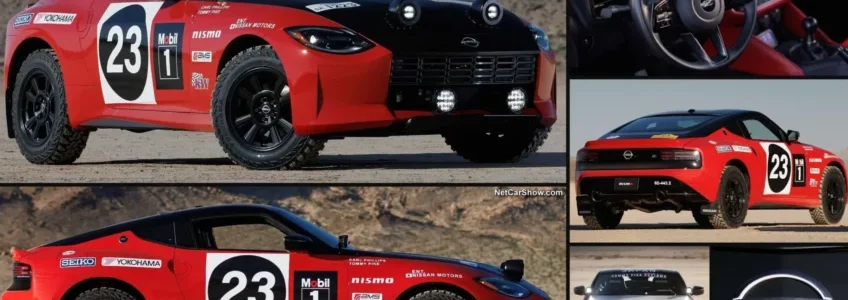
At PRV Engineering, we appreciate the intricate blend of engineering prowess and historical reverence in automotive design. The Nissan Rally Z Tribute stands as a prime example of this fusion, offering an exhilarating nod to the iconic 1971 Safari Rally champion. As engineers and car enthusiasts ourselves, we can’t help but admire the meticulous attention to detail and innovative engineering that has gone into creating this modern-day rally legend.
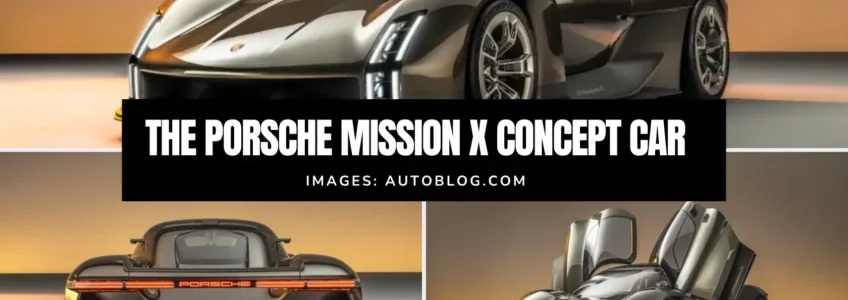
Porsche’s recent unveiling of the Mission X concept hypercar has sent ripples throughout the automotive world. This striking electric supercar concept serves as a testament to Porsche’s vision for the future. At first glance, it’s a jaw-dropping spectacle; delve a little deeper, and the details are simply out of this world. Let’s dive in!
The Cheetah: More Than Just a Mascot
Upon closer inspection, a sprinting cheetah emblem becomes apparent near the rear wheels. Porsche’s decision to incorporate this swift, lightweight animal serves as an emblematic nod to the design ethos of this incredible hypercar. It’s a continuation of an endearing Porsche design tradition – infusing models with animal symbols. Remember the Vision 357’s dinosaur, a homage to the past, and the wild boar representing the race-ready Mission R?
Image Credit: autoblog.com
Motorsports Roots Run Deep
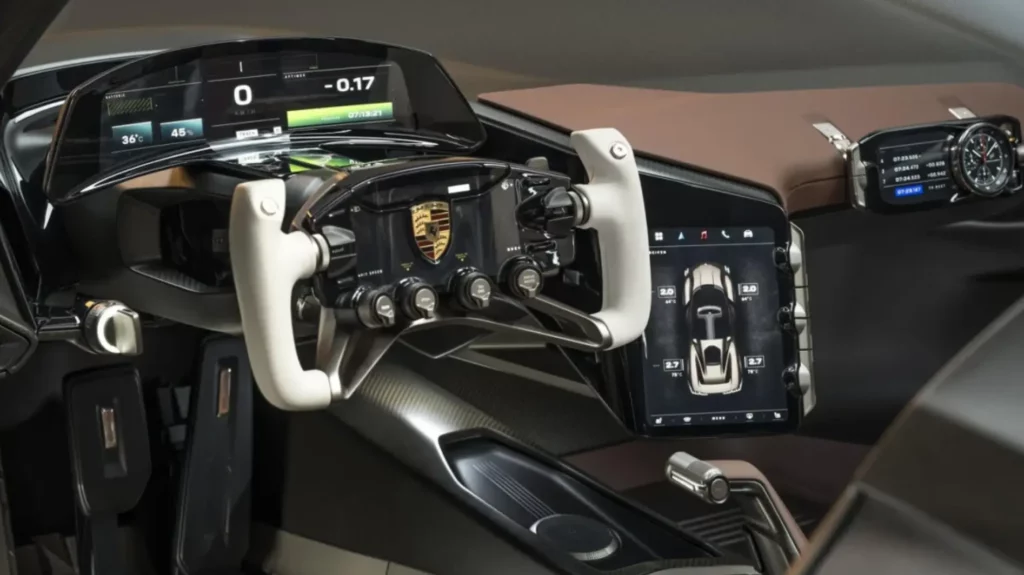
In every curve and corner, there’s a trace of motorsports. The Mission X’s design borrows heavily from iconic Porsche race cars, with cleverly incorporated tributes like the vertical headlights reminiscent of prototype hypercars. The “Daytona” window harks back to the classic Porsche 917. Additionally, the inclusion of a passenger-side screen and clock, which can even be detached, screams ‘rally’ to any enthusiast.
Unconventional Braking at the Driver’s Fingertips
The steering wheel’s paddles have left many guessing. While most associated these with shifting, the real functionality was a delightful surprise. While the left paddle adjusts regenerative braking, the right one fine-tunes the brake balance. An intriguing and innovative feature that offers the driver unparalleled control.
Though the Mission X isn’t a full-fledged race car, it’s undeniably track-ready. Its luxurious metallic grey finish subtly contrasts its race ambitions. Thoughtful design elements like infotainment buttons crafted for ease of use, even with racing gloves on, and the bespoke seats – essentially modular pads that can be customised – reiterate Porsche’s attention to detail.
One might question the mid-engine design of an electric car. However, Porsche’s rationale is simple. The car’s battery pack sits snugly behind the seats, somewhat shaping its profile. Plus, let’s admit it, the mid-engine silhouette is a real classic.
What Lies Ahead For Porsche’s Hypercar Future?
While Porsche CEO, Oliver Blume, has hinted at the potential of a new hypercar, it won’t be before the decade’s end. Challenges with current battery technology remain a hurdle. However, the Mission X, not intended for sale currently, undoubtedly paints a tantalising picture of what the future might hold.
Adorning a unique Rocket Metallic with satin carbon fibre touches, the Mission X mirrors the dimensions of past legends like the Carrera GT and 918 Spyder. A blend of historic and contemporary design cues can be found, from the iconic illuminated DRLs to the futuristic lattice-supported LED taillights.
The car’s interior beckons speed enthusiasts, with its plush Andalusia Brown and Kalahari Gray upholstery, and the state-of-the-art “e-core” battery setup promises mid-engined dynamics.
Image Credit: autoblog.com
The Porsche Mission X: Potential Record Breaker
Though specifics regarding drivetrain and output were conspicuously absent at the reveal, one thing’s for sure – if it goes into production, Porsche aims for the Mission X to be a Nürburgring record-breaker with unrivalled charging capabilities. And while its commercial future remains undecided, we’re certain that this hypercar concept has already garnered a list of eager, deep-pocketed enthusiasts.
If the street-legal coupe goes to production, it would aim to “be the fastest road-legal vehicle around the Nürburgring Nordschleife; have a power-to-weight ratio of roughly one hp per 2.2 lbs.; achieve downforce values that are well in excess of those delivered by the current 911 GT3 RS; offer significantly improved charging performance with its 900-volt system architecture and charge roughly twice as quickly as the current Porsche frontrunner, the Taycan Turbo S.”
In the ever-evolving landscape of automotive engineering, Porsche’s Mission X hypercar concept stands as a beacon of innovation, performance, and design. A marvel that has undoubtedly set the stage for an electrifying future.





Recent Comments