

Redefining Amphibious All-Terrain Vehicle Design in India
In the world of amphibious all-terrain vehicle design, innovation often begins where ordinary engineering stops. India’s newly developed ATOR N1200 is a striking example of a homegrown machine built to navigate floodwaters, mud, snow, and rugged landscapes with equal confidence.
Developed by JSW Gecko Motors, part of the JSW Group, the ATOR N1200 represents more than just a mobility solution. It’s a symbol of India’s growing capability to engineer advanced defence and rescue vehicles using indigenous fabrication and materials expertise.
Although PRV Engineering is not directly involved in the project, vehicles like the ATOR N1200 demonstrate how high-precision fabrication, surface finishing, and component engineering play a defining role in the success of modern defence mobility platforms.
An Amphibious All-Terrain Vehicle Built for Extremes
The ATOR N1200 Amphibious All-Terrain Vehicle was recently deployed by the Indian Army in flood-hit areas of Punjab, where it assisted in rescue and relief operations across submerged villages. Designed to operate both on land and water, the vehicle’s versatility makes it ideal for humanitarian, disaster-response, and military logistics roles.
According to multiple verified sources, here are some specifications of the ATOR N1200:
- Is powered by a 55 hp diesel engine producing approximately 190 Nm of torque.
- Achieves speeds of roughly 40 km/h on land and 6 km/h in water.
- Carries up to nine occupants (one driver and eight passengers).
- Can handle payloads of around 1,200 kg and tow up to 2,350 kg.
- Operates across an extreme temperature range of –40 °C to +45 °C.
Its structure features heavy-duty wheels, a sealed hull, and central tyre inflation for flotation and traction. The amphibious capability means it can drive directly into a river or flooded area without preparation which is a critical feature for both civil defence and military engineering operations.
Engineering DNA and Indigenous Design
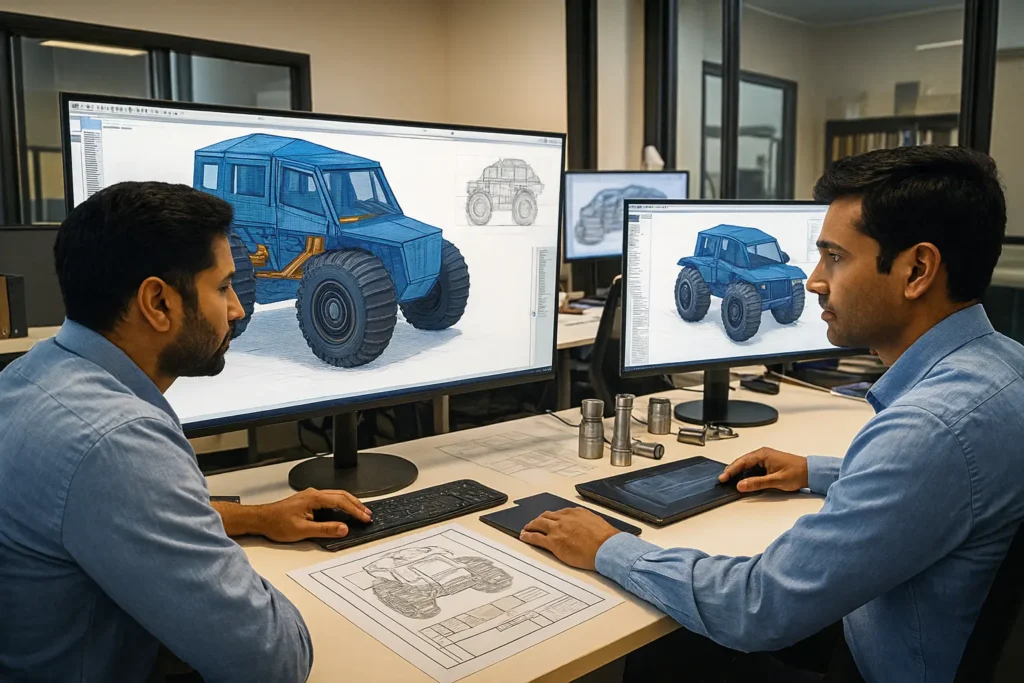
The vehicle’s lineage reportedly draws inspiration from the SHERP N1200, a globally recognised amphibious platform. Several media outlets describe the ATOR as an adapted or localised variant, though this has not been independently verified by defence officials.
What is confirmed is that the vehicle was manufactured in India, with approximately 60 per cent indigenous content according to statements by JSW Gecko Motors. That level of localisation aligns with the government’s “Make in India” initiative, aimed at strengthening the domestic defence and automotive supply chain.
JSW Gecko has also indicated that the ATOR’s body panels and chassis components incorporate corrosion-resistant coatings and zinc-treated materials, essential for amphibious vehicles that operate in water and high humidity. While some reports suggest the platform could accommodate Kevlar or composite armour upgrades, this remains unverified at present.
Precision Fabrication and Finishing in Military Vehicles
Building an amphibious all-terrain vehicle demands a high level of engineering integration — mechanical, electrical, and material science all converge.
- Fabrication: The chassis must combine strength and buoyancy, often requiring precision-cut steel sections, welded under strict quality control to withstand torque and vibration.
- Surface finishing: Amphibious vehicles face unique corrosion challenges. Techniques such as powder coating, electroplating, and anodic protection extend service life in moisture-rich environments.
- Electrical systems: In wet conditions, the electrical and control systems — including busbars, connectors, and power modules — must be fully sealed and tested to military standards.
- Maintenance efficiency: Modular design enables quick part replacement and field servicing, critical during emergencies.
These are the same disciplines PRV Engineering specialises in; from custom fabrication and coating to precision machining for the automotive, defence, and heavy engineering sectors. A platform like the ATOR N1200 Amphibious All-Terrain Vehicle underlines how these foundational capabilities translate directly into real-world resilience.
Deployment and Real-World Testing
During the 2025 monsoon floods in Punjab, the Indian Army deployed multiple ATOR N1200 units for relief and rescue operations. According to The Indian Express and Moneycontrol, the vehicles successfully navigated flooded roads and deep water channels, rescuing stranded civilians and transporting essential supplies.
Footage released by the Army showed the ATOR N1200 manoeuvring through submerged fields and villages, reinforcing its role as a rapid-response tool for both disaster and tactical missions.
While no long-term performance data is publicly available, early operational use appears to confirm that the design meets and (likely) exceeds expectations for an indigenous amphibious platform.
The Role of Indigenous Fabrication in Amphibious All-Terrain Vehicle Design
India’s push for domestic defence manufacturing is reshaping its industrial ecosystem. With roughly 60% local content, the ATOR N1200 stands as a symbol of that shift. Local fabrication, machining, coating, and assembly reduce dependence on imports and open new opportunities for smaller precision suppliers and component specialists.
Projects like this demonstrate the value of engineering collaboration; from heavy fabrication to surface finishing and systems integration. As India develops more indigenous land and amphibious vehicles, supply-chain partners with advanced machining, plating, and structural fabrication capabilities will become increasingly critical.
What Comes Next
Though the ATOR N1200 Amphibious All-Terrain Vehicle currently serves primarily in humanitarian and logistics roles, several sources suggest that future variants could include upgraded protection, enhanced engines, or hybrid propulsion systems for military applications. These possibilities remain speculative until verified by official defence publications, but they reflect the growing ambition within India’s mobility-engineering sector.
For engineering and fabrication specialists worldwide, the ATOR N1200 is more than just a new vehicle. it’s a reminder of how advanced design, precision manufacturing, and applied materials science can reshape the limits of mobility. Here’s a quick look at another interesting vehicle primarily for the defence sector, and what’s happening in the world of materials engineering in the automotive sector.
Closing Thoughts: Amphibious All-Terrain Vehicle Engineering Innovation
The ATOR N1200 proves that complex mobility platforms no longer need to rely solely on imported technology. Its successful deployment shows that engineering precision and robust fabrication are at the heart of every breakthrough in defence and automotive innovation.
At PRV Engineering, we recognise that same commitment in every project we undertake; from custom fabrication and busbar systems to powder coating and precision components for the automotive and defence sectors. The ATOR N1200 Amphibious All-Terrain Vehicle is a timely reminder that the future of mobility, on land and water alike, will be engineered through the same principles: quality, precision, and adaptability.
Recent Comments