
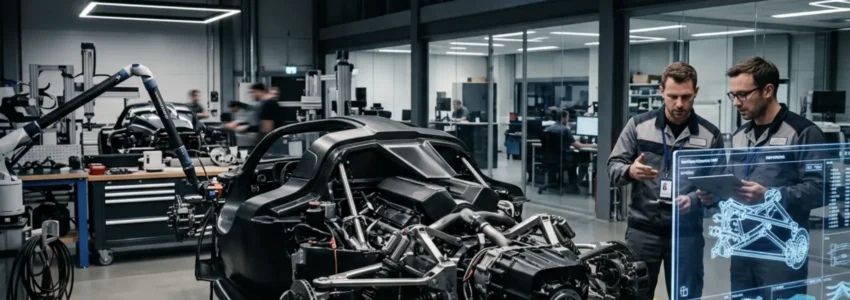
From the Bugatti Tourbillon to the McLaren W1: The Manufacturing Challenge Behind Modern Hypercars
Modern hypercars have become some of the most ambitious engineering projects ever attempted.
When Bugatti unveiled the Tourbillon, attention naturally focused on its naturally aspirated 8.3-litre V16 and 1,800-horsepower hybrid powertrain. Ferrari’s new F80 and McLaren’s W1 generated similar excitement, each showcasing a different approach to performance, electrification and lightweight design.
What makes these cars fascinating isn’t simply how fast they are.
Modern hypercars reveal how dramatically manufacturing has evolved. Advanced materials, hybrid systems, aerodynamic complexity and increasingly demanding tolerances are forcing engineers to solve challenges that barely existed a decade ago.
The performance figures grab the headlines. The manufacturing behind them is just as impressive.
Modern Hypercars Are Solving Different Problems
For decades, building a faster car followed a relatively predictable formula. More power, less weight, better aerodynamics and improved grip generally produced the desired result. While those principles still apply, modern hypercars operate within a far more complicated engineering environment.
Manufacturers must balance electrification, emissions regulations, safety requirements, thermal management and increasingly sophisticated electronics while continuing to deliver the performance expected from a flagship vehicle. The challenge is no longer confined to engines and chassis development. Every system influences another.
The Bugatti Tourbillon combines a naturally aspirated V16 with a sophisticated hybrid system. Ferrari’s F80 integrates technology influenced by the company’s endurance racing programme, while the McLaren W1 continues the brand’s pursuit of lightweight performance through advanced aerodynamics and carbon fibre construction.
Each vehicle represents a different engineering philosophy, yet all three highlight the same reality: designing modern hypercars is difficult, but manufacturing them consistently may be even harder.
The Materials Inside Modern Hypercars Would Have Seemed Exotic Twenty Years Ago
Many of the materials now found within modern hypercars were once associated primarily with aerospace, motorsport and specialist engineering programmes.
Carbon fibre forms the structural backbone of many high-performance vehicles thanks to its exceptional strength-to-weight ratio. Advanced aluminium alloys remain essential to chassis development, while specialist steels continue to play important roles where durability and crash performance are critical.
These materials contribute significantly to performance, but they also create manufacturing challenges. Production methods become more specialised, quality control requirements become stricter and tolerances become increasingly important.
Why Titanium Remains Difficult To Manufacture
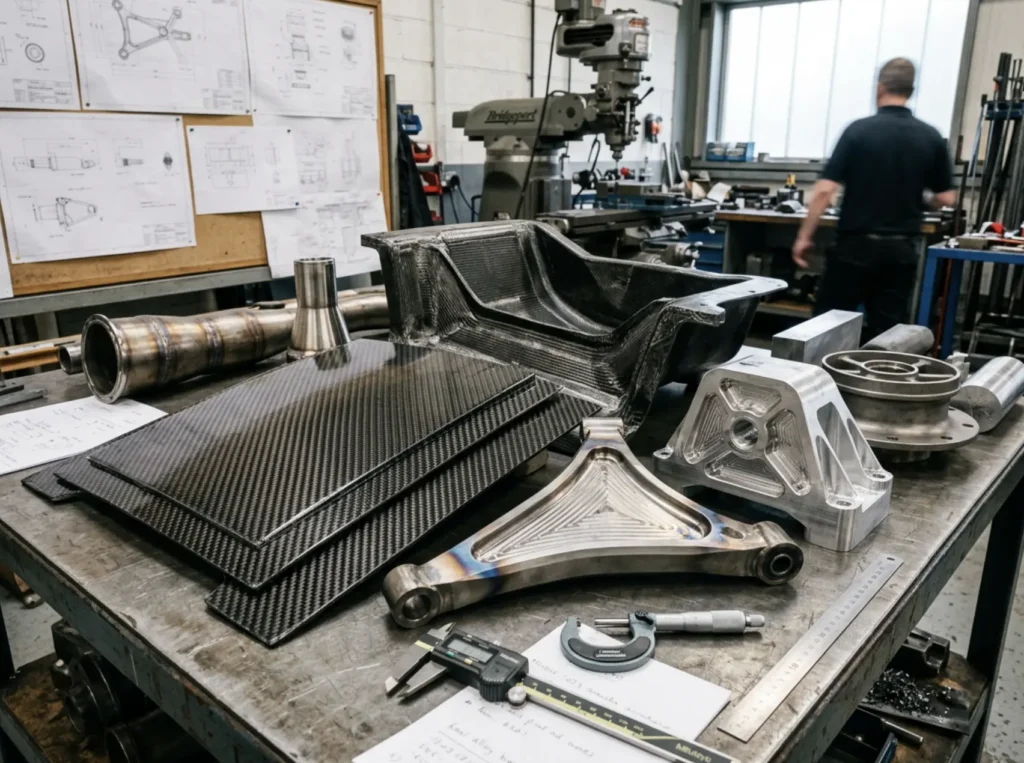
Titanium has become a favourite material among hypercar manufacturers because it combines low weight with impressive strength and excellent resistance to heat. However, those advantages come at a cost.
Titanium remains one of the more challenging engineering materials to process accurately and efficiently. Traditional machining operations require careful management of heat generation, tool wear and cutting parameters, while many manufacturers turn to hydro-abrasive waterjet cutting to avoid introducing heat into the material. Achieving consistent results still depends on specialist expertise, precise process control and a detailed understanding of titanium’s unique characteristics.
As modern hypercars continue to chase marginal gains in weight reduction and performance, materials such as titanium are becoming increasingly common. The manufacturing expertise required to work with them is becoming equally valuable.
Why Precision Matters In Modern Hypercars
One characteristic shared by almost all modern hypercars is an extraordinary dependence on manufacturing accuracy. The days when performance could be achieved through raw engine output alone are long gone. Today’s vehicles rely on aerodynamic efficiency, thermal management and tightly integrated electronic systems, all of which place increasing demands on production tolerances.
Performance figures often dominate discussions around hypercars, yet many of those figures depend on manufacturing precision long before a vehicle turns a wheel.
Aerodynamic surfaces must be positioned exactly as intended. Suspension components must operate within extremely tight tolerances. Cooling systems rely on carefully engineered airflow paths capable of managing the enormous heat generated by modern hybrid powertrains.
Even seemingly minor manufacturing inconsistencies can influence performance elsewhere. A component that remains technically within tolerance may still affect assembly quality, cooling efficiency or aerodynamic behaviour.
This is one reason why advanced manufacturing processes remain so important throughout modern engineering. Technologies like CNC machining continue to play a critical role in producing components where repeatability, accuracy and consistency are essential.
For manufacturers of modern hypercars, precision is no longer simply a manufacturing objective. It has become part of the performance equation itself.
Modern Hypercars Depend On Manufacturing As Much As Engineering
There was a time when manufacturing largely followed engineering. Designers developed components and production teams determined how to build them.
That distinction is becoming increasingly blurred.
Modern hypercars are developed using sophisticated simulation tools capable of modelling airflow, structural loads and thermal behaviour long before physical prototypes exist. Manufacturing considerations now influence design decisions from the earliest stages of development because engineers understand that production capability can ultimately determine whether an idea succeeds or fails.
When Manufacturing Shapes Design Decisions
What makes modern hypercars particularly interesting is that manufacturing capability increasingly influences engineering decisions from the beginning of a project. Engineers must consider not only how a component performs, but also whether it can be produced repeatedly and to the required standard.
A design that performs perfectly in simulation may still require modification if it proves difficult to manufacture consistently. Production constraints, material behaviour and quality control requirements all influence the final outcome.
This closer relationship between engineering and manufacturing is becoming common across industries where complexity, performance and reliability matter equally.
Why Aerospace Thinking Continues To Influence Modern Hypercars
The overlap between aerospace engineering and modern hypercars grows stronger with every new generation.
Lightweight structures, advanced composite materials and simulation-led development are now standard practice across much of the automotive industry. Techniques once reserved for aircraft programmes increasingly appear in road cars capable of being driven to the supermarket.
The similarities extend beyond materials and design methodologies.
Traceability Is Becoming Increasingly Important
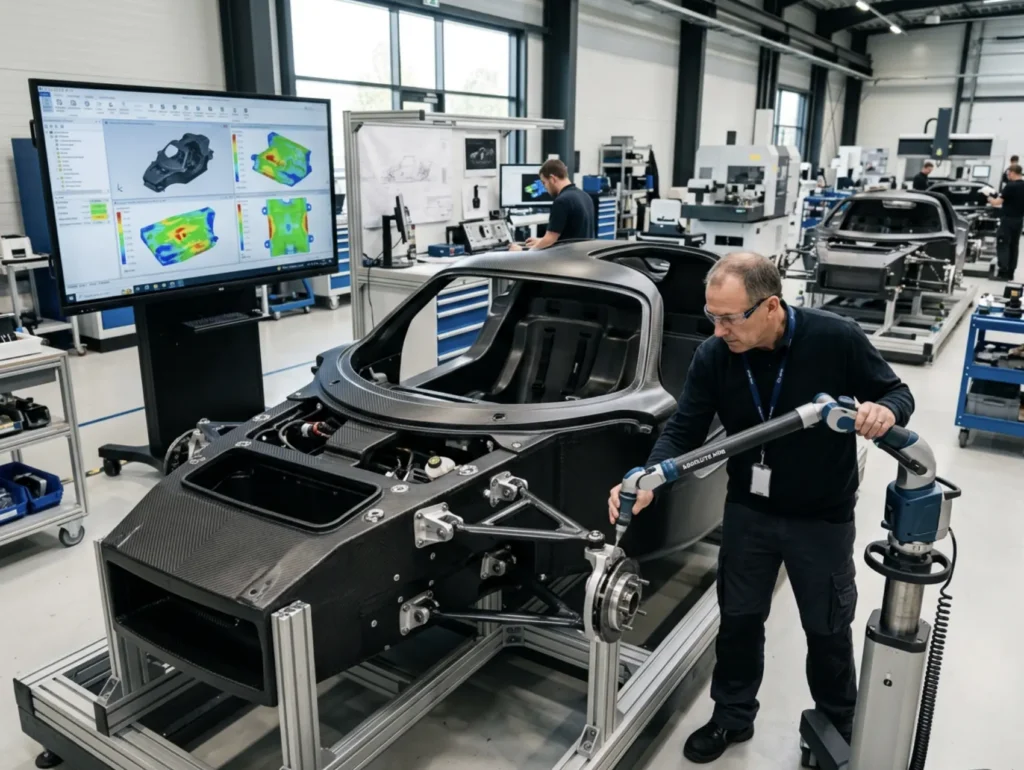
As manufacturers work with specialist alloys, advanced composites and increasingly complex supply chains, understanding the origin and certification of materials becomes more important.
The same principle applies throughout aerospace, defence and specialist industrial engineering sectors. Confidence in a finished component often depends upon confidence in the materials, processes and documentation behind it.
We explored this subject in greater detail in our article on why material traceability is becoming critical in engineering projects, and the trend is becoming increasingly visible throughout automotive manufacturing as well.
Many of the quality assurance processes supporting modern hypercars would look entirely familiar to engineers working within aerospace and defence environments.
The Influence Of Modern Hypercars Extends Far Beyond The Automotive Sector
It is tempting to view hypercars as engineering curiosities built in tiny numbers for a very small audience.
History suggests otherwise. Many technologies that first appeared in specialist performance vehicles eventually found their way into mainstream automotive manufacturing.
Lightweight materials, advanced electronics, active aerodynamics and sophisticated production techniques all followed a similar path. The same process continues today.
From Limited Production To Industry Adoption
Manufacturers across the automotive sector continue exploring ways to reduce complexity while improving efficiency and structural performance. Large-scale casting technologies provide one example, allowing multiple components to be replaced by a single structural part.
We explored one such development in our article examining the world’s first single-cast EV chassis, which highlighted how manufacturing innovation is reshaping vehicle design.
Although these developments differ from the technologies found within modern hypercars, the objective remains remarkably similar. Better products increasingly depend upon better manufacturing.
The influence of modern hypercars often extends far beyond the manufacturers that build them. Materials, production techniques and engineering methodologies developed for limited-production vehicles frequently find their way into wider automotive and industrial applications over time.
A Different Kind Of Competition
The latest generation of modern hypercars will undoubtedly be remembered for extraordinary performance figures.
The Bugatti Tourbillon’s naturally aspirated V16 will dominate conversations for years. Ferrari’s F80 will be associated with racing-derived hybrid technology. The McLaren W1 will continue one of the most influential bloodlines in modern automotive history. Yet the most significant competition may be taking place somewhere else entirely.
Modern hypercars increasingly represent a contest between manufacturing systems, material technologies and production capabilities as much as they do between engines and aerodynamic packages.
The extraordinary performance achieved by these vehicles begins long before a driver presses the accelerator pedal. It begins with engineers, manufacturing specialists and materials experts solving problems that rarely appear on specification sheets.
That achievement may never generate as many headlines as horsepower figures or top-speed records. For anyone interested in engineering, it is arguably the most impressive accomplishment of all.
Recent Comments