
When Waterjet Cutting Services Are the Right Choice for Industrial Projects
Choosing the right cutting process is rarely about preference. It is about material behaviour, thickness, tolerances, finishing requirements, and downstream performance.
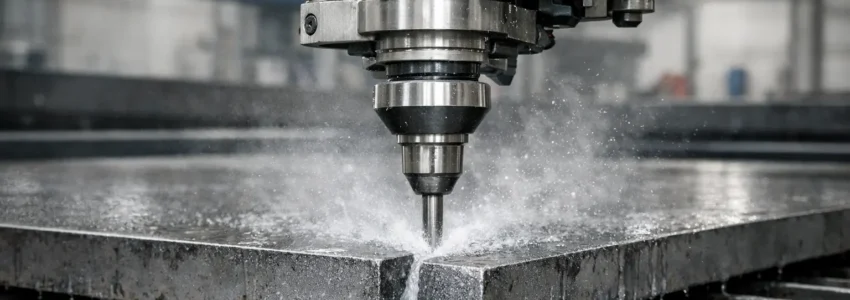
Waterjet cutting services are often selected when thermal cutting methods introduce risk. While laser and plasma systems have their place in modern manufacturing, hydro-abrasive waterjet cutting offers a fundamentally different approach; one that removes heat from the equation entirely.
Understanding when to choose waterjet cutting services over alternative methods can significantly influence cost, quality, and long-term performance.
What Makes Waterjet Cutting Services Fundamentally Different?
Waterjet cutting machines use a high-pressure stream of water mixed with abrasive material to cut through metal and other materials. Unlike laser or plasma systems, the process is cold.
There is:
- No heat-affected zone (HAZ)
- Zero thermal distortion
- No metallurgical hardening at the cut edge
Thermal cutting methods can alter microstructure, particularly in high-strength alloys. The concept of a heat-affected zone (HAZ) is well documented in materials engineering and directly influences fatigue resistance and weldability.
Because waterjet cutting services eliminate heat, material properties remain unchanged, a critical factor in aerospace, defence, and energy applications.
When Waterjet Cutting Services Outperform Laser Cutting
Laser cutting is efficient for thin materials and high-volume sheet work. However, limitations emerge when:
- Cutting thick plate
- Working with reflective materials
- Processing titanium or advanced alloys
- Preventing micro-cracking or edge hardening
Laser systems generate intense localised heat. For thin materials, this is manageable. For thicker or heat-sensitive alloys, distortion and structural changes can occur.
Waterjet cutting services excel in these scenarios because they cut mechanically, not thermally. Titanium, stainless steel, duplex alloys, and nickel-based materials can be processed without introducing residual stress.
This becomes particularly important where downstream machining or welding is required.
Why Waterjet Cutting Services Are Often Superior to Plasma for Precision Work
Plasma cutting is powerful and cost-effective for structural steel and heavy fabrication. It is fast and suitable for rougher tolerances. However, plasma cutting:
- Produces wider kerf widths
- Leaves larger heat-affected zones
- Often requires secondary finishing
Where edge quality, tight tolerances, and minimal post-processing are essential, waterjet cutting machines provide a cleaner result. Reduced rework can offset the marginally higher process cost.
For complex geometries or multi-material assemblies, hydro-abrasive waterjet cutting offers greater control.
Where Waterjet Cutting Services Deliver Maximum Value
Waterjet cutting services are particularly suited to:
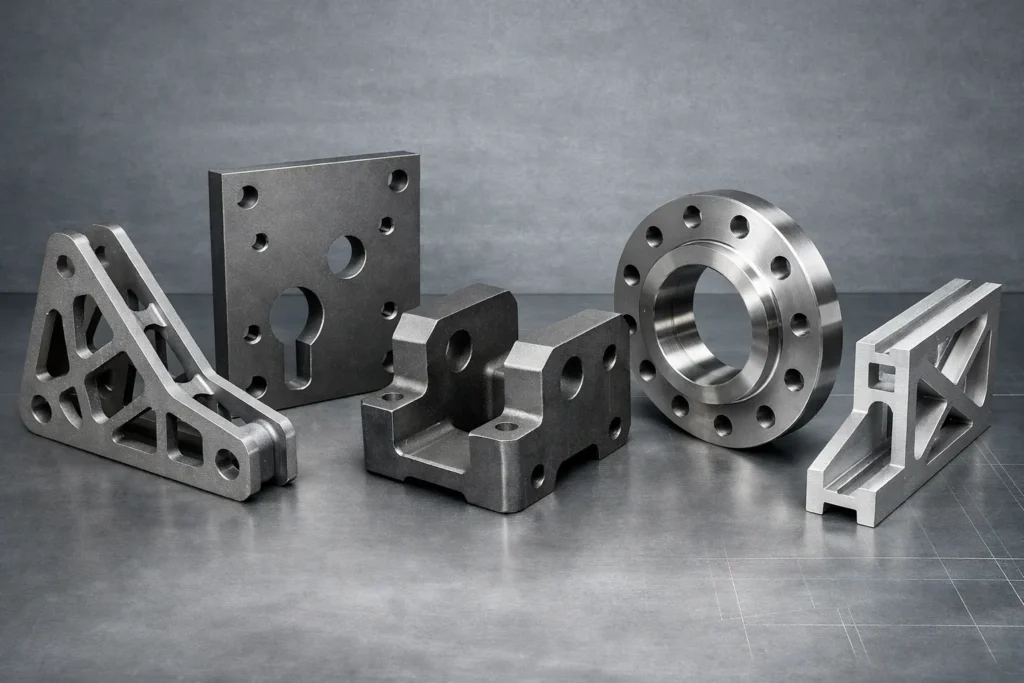
- Thick carbon and stainless steel plate
- Aluminium structural components
- Titanium and advanced aerospace alloys
- Defence-grade materials
- Composite and layered materials
- Complex nested geometries
Because hydro-abrasive waterjet cutting does not rely on heat, it can process materials that would otherwise distort or degrade under thermal stress.
This is especially relevant in sectors such as:
- Aerospace
- Defence
- Rail
- Oil and energy
- Heavy industrial fabrication
In these environments, maintaining material integrity is not optional but rather fundamental.
Demand in sectors such as defence and heavy industry continues to expand, particularly across Europe, where long-term manufacturing capability is receiving renewed investment. Read more in our recent article on Why Defence Manufacturing in Europe Is Quietly Scaling Again.
Why Waterjet Cutting Services Matter in the Wider UK Manufacturing Economy
Waterjet cutting does not operate in isolation. These machines sit within a manufacturing sector that remains a major contributor to the UK economy.
According to the Office for National Statistics, UK manufacturing contributes over £200 billion annually to national output, highlighting the scale and industrial significance of precision processing capabilities.
At this level of activity, even marginal improvements in material handling, dimensional control, and downstream finishing efficiency can have measurable commercial impact. Processes such as hydro-abrasive waterjet cutting support this by reducing distortion, preserving material properties, and limiting rework across complex supply chains.
The Commercial Reality: Cost vs Downstream Impact
When evaluating waterjet cutting services, buyers sometimes focus on headline cutting speed or hourly rates. A more accurate evaluation considers:
- Rework risk
- Distortion correction
- Secondary finishing
- Material waste
- Dimensional stability
Thermal processes can introduce hidden downstream costs if edges require machining, grinding, or corrective alignment.
Waterjet cutting often reduce cumulative project cost by preserving tolerances from the outset.
Hydro-Abrasive Waterjet Cutting at PRV Engineering
PRV Engineering provides hydro-abrasive waterjet cutting as part of a broader integrated engineering capability.
Because waterjet cutting services sit within a wider environment of machining, fabrication, finishing, and coating, projects can be managed holistically rather than as isolated operations. This broader integration aligns with the growing emphasis on end-to-end engineering capability in complex industrial work.
PRV’s wider engineering services portfolio supports this integration. This matters when:
- Tight tolerances must carry through to assembly
- Coating specifications follow immediately after cutting
- Materials such as titanium or advanced alloys are involved
- Documentation and compliance are essential
The value of waterjet cutting services increases when aligned with downstream engineering processes.
When Should You Choose Waterjet Cutting Services?
Hydro-abrasive waterjet cutting is typically the right choice when:
- Material integrity must remain unchanged
- Thick plate cutting is required
- Precision edge quality is critical
- Thermal distortion would compromise performance
- Advanced alloys are involved
- Secondary machining needs to be minimised
Laser and plasma systems remain effective in specific scenarios. The correct decision depends on project priorities. For engineering teams balancing material science, tolerances, and compliance, hydro-abrasive waterjet cutting offers a controlled and reliable solution.
Final Thoughts
In industrial manufacturing, cutting is rarely just cutting. It is the first stage of a longer engineering sequence.
Waterjet cutting machines provide a precision, heat-free method that protects material properties, reduces distortion, and supports downstream performance, particularly in complex or regulated sectors.
For projects where precision and material integrity matter as much as speed, hydro-abrasive waterjet cutting remains one of the most versatile and technically sound solutions available.
For further discussion around waterjet cutting services and project requirements, please contact PRV Engineering directly.
Recent Comments