
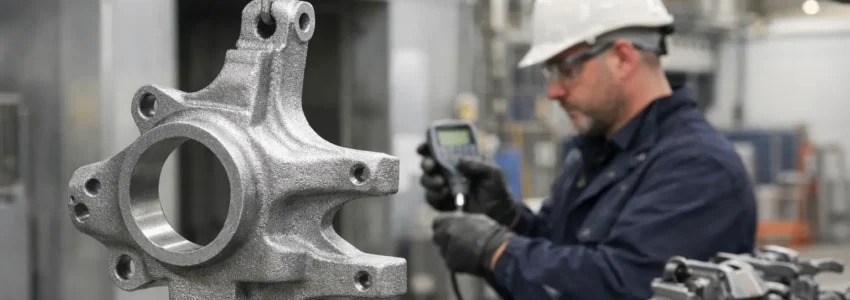
How Surface Treatment Improves Performance, Durability and Compliance
Surface Treatment is the engineering process of modifying a material’s outer layer to improve its corrosion resistance, conductivity, wear performance, or environmental durability.
In modern engineering applications, surface treatment directly affects how long a component lasts, how it performs under load and whether it complies with industry standards. It is no longer a cosmetic afterthought. In sectors like defence, rail, automotive and energy, surface treatment determines structural protection, electrical stability and long-term reliability.
Without effective surface treatment, even precision-machined components can degrade prematurely in harsh environments. The surface is the first point of contact with moisture, chemicals, vibration and electrical load. As a result, it has become a core engineering decision rather than a final finishing step.
Surface Treatment and the Real Cost of Corrosion
Corrosion remains one of the most expensive engineering challenges globally.
According to the Association for Materials Protection and Performance (AMPP), in collaboration with the World Corrosion Organisation and European Federation of Corrosion, corrosion now represents a global economic burden exceeding $2.5 trillion annually, with that figure widely cited in the industry and referenced in campaign and awareness materials in 2025.
In offshore structures, rail assets, defence platforms and energy infrastructure, poorly specified surface treatment can result in:
- Premature material degradation
- Structural weakening
- Increased inspection and maintenance cycles
- Operational downtime
- Regulatory exposure
Protective finishing is therefore not cosmetic. It is a form of risk control.
Where components face moisture, salt, industrial pollutants or thermal cycling, coating systems must be selected based on exposure class and expected service life. Shot blasting profiles, coating thickness and curing conditions directly influence long-term corrosion resistance.
PRV’s spray painting, powder coating and shot blasting services are designed around these structural durability requirements.
Surface Treatment in Electrified and High-Performance Systems
In automotive, rail and defence applications, electrical performance is now central to system design. The condition of a contact surface affects conductivity, contact resistance and heat generation.
Silver and tin plating are specified for functional reasons:
• Improved electrical conductivity
• Reduced oxidation
• Increased current-carrying capability
• Stable long-term connection performance
As electrified systems expand, including EV platforms and hybrid defence vehicles, surface treatment decisions directly affect busbars, enclosures and connection interfaces.
PRV’s electroplating capabilities support these engineered requirements.
In these environments, degradation does not begin with visible corrosion. It begins at the contact interface.
Why Protective Finishing Must Be Considered Early in the Engineering Process
A common manufacturing mistake is treating surface treatment as a final-stage addition. In practice, it should be defined during design and process planning.
Surface treatment influences:
- Tolerance allowances
- Edge geometry
- Surface roughness
- Masking strategy
- Post-machining preparation
Precision machining, including complex 5-axis work, must account for plating thickness and coating build. Similarly, hydro-abrasive waterjet cutting avoids heat-affected zones, producing edges that support more consistent coating adhesion.
When defined too late, dimensional drift, adhesion failure or rework can follow. Those issues are process failures, not coating failures.
Surface Treatment and Structural Durability in Harsh Environments
Rail infrastructure, offshore-adjacent energy systems and defence platforms operate under continuous exposure to vibration, moisture and contaminants.
Powder coating, wet spray systems and mechanical surface preparation are not interchangeable. Each offers different levels of:
- Impact resistance
- Corrosion protection
- Abrasion tolerance
- UV stability
- Long-term adhesion
Specification should reflect service environment rather than initial cost.
In infrastructure applications, correctly selected surface treatment extends asset life and reduces intervention frequency. Lifecycle cost reduction often outweighs short-term savings made during fabrication.
Protective Finishing as Part of an Integrated Engineering Capability
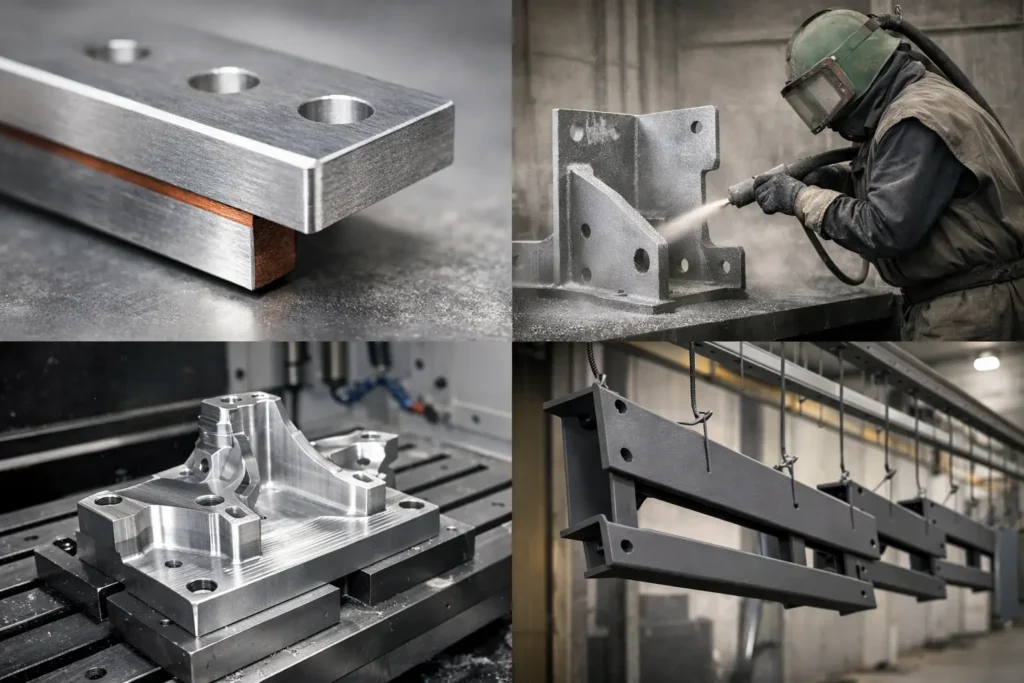
Modern engineering workflows rarely operate in isolation. Components move through cutting, machining, fabrication, finishing and assembly stages in sequence.
Surface treatment must align with:
- Base material selection
- Fabrication method
- Machining tolerance strategy
- Assembly sequencing
- Applicable standards
When coating and plating are integrated within an engineering-led environment rather than treated as a disconnected external process, consistency improves. This becomes critical in defence, aerospace-adjacent and automotive sectors where performance verification is mandatory and traceability is expected.
The Future of Surface Treatment in Advanced Manufacturing
As materials become lighter and systems more electrified, surface engineering requirements are becoming more precise.
Current pressures include:
- Increased galvanic risk from mixed materials
- Higher electrical loads
- Stricter environmental regulation
- Removal of legacy chemistries
- Extended asset lifecycles
Surface treatment is steadily moving from appearance-focused finishing to defined functional performance control.
Engineering discussions are shifting from “how should this look” to “how will this perform under load, exposure and electrical demand over its full service life”.
That evaluation begins at the surface.
Surface Performance in Real-World Manufacturing
In subcontract engineering, performance is rarely judged on how a component looks when it leaves the facility. It is judged on how it behaves months or years later in service.
A fabricated bracket in a rail system, a plated connector in a defence assembly, or a coated enclosure in an energy installation all face environmental and mechanical demands that begin at the surface. Corrosion, conductivity loss, coating failure and wear do not originate in the core material. They begin where exposure occurs.
For manufacturers, that reality changes how surface treatment should be approached. It cannot sit outside machining, fabrication or cutting decisions. It must be defined alongside them. Coating thickness affects tolerances. Edge preparation influences adhesion. Material pairing determines galvanic behaviour.
In sectors such as the railway industry where exposure, vibration and regulatory oversight are constant, surface treatment decisions directly influence service life and compliance outcomes. Read more about PRV’s role in the rail sector.
Engineering Perspective: Where Surface Treatment Fits
Surface treatment sits at the intersection of materials science, fabrication and long-term asset management. It influences corrosion rates, electrical stability, tolerance strategy and maintenance planning.
When specified early and integrated properly, surface treatment supports predictable performance in the field. When treated as a finishing add-on, risk increases.
In practical terms, the surface defines how long the component performs as designed.
Recent Comments