Tag Archives: CNC Machining

11 Dec 2015

CNC milling machines are used for the shaping of metal and other solid material and there isn’t much nowadays that hasn’t involved CNC machining somewhere in the manufacturing process. Cars, aeroplanes, machine parts, moulds for household machines, toys and prosthetics etc. are all likely to have CNC machined components.

Early milling machines were manually or mechanically operated but developed to be CNC controlled – Computer Numerically Controlled. Computer programmes control and drive the machining centre, with help from an operator and they have now also moved on from 3 axis to 4 and 5 axis machines enabling much more intricate parts to be produced.

17 Apr 2015

When considering 5 axis machining, it is important to look at the differences between it, and the more common 3 axis cnc system. The most apparent is that a 5 axis system has the normal X, Y, and Z axis but can also rotate on it’s X and Y axis. This leads to a number of distinct benefits.

A major advantage of the 5 axis system is set up, as complex parts can be machined without having to re-set the work piece. This has the two fold effect of firstly, speeding up the machining process as the work piece does not need to be re-set; and secondly accuracy. The zero datum remains undisturbed during the process so reducing the likelihood of production tolerance errors.

Five axis machines can also utilise shorter, more rigid tooling, which is suitable for higher cutting speeds and lower vibration allowing more complex three dimensional profiles and deeper pockets to be cut without the need for a re-set, or a change of tooling. This again helps to ensure the accuracy of the finished part.

3 Oct 2014

It goes without saying. If you want engineering done, you need to get it done properly.

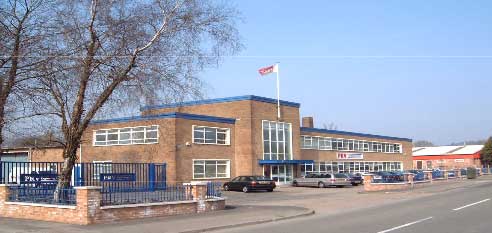
From start to finish it’s precisely what PRV Engineering seeks to achieve at its headquarters in Pontypool, South Wales.

“We call it a one stop shop,” said PRV Engineering CEO Simon Jones.

“Our approach, enables us to provide a complex and diverse range of products and services to our customers. In turn, they can satisfy their requirements from a single source.”

“We not only provide superior workmanship, at a price our engineering competitors can’t match, but we also offer personal attention from start to finish of your project.”

What do PRV Engineering do?

21 Aug 2014

With any business, investing in the latest technology is a necessary requirement to compete effectively.

The engineering industry is constantly on the move with the latest developments making life so much easier – both for the manufacturer and of course, the client.

The introduction of 5 Axis machining within the industry has not only worked in terms of cutting down costs, but also producing greater quality in quick-fire time.

Here at PRV Engineering we have invested heavily over the past 18 months.

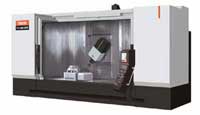
Part of the overall investment has been the addition to our plant list of a Vertical Travelling Column Machining Centre, with full 5 Axis Synchronous Milling ability and a Large Machining Envelope.

30 Jun 2014

Overheating is an issue within industry, not just for those workers struggling to cope with the increasing temperatures that even a British summer can bring, but for the industry’s machinery too.

Whilst the rising heat and humidity levels create physical discomfort, they represent real danger for the electronic components of machine tools, computers and other shop equipment. Overheating and humidity can cause switch contacts to become oxidized and begin arcing. It can also cause decreased insulation resistance, leading to shorts, loss of conductivity and changes in resistance.

19 Jun 2014

PRV-Engineering is constantly moving with the times and as part of the company’s recent £1.25million investment, managing director Simon Jones has added a vertical travelling column machining centre with full 5-Axis Synchronous milling ability.

Five-sided machining, also known as 3+2, is the process of setting up a part once and using a machine like the Mazak VTC800/30SR to machine five sides instead of machining the part one side at a time using a conventional 3-Axis machining centre.

31 Oct 2013

There are many methods employed in Tool Making, ranging from the traditional processes to the more modern methods using CAD designs and CNC machining. It goes without saying, that the technique employed depends upon the quality, precision and quantity of tools required.

With improved machining technologies and design capabilities, it has become easier to produce high performance precision manufactured tools. However, designing and making these tools requires a great deal of planning, high performance equipment, technical know-how and of course, skill.

So, what should you take into consideration when searching for a good tool making service?

15 Jul 2013

Although the current recession has created difficulties in business, PRV Engineering has spent the last year establishing a platform on which they can confidently support their ambitious plans- 2013 is about building for the future.

CEO Simon Jones has invested £1.25million in the company over that 12 month period, primarily to increase the size and capacity of the unit from 29,000 to 38,000 square feet. As part of the overall development, PRV Engineering have also installed a state of the art crane with a 10 tonne overhead capacity. “These are exciting time for us,” said Simon, who confirmed that PRV has also returned to the construction industry from which they retracted several years ago.

8 Jul 2013

Deep hole drilling is beneficial across several applications and requires specialist equipment to maintain the straightness and tolerances. Oil and gas exploration equipment, armaments, aerospace equipment and engines are amongst the common applications for deep hole drilling and machining processes, and in each of these industries hole qualities are necessary for high-performance end products, such as landing gear that easily retracts. It’s a given that production requires deep hole drilling that is reliable, but accurate and time-efficient.

14 Jun 2013

5-axis machining is now used by many machining companies and allows machining of a part along 5 axes of motion compared to 3 axes in one setup. While this can be a cost saving factor, 5 Axis machining is used more often for complex contour work, which may need simultaneous movement of all 5 Axes.

Recent advances in software have helped make the conversion from 3-axis and 3+2 axis positioning to simultaneous 5-axis machining accessible to everyday numerical control  programmers.

Although some of these techniques might require additional programming time, the benefits of reduced machining, setup time and reduced hand-polishing outweigh the costs.

Recent Comments

    Events

    November 2026
    M T W T F S S
     1
    2345678
    9101112131415
    16171819202122
    23242526272829
    30