
There are few products that we use in everyday life that have not had CNC machining take some part in their production. Cars, planes, household machines and appliances, medical parts and toys all get to visit the CNC machine at some point in their production.
CNC or Computer Numerically Controlled machining has become more versatile then ever over the years. The number of axis has increased and the types of machine available now mean that increasingly smaller and more intricate parts can be manufactured using CNC machining.
30
Sep
2016

1
Aug
2016
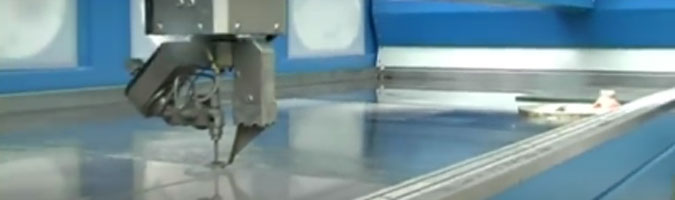
Even though waterjet cutting has only come into its own in recent years it may surprise you to know that it has been around since the 1930s. At that time it was used at a low pressure and only for cutting soft materials. Whilst things continued to develop after the war, waterjet cutting became much more effective in the 1970s, when the first reliable high pressure pump was developed.
Whilst the earlier waterjet machines could cut softer materials they could not handle harder materials and metals. The ability to cut harder materials like metal came about following the addition of an abrasive to the waterjet cutting nozzle. This was a technique first used in the 1930s, however early versions of the nozzle were not commercially viable. Further development of the nozzle and the availability of a reliable pump led to a more effective waterjet that could now cut through a bigger variety of materials.
1
Jul
2016

There are many advantages of waterjet cutting compared to other methods, but if we had to try and summarise them neatly into a few words we’d say;
The ability to cold cut almost any material in any direction with less waste and a superior finish.
But really that’s not enough of an explanation, so let’s expand a little on that statement and address some of the areas of improvement over more traditional cutting methods.
Omni-directional cutting
Waterjet cutting allows omni-directional cutting – the ability to cut in any direction which gives much greater cutting flexibility. In most cases starting holes are not required as the water jet is able to perforate the material. It is now much easier to cut more complex shapes and designs into all sorts of materials.
17
Jun
2016
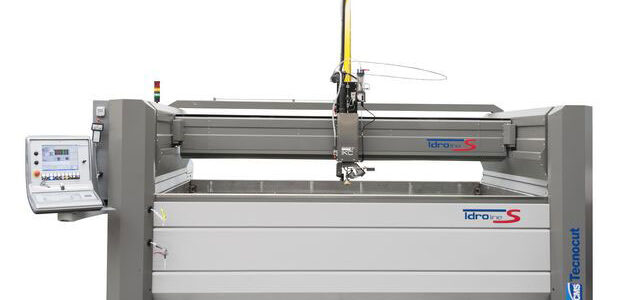
After a busy few days at the Subcon Show in Birmingham, it was all hands on deck to take delivery of our new Idroline S1730 Hydro-Abrasive Waterjet Cutting System from Selmach Machinery.
The system is the latest addition to our suite of state of the art CNC Multi Axis / Multi Discipline machining centres and will allow us to continue to improve and provide the best service possible to our clients.
The Idroline S1730 hydro-abrasive waterjet cutting system is an elite design which ensures superior technological and productive performance. It uses a very high pressure jet of water or a mix of water and abrasive to cut a wide variety of materials and allows greater control and precision when materials being cut are sensitive to high temperatures.
27
May
2016

Developments in engineering and manufacturing are moving on at a pace. Continuing research into materials and their capabilities results in demand for more complex work requirements and those requirements mean more advanced machinery.
Whether you provide one service or many, older outdated machinery may eventually lead to less efficient production and an increase in costs. There probably are some areas of manufacturing that have remained unchanged for years and so the older machinery may well still be able to work effectively, but can it compete with more modern machinery that is more efficient and technically capable? A regular review of the machinery and equipment you use should identify if your business can be improved by investing in new machinery – and it should be seen as an investment, not a cost. Newer more advanced machines may open up markets and opportunities that you previously hadn’t been able to consider, ensuring your businesses longevity.
9
May
2016

Subcon 2016 is only a few weeks away now and with that in mind the organisers have asked some of their speakers their views and opinions on some key areas of manufacturing.
Not surprisingly, when asked about the biggest challenge facing the industry this year, 4 of the 7 said that they saw political and economic uncertainty as a major challenge in the coming months. The debate about staying or leaving the EU means that people are reconsidering longer term commitments and may even be delaying projects as they are unsure as to how they will be affected. Things will be clearer after the referendum in June, but there still may be longer term issues to consider depending on the outcome. It would be prudent for any business to consider the impact on them should the result be that the UK exits the EU. Of course it will take time for any exit policies and agreements to be put into place, but there’s likely to be some sort of immediate impact on existing contracts and projects. Should the vote be to stay in, then of course, things will settle back down, but it still may take a little time for that uncertainty to settle completely.
29
Apr
2016
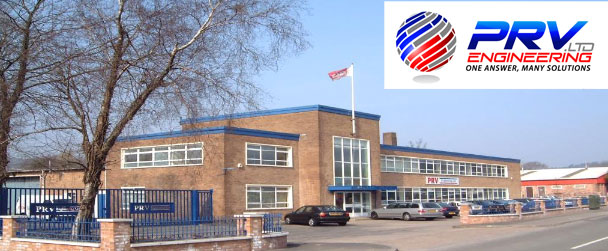
“Investment is essential to the future of PRV Engineering” says CEO Simon Jones.
Over the past two years there have been huge investments in equipment and premises to ensure that PRV Engineering can provide the best customer service possible.
1.5 million pounds worth of state of the art CNC Multi Axis/Multi Discipline machining centres have been installed, a new temperature controlled inspection facility and an 8000 sq ft extension with have also been completed.
Finishing is one of the most important areas in the engineering sector. Components that have been carefully machined to the highest standards and tightest specifications can still be scrapped if the finishing is not up to standard. To ensure the best finishes are provided to clients, PRV Engineering decided not to rely on external companies for their plating requirements and instead, bought their own plating facility, ensuring that they could supply a full One Stop Shop service to clients.
11
Dec
2015
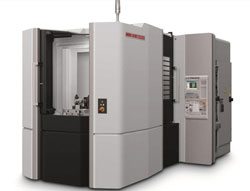
CNC milling machines are used for the shaping of metal and other solid material and there isn’t much nowadays that hasn’t involved CNC machining somewhere in the manufacturing process. Cars, aeroplanes, machine parts, moulds for household machines, toys and prosthetics etc. are all likely to have CNC machined components.
Early milling machines were manually or mechanically operated but developed to be CNC controlled – Computer Numerically Controlled. Computer programmes control and drive the machining centre, with help from an operator and they have now also moved on from 3 axis to 4 and 5 axis machines enabling much more intricate parts to be produced.
17
Apr
2015

When considering 5 axis machining, it is important to look at the differences between it, and the more common 3 axis cnc system. The most apparent is that a 5 axis system has the normal X, Y, and Z axis but can also rotate on it’s X and Y axis. This leads to a number of distinct benefits.
A major advantage of the 5 axis system is set up, as complex parts can be machined without having to re-set the work piece. This has the two fold effect of firstly, speeding up the machining process as the work piece does not need to be re-set; and secondly accuracy. The zero datum remains undisturbed during the process so reducing the likelihood of production tolerance errors.
Five axis machines can also utilise shorter, more rigid tooling, which is suitable for higher cutting speeds and lower vibration allowing more complex three dimensional profiles and deeper pockets to be cut without the need for a re-set, or a change of tooling. This again helps to ensure the accuracy of the finished part.
3
Oct
2014
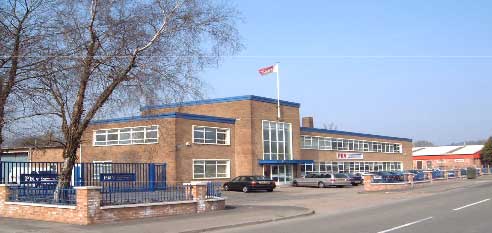
It goes without saying. If you want engineering done, you need to get it done properly.
From start to finish it’s precisely what PRV Engineering seeks to achieve at its headquarters in Pontypool, South Wales.
“We call it a one stop shop,” said PRV Engineering CEO Simon Jones.
“Our approach, enables us to provide a complex and diverse range of products and services to our customers. In turn, they can satisfy their requirements from a single source.”
“We not only provide superior workmanship, at a price our engineering competitors can’t match, but we also offer personal attention from start to finish of your project.”
Recent Comments