
Rethinking How We Use Carbon in Modern Energy Systems
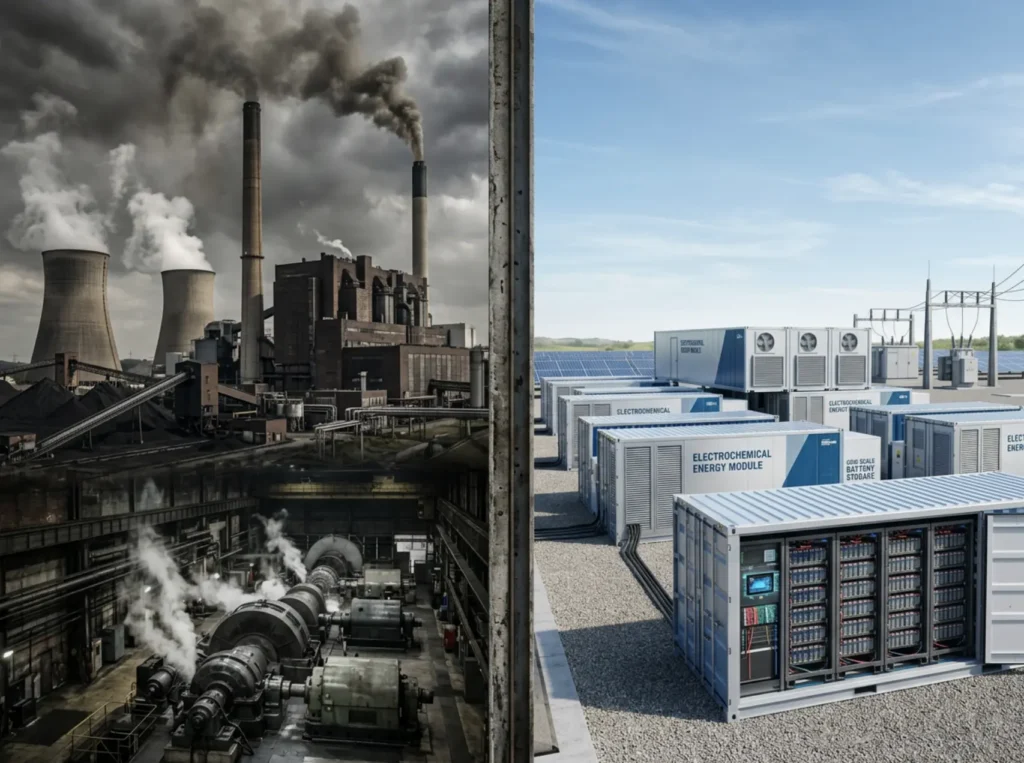
For over a century, coal has been synonymous with combustion.
Burn it. Heat water. Spin turbines and generate electricity.
It’s a system that has powered industrial growth for generations, but it’s also fundamentally inefficient. At every stage of that process, energy is lost through heat, friction, and mechanical conversion.
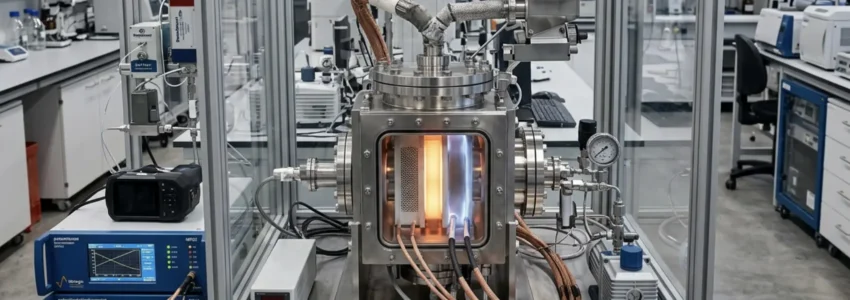
Now, a new line of research, particularly emerging from China, is challenging that model. Instead of burning coal in the traditional sense, engineers are exploring ways to convert carbon’s chemical energy directly into electricity using electrochemical systems.
At first glance, it sounds like a radical departure. In reality, it’s something far more interesting.
What Are Direct Carbon Fuel Cells?
At the centre of this shift are systems like Direct Carbon Fuel Cells (DCFCs).
Unlike conventional power stations, DCFCs don’t rely on combustion to release energy. Instead, they use an electrochemical reaction to convert solid carbon (including coal) into electricity.
Rather than producing heat first, these systems:
- Facilitate controlled chemical reactions
- Transfer electrons directly through a circuit
- Generate electricity without a steam cycle
It’s important to be precise here.
Carbon is still undergoing oxidation, so this isn’t “zero combustion” in a strict chemical sense. But critically, it avoids the inefficiencies of heat-based energy conversion.
That distinction matters.
Why Electrochemical Conversion Changes the Game
Traditional coal power operates as a heat engine and heat engines are inherently limited by thermodynamic efficiency. In contrast, electrochemical systems bypass that constraint.
The result?
- Potentially higher efficiency
- Fewer mechanical stages
- Reduced energy losses
- More stable and controllable output
This is less about incremental improvement and more about changing the pathway through which energy is extracted. That’s a fundamentally different engineering problem.
Integrating Carbon Capture at the Source
One of the more compelling aspects of these systems is how they integrate with carbon capture and utilisation (CCU) technologies.
In conventional setups, CO₂ is an unwanted byproduct. Here, it becomes part of the system design.
Captured CO₂ can be:
- Converted into synthetic fuels
- Used in chemical manufacturing
- Recycled into industrial processes
This aligns with broader industry conversations around material efficiency and lifecycle responsibility, something we’ve explored in more depth in our article on material traceability in engineering projects.
Instead of treating emissions as waste, engineers are increasingly treating them as resources to be managed, reused, and engineered into value chains.
From Fuel to Feedstock: A Shift in Engineering Thinking
If systems like DCFCs become scalable, they could redefine how we think about fuel entirely. Coal, in this context, stops being something we simply burn.
Instead, it becomes a feedstock—a material with chemical potential that can be:
- Converted into electricity
- Processed into chemicals
- Integrated into circular production systems
This blurs the line between energy generation, chemical engineering and advanced manufacturing.
It also reinforces a broader trend we’re seeing across engineering sectors where materials, processes, and outputs are becoming more interconnected.
What This Means for Engineering and Manufacturing
For companies operating in high-precision industries, this shift has practical implications.
Electrochemical systems demand:
- Advanced materials capable of withstanding high temperatures and reactive environments
- Precision manufacturing for consistent performance
- Tight tolerances across integrated systems
These are the same challenges faced in sectors like aerospace, defence, and energy, where reliability and repeatability are non-negotiable.
It’s also where capabilities like large format machining become critical, particularly when working with complex geometries or large-scale components that must perform under demanding conditions.
Similarly, processes such as waterjet cutting, explored in our article on waterjet cutting in engineering applications, offer advantages when material integrity must be preserved without introducing heat distortion.
These aren’t abstract requirements. They’re engineering realities.
The Bigger Picture: Extracting Energy from Structure
What makes this development worth paying attention to isn’t just the technology itself. It’s the underlying principle.
For decades, energy systems have relied on breaking down materials through heat. Now, we’re seeing a shift towards extracting energy directly from chemical structure.
That opens the door to:
- More efficient systems
- Greater process control
- New hybrid models of energy and manufacturing
And perhaps most importantly, it challenges assumptions that have gone largely unquestioned for over a century.
A Relevant Step Towards the Future of Energy
For further reading on how these systems are being explored at a global level, the U.S. Department of Energy provides an overview of fuel cell technologies and their potential role in future energy systems.
While Direct Carbon Fuel Cells and similar technologies are still developing, the direction of travel is clear.
Closing Thoughts on the Future of Carbon in Energy Systems
Innovation doesn’t always mean replacing existing resources. Sometimes, it means rethinking how we use them.
Coal has long been viewed as a legacy fuel, something to move away from. But technologies like electrochemical conversion suggest a more nuanced possibility:
The material itself may not be the problem. It’s how we extract energy from it that’s evolving.
If carbon can transition from something we burn to something we electrically harvest and chemically reuse, then the conversation around energy doesn’t just change, it becomes far more interesting.
Recent Comments