
Reflecting back on 2017 we saw a number of engineering trends making their mark in a big way. Some include advanced robotics, additive manufacturing, IIoT, quantum computing and big data. Even though it’s possible to identify hundreds of minor developments, what are the major engineering trends to follow in 2018? Take a look at these top trends we put together to end the year on a positive note.
29
Dec
2017

22
Dec
2017

A glimpse into the future of mountain rescue could mean replacing the image of our furry friend, the St Bernard. No surprise really as technology is forever advancing and with that, an unmanned aerial vehicle (UAV) made from carbon fiber with a 2.2 meter wingspan.
A team of students at the prestigious University of Warwick School of Engineering in Coventry, England, has designed an unmanned aerial vehicle. The core concept is to deliver immediate aid and equipment to people in need before a rescue team arrives. These UAV’s will essentially be the first responders.
8
Dec
2017

Unlike some industries, UK manufacturing has grown to new heights throughout November and has defied all odds. Industries performing particularly well include the automotive sector, the steel industry and shipbuilding.
Overall, production is on the rise to the highest it’s been in four years; new territories with a significant increase in exports along with the highest employment growth in over three years. And according to a report from the Office for National Statistics (ONS), the UK’s industrial sector has increased by
1
Dec
2017
Throughout human history there has been, and still is, a number of methods used to manufacture custom parts. Today, modern manufacturing sees 3D printing and CNC machining as the most common ones. In fact, both utilise computer numerical control (CNC), which developed from traditional milling methods after the Second World War.
With the rapid growth of 3D printing technology, many would agree it has become the first choice for a host of industries. On the other hand, CNC machining is still considered a reliable standard and you will not find much nowadays without the involvement of CNC machining
24
Nov
2017

The most promising digital technologies of recent times have been virtual reality (VR) and augmented reality (AR). The concept may have been around for some time but the technology is still very much in its infancy. That being said, many manufacturers have started exploring the benefits augmented reality can offer in a manufacturing environment. We also know it will have a significant impact on the industrial sector within the next few years.
17
Nov
2017
Engineers are always in high demand and none more so than in advanced engineering. Looking to the future, the industry will need about 186 000 engineers by 2024. Another report, according to The Telegraph, suggests the UK is grossly lacking skilled engineers and would need 1.8 million new engineers and technicians by 2025.
Whichever way you look at it, these are big numbers to swallow. Engineering is not only central to ensure economic growth, it plays a vital role in global challenges. Among these are climate change, food security, health and safety, biodiversity, population and water security. Adding to the increased number of opportunities, engineering can yield significant financial reward.
10
Nov
2017

The construction industry along with the architectural engineering are possibly two of the toughest marketplaces in the world. Fabrication projects are often both complex and demanding where the final product must have high integrity and capable of withstanding nearly anything. It’s also no secret that modern manufacturing and engineering have changed considerably in recent years. Companies now find themselves under pressure to rapidly introduce new products, adapt to local market conditions and improve quality, cost and efficiency.
We can agree that one of the main elements of any fabrication project is cost. And by cost, we refer to
27
Oct
2017

Last week we covered electric hoverbikes in Dubai and today we’re continuing along that path but with a slight twist. What do you get when you cross a motorcycle with new technology and a mountain bike? The answer is simple – a hybrid electric motorcycle called the LMX 161-H. It resembles downhill bicycles and is described as a super-light electric motorcycle weighing in at just 42kg. Early reports suggest it’s ideal for off-road, freeride and enduro use but just as suitable for urban travel.
Two young French engineers and avid riders, Adam Mercier and Lucas Suteau, are responsible for this concept as they see a future for electric motorsport. Their vision turned prototype and the project has quickly become a crowdfunding campaign. Their aim is to get the worlds lightest freeride electric motorcycle to hit the streets all over the world. If all goes according to plan, the first deliveries will go out in May 2018.
20
Oct
2017
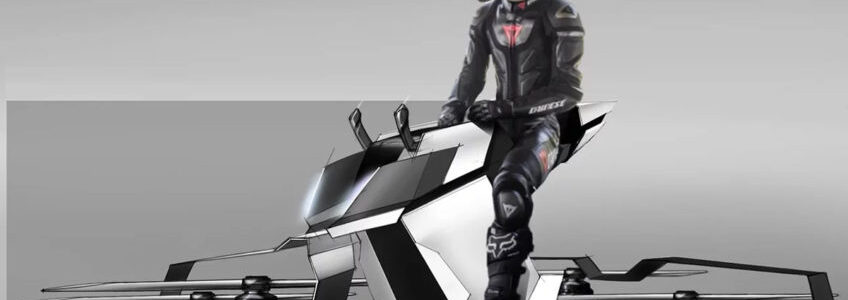
Not that long ago everyone thought the new millennium would usher in flying cars, electric hoverbikes and other advanced tech. It’s no longer just a fantasy as portrayed in sci-fi movies with flying cars and electric hoverbikes in daring police chases. Technology is now at the point where that dream could, in fact, become reality sooner than we think. Not just for military or police purposes, but a much broader horizon awaits us all.
13
Oct
2017

First it was self-driving cars and now we’re talking about autonomous flight as if we’re ordering pizza. It’s been all over the news and talks around the watercooler are more interesting than ever. Boeing’s acquisition of Aurora and a stake in Zunum Aero is set to take place this year. The overall consensus is that the aerospace industry is in for a major change.
Recent Comments