
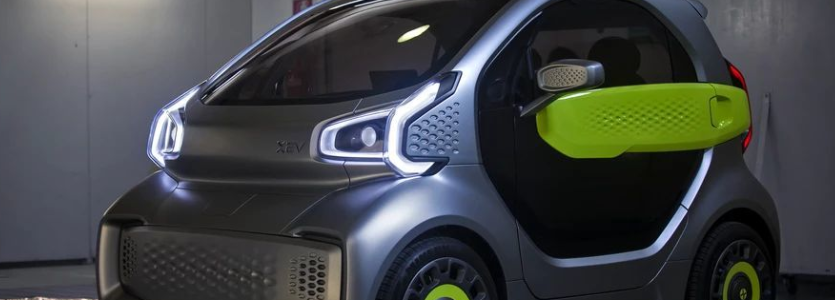
3D Printing has come a long way in the last few years and the latest development involves mass-producible electric cars. In 2018, Italy’s XEV announced they were partnering with Chinese 3D printing firm, Polymaker, to build a small, inexpensive electric city car called the LSEV.
30
Dec
2019
6
Dec
2019

Russia is the latest country to announce launching a new electric vehicle. Russian Engineering and Manufacturing Company (REMC) is launching the first locally manufactured electric vehicle, naming it Zetta.
Early reports suggest it could be the cheapest electric vehicle ever built with an expected price tag of just $7,000 (£5,400). Zetta is short for Zero Emission Terra Transport Asset and should be ready for launch early in 2020 after the final certification stages.
20
Nov
2019

The World Automotive Conference was held in Istanbul on October 17 2019, where experts presented possible solutions for keeping up with future trends in the automotive sector.
From managing global economic challenges to overcoming changing industry demands, 50 speakers added tremendous value to the conversation. There are various issues plaguing the automotive sector including too much traffic, too many cars, bad drivers, inadequate public transport, air pollution and not enough parking.
These may not be the trends that are directly shaping the automotive industry but they are important nonetheless. It clearly indicates some of the consumer feedback which the automotive sector needs to respond to.
26
Aug
2019

A new flying car has been unveiled in Japan by NEC Corp. While it is essentially a drone with four propellers, the company says it will be capable of carrying people. Even though the prototype only hovered for a minute, it did fly and marks another impressive development in the hotly debated area of future transport.
Over the last few years in Japan, a number of small, passionate flying car communities have emerged. They believe that Japan has the engineering knowledge and the right environment to succeed (and lead) a global flying car industry. Venture capitalists in Japan have set up a fund called the ‘Drone Fund’ which is purely for investing purposes into autonomous aircraft and flying car companies.
14
May
2019
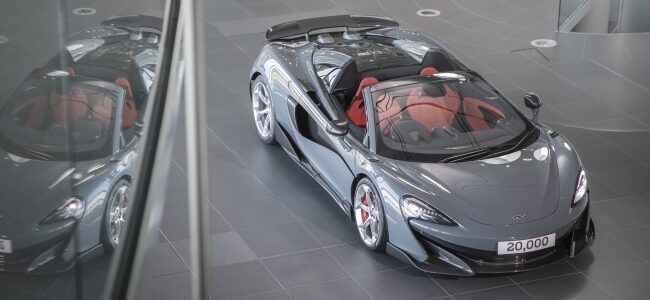
Img Credit: McLaren Automotive
For the few who don’t know, McLaren Cars were founded in 1985 which later became McLaren Automotive. Today, they remain a successful British car manufacturer based at the McLaren Technology Centre in Woking, Surrey where their primary focus is on sports cars.
In 2017, McLaren constructed a £50m McLaren Composites Technology Centre (MCTC) at the Advanced Manufacturing Park between Sheffield and Rotherham. The facility is responsible for building carbon fibre chassis for all McLaren road cars.
McLaren Automotive became a 100% owned subsidiary of the wider McLaren Group in July 2017 and recently celebrated selling their 20,000th car. It will be hand-assembled at the McLaren Production Centre (MPC) in Surrey.
7
Dec
2018

While there is no magic trick to change common chemical elements into rare and valuable ones, electroplating is as close as it gets. Electroplating is similar to electrolysis which is the opposite of the process batteries use to produce electric currents. The earliest form, which became the modern electroplating process, occurred in the early 19th century.
The development of bigger electric generators meant higher currents which drastically improved the process. Advancements in industrial and manufacturing practices over the past two centuries have changed this process considerably.
While some of you may already know what electroplating is, what about how it works?
30
Nov
2018

Credit: New Atlas
We can never get tired of reading and writing about engineering developments, emerging technologies and the flying taxi. This year has already seen a few interesting concepts from Uber signing with NASA to the CityHawk and Pal-V. And now it is time for Audi to step up to the plate.
The German automaker is living up to their name with the new Pop.Up Next, a hybrid quadcopter and compact two-seater electric vehicle. This is certainly an ambitious attempt but one that seems well worth it considering their partnership with Italdesign and Airbus.
24
Jul
2018
We can all agree that there aren’t many products we use in everyday life that does not involve CNC machining. From cars, planes, household machines and appliances to medical parts and toys, all go through a CNC machine at some point during production.
Computer Numerically Controlled or CNC machining has become more versatile then ever. The number of axis has increased and the types of machines now available mean that increasingly smaller and more intricate parts are manufactured using a CNC machine. The development of CNC Machining has truly revolutionised the manufacturing industry.
It’s not just CNC machines making waves, further advances like
6
Jul
2018
While Industry 4.0 is all about automation and digitisation, the future of manufacturing is in personalisation. Manufacturing 5-0, or the Fifth Industrial Revolution, will focus on the co-operation between humans and robots. Although the focus remains on automation and advanced manufacturing, the human element is more important than ever. We’ll take a closer look at what this means for manufacturing but first, let’s recap our journey up to now.
2
Feb
2018

UK Manufacturing has continued its upward trend and toward the end of 2017, was named the eighth largest manufacturer by output in the world. This came less than one year after claiming ninth spot. Reports from EEF and Santander shows the nation’s annual output is worth nearly $250bn. If this current growth continues, UK Manufacturing could be in the top five as early as 2020.
Recent Comments