
Aviation and aerospace technology has been at the forefront since the Concorde but now, there’s this. A supersonic jet that could travel at 1513 km/h (940 mph) considerably shortening commercial flight times. NASA has signed a deal with Lockheed Martin to develop a supersonic “X-plane” that could break the sound barrier but with one major difference – no sonic boom.
6
Apr
2018

16
Mar
2018

Flying cars have been in the news all over the world and competition is rife to produce the first commercial model. Besides finding the perfect balance between road and air capabilities, companies need to contend with legal, safety and regulatory issues. At this year’s Geneva Motor Show, Dutch company PAL-V certainly raised some eyebrows with their road-legal Liberty flying car.
Firmly in the driving seat of innovation, the PAL-V Liberty is set to undergo compliance demonstrations after the Geneva Motor Show. This is the final step in the certification process where we could very well see the world’s first flying car take to the skies as early as 2019.
16
Feb
2018

Over the last few years the flying taxi has become somewhat crowded with the Ehang 184 being the latest addition. Bell Helicopter, Boeing, Airbus and Intel are all in the advanced stages of their respective autonomous aerial vehicles (AAV’s). Although designs vary, all flying taxis seem built for the same purpose. They transport people autonomously across city environments to overcome pollution, congestion and
2
Feb
2018

UK Manufacturing has continued its upward trend and toward the end of 2017, was named the eighth largest manufacturer by output in the world. This came less than one year after claiming ninth spot. Reports from EEF and Santander shows the nation’s annual output is worth nearly $250bn. If this current growth continues, UK Manufacturing could be in the top five as early as 2020.
12
Jan
2018

The first ever electric plane was recently certified and flown in Australia marking an exciting frontier for electric aircraft. Australian sustainable aviation company, Electro.Aero, is at the forefront of electric aviation technology. They are responsible for the test flight after obtaining certification for the Alpha Electro from the Australian Civil Aviation Safety Authority late 2017.
5
Jan
2018
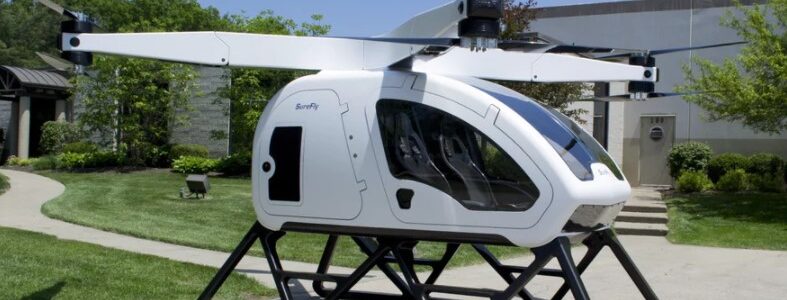
A lot has happened since the Paris Air Show in June last year with the Workhorse SureFly drone topping the charts. The passenger drone has been granted an Experimental Airworthiness Certificate for test flights at the CES Las Vegas next week. The show is set to attract business and industry leaders from across the globe with breakthrough technologies and innovations.
At the top of our list of featured innovations is the SureFly drone from Workhorse. The VTOL aircraft has been expertly designed for
22
Dec
2017

A glimpse into the future of mountain rescue could mean replacing the image of our furry friend, the St Bernard. No surprise really as technology is forever advancing and with that, an unmanned aerial vehicle (UAV) made from carbon fiber with a 2.2 meter wingspan.
A team of students at the prestigious University of Warwick School of Engineering in Coventry, England, has designed an unmanned aerial vehicle. The core concept is to deliver immediate aid and equipment to people in need before a rescue team arrives. These UAV’s will essentially be the first responders.
24
Nov
2017

The most promising digital technologies of recent times have been virtual reality (VR) and augmented reality (AR). The concept may have been around for some time but the technology is still very much in its infancy. That being said, many manufacturers have started exploring the benefits augmented reality can offer in a manufacturing environment. We also know it will have a significant impact on the industrial sector within the next few years.
17
Nov
2017
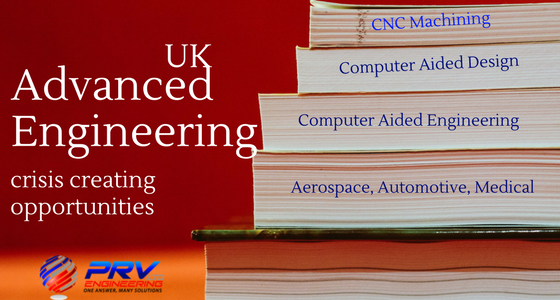
Engineers are always in high demand and none more so than in advanced engineering. Looking to the future, the industry will need about 186 000 engineers by 2024. Another report, according to The Telegraph, suggests the UK is grossly lacking skilled engineers and would need 1.8 million new engineers and technicians by 2025.
Whichever way you look at it, these are big numbers to swallow. Engineering is not only central to ensure economic growth, it plays a vital role in global challenges. Among these are climate change, food security, health and safety, biodiversity, population and water security. Adding to the increased number of opportunities, engineering can yield significant financial reward.
20
Oct
2017
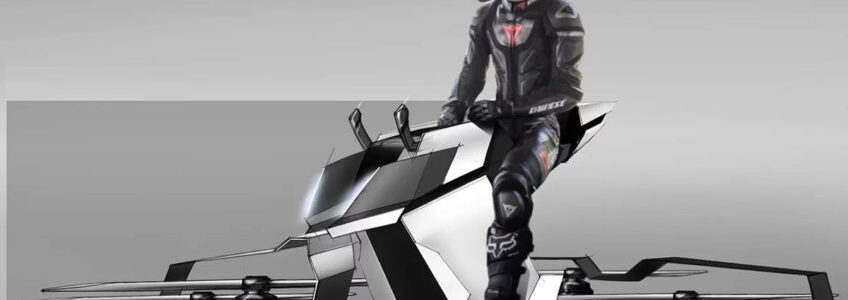
Not that long ago everyone thought the new millennium would usher in flying cars, electric hoverbikes and other advanced tech. It’s no longer just a fantasy as portrayed in sci-fi movies with flying cars and electric hoverbikes in daring police chases. Technology is now at the point where that dream could, in fact, become reality sooner than we think. Not just for military or police purposes, but a much broader horizon awaits us all.
Recent Comments