
How China Is Reshaping Aluminium Automotive Engineering With a One-Piece EV Frame
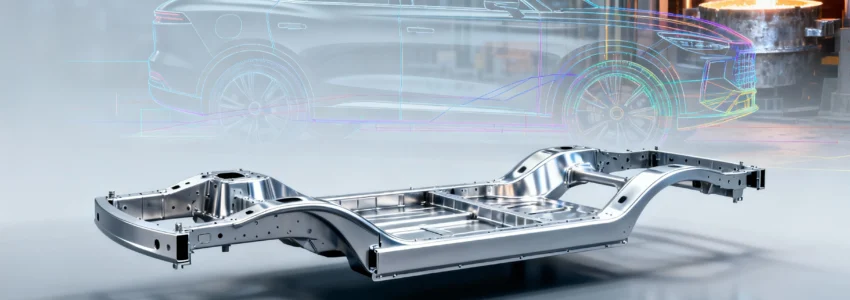
China has just taken a major leap forward in aluminium automotive engineering. Hantek, a specialist in lightweight aluminium chassis systems, has developed the world’s first true one-piece aluminium EV frame; a breakthrough already making waves across the global automotive industry.
This innovation, recently highlighted by Interesting Engineering in 2025, is not simply another incremental upgrade. It fundamentally changes how electric vehicles can be designed, manufactured, strengthened and scaled. (Source: Interesting Engineering)
The technology debuts in BYD’s flagship SUV, the Yangwang U8L, marking a new chapter in smart automotive design—and giving China a significant engineering advantage.
A World-First in Aluminium Automotive Engineering
Hantek’s achievement is remarkable from both a materials science and manufacturing perspective. Their new one-piece frame:
- spans a massive 45 square feet
- maintains wall thicknesses from 0.16 inches to 1.97 inches
- achieves a 12:1 thickness ratio within a single casting
- eliminates dozens of welds, rivets and joints
- dramatically improves structural integrity
- reduces long-term fatigue and weak points
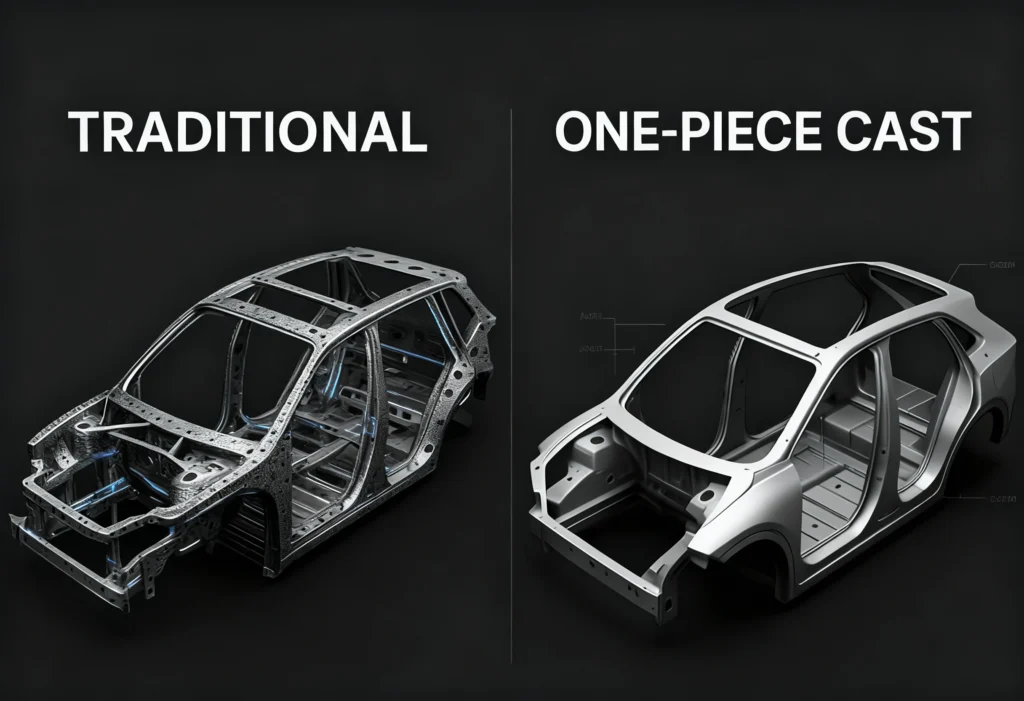
This is not how aluminium EV frames are typically built. Most manufacturers rely on multiple parts, joined with welding, bonding or mechanical fasteners where each create potential failure points. With a single integrated aluminium structure, the frame becomes stronger, lighter and more predictable under stress.
Why Traditional Aluminium Frames Have Built-In Weak Points
Even premium EVs today are built from a cluster of smaller aluminium extrusions and castings. Every join that is either welded, bonded or riveted, creates:
- a break in the metal grain
- changes in stress distribution
- a hotspot for fatigue
- variations in rigidity
- additional production time and cost
Hantek’s one-piece frame eliminates all of this.
Instead of 60–100 components, you get one unified structure capable of handling intense torsional forces, crucial for a vehicle like the Yangwang U8L, which uses four electric motors and produces over 1,180 horsepower.
How Hantek Solved the Challenges of Ultra-Large Aluminium Casting
Casting something this large, thin-walled and complex has long been considered almost impossible. The main engineering obstacles included:
- controlling molten aluminium flow across huge surface areas
- avoiding air pockets and porosity
- ensuring consistent solidification in thick vs thin sections
- preventing deformation during cooling
- maintaining tight tolerances throughout
Hantek overcame these challenges using:
- advanced low-pressure aluminium casting
- precision heat treatment
- a proprietary high-strength aluminium alloy
- real-time solidification monitoring
The result is a frame that delivers high toughness, excellent fatigue resistance, and a level of rigidity unmatched by traditional aluminium assemblies.
Real-World Proof: BYD’s Extreme Strength Test
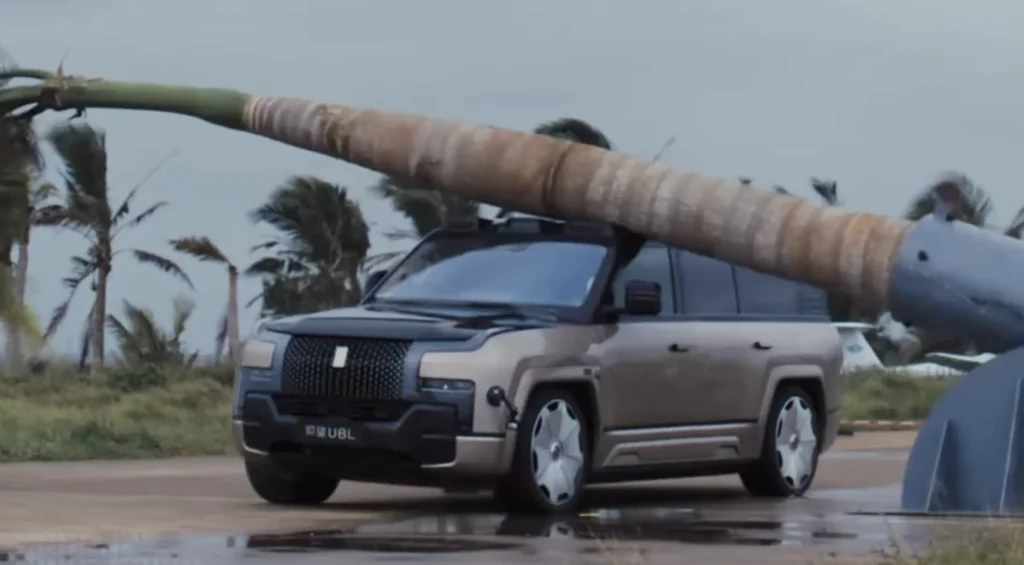
BYD has built a reputation for dramatic, real-world engineering demonstrations, and this frame is no exception. In a recent durability test, BYD dropped a full tree onto one of its Yangwang models with surprising results.
- Almost no visible structural damage
- Frame remained intact
- Doors continued functioning
- No cabin deformation
This test showcased the benefits of a single-piece aluminium structure under extreme impact loads.
The BYD Yangwang U8L: The First Vehicle to Use the Frame
The 2025 Yangwang U8L is the first production model to feature Hantek’s breakthrough frame. Key specifications include:
- 2.0-litre turbo engine + 4 electric motors
- 1,180 hp and 1,120 lb-ft torque
- 721-mile total range
- 124-mile electric-only range
- Built on BYD’s advanced e4 (Yisifang) platform
This is the same company known for unconventional engineering ideas, like the 2023 SUV that could float in deep water during emergencies. Learn more about BYD UK models on their official website.
Why Aluminium Automotive Engineering Is Becoming Essential in EV Production
The global shift toward EVs hinges on lightweight, structurally efficient materials; making aluminium one of the most important metals in modern vehicle design.
Key benefits include:
- Lightweighting for Range & Efficiency: Reducing mass directly increases electric range and lowers energy consumption.
- Excellent Crash Performance: Aluminium absorbs energy more predictably than steel, especially when cast.
- Corrosion Resistance: Crucial for long-term durability—especially in EVs that need long lifecycle guarantees.
- Recyclability & Sustainability: Aluminium is 95% recyclable with minimal performance loss. This ties directly into one of our more popular articles on sustainable materials.
- Compatibility With Gigacasting and Integrated Frame Design: EVs increasingly rely on large castings. Hantek’s breakthrough pushes this trend even further.
What This Means for the Future of Automotive Design
China is rapidly becoming a centre of expertise in:
- ultra-large structural castings
- smart automotive design
- modular EV platforms
- integrated chassis systems
- advanced materials engineering
The one-piece aluminium EV frame marks a shift toward:
- simpler manufacturing
- stronger structures
- fewer weak points
- more efficiency
- higher safety margins
- lower long-term maintenance costs
This will ripple across the global automotive market as other manufacturers adapt.
PRV Engineering’s Expertise in Aluminium & Advanced Automotive Materials
While PRV does not manufacture EV frames, the company works extensively with aluminium and advanced metals used throughout automotive systems. Some of our relevant capabilities include the following:
- Aluminium Fabrication: High-integrity aluminium structures and assemblies
- Full Metal Fabrication Services: For large and small-scale automotive and industrial components
- Busbars for EV Electrical Systems: Used across automotive, industrial and energy sectors
- Powder Coating, Spray Painting and Shot Blasting: Essential for corrosion protection, durability and finish
PRV’s multi-sector experience in automotive, defence, energy and rail positions it strongly to support the evolving materials and fabrication needs of modern vehicle manufacturers. Explore all of the PRV Engineering services.
Closing Thoughts: Aluminium Automotive Engineering
China’s one-piece aluminium EV frame is more than a production milestone, it’s a blueprint for the future. As EVs demand stronger yet lighter structures, and as gigacasting evolves into ultra-large integrated castings, aluminium automotive engineering will only become more important.
Hantek’s breakthrough, validated by real-world durability tests and now embedded in BYD’s flagship U8L, marks a shift toward smarter, stronger, and more sustainable vehicle design.
And as the industry continues moving toward advanced materials and complex aluminium structures, engineering partners like PRV remain essential to delivering precision fabrication, high-performance finishing and specialist metalwork across the automotive supply chain.
Recent Comments