
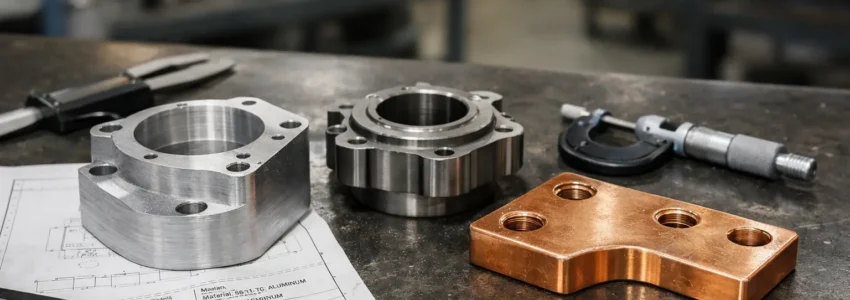
Material Selection in Engineering: Where Good Designs Go Wrong
Material selection in engineering rarely gets the attention it deserves.
Most discussions focus on design geometry, tolerances or manufacturing processes. But even the most well-designed component can underperform, or fail entirely, if the material isn’t right for the job.
Two parts can look identical on a drawing and still behave very differently in the real world. Heat, load, corrosion and fatigue all act on materials in ways that aren’t always obvious at the design stage.
That’s why material selection isn’t just a specification decision. It’s a performance decision; one that can determine whether a system lasts for years or begins to degrade far sooner than expected.
When Material Selection in Engineering Undermines Good Design
It is possible for a design to be technically correct and still fail in service.
This often happens when the selected material cannot withstand the environment or loading conditions it is exposed to. The geometry may be sound, tolerances may be accurate, and manufacturing may be precise, yet the component begins to degrade earlier than expected.
Common examples include:
- components that deform under thermal expansion
- surfaces that wear prematurely under friction
- materials that corrode in aggressive environments
- electrical components that lose conductivity over time
These issues are not always immediate. In many cases, they develop gradually, making them harder to diagnose and more costly to resolve. Material selection in engineering therefore needs to consider not just how a component is made, but how it behaves over time.
Material Behaviour Under Real Operating Conditions
Materials respond differently depending on the conditions they are exposed to. Understanding this behaviour is essential when making engineering decisions.
Key factors include:
Thermal expansion and heat resistance
Different materials expand at different rates when exposed to temperature changes. In assemblies with tight tolerances, even small variations can introduce stress, distortion or misalignment.
Load and fatigue performance
Repeated loading cycles can cause fatigue failure, even when the applied stress is below the material’s yield strength. The choice of material directly affects how long a component can withstand these cycles.
Corrosion resistance
Exposure to moisture, chemicals or environmental contaminants can degrade materials over time. Selecting the right material, or applying appropriate finishing processes, is critical in sectors such as rail, energy and construction.
Electrical conductivity
In electrical systems, material choice affects current flow, heat generation and long-term stability. This is particularly relevant in power distribution systems such as busbars.
These factors are rarely isolated. In most real-world applications, materials must perform under a combination of conditions.
The Trade-Offs Behind Material Selection in Engineering
There is rarely a single “perfect” material for any application. Instead, engineers must balance multiple competing factors.
These include:
- strength versus weight
- durability versus machinability
- cost versus lifecycle performance
- corrosion resistance versus conductivity
- availability versus performance characteristics
For example, a material that offers excellent strength may be difficult to machine efficiently. Likewise, a highly conductive material may require additional surface treatment to prevent oxidation.
This is where collaboration between design and manufacturing becomes essential. Decisions made early in the design phase can significantly affect production efficiency and long-term reliability.
Processes such as hydro-abrasive waterjet cutting are often chosen specifically because they allow engineers to work with materials that would otherwise be difficult to machine without introducing heat distortion.
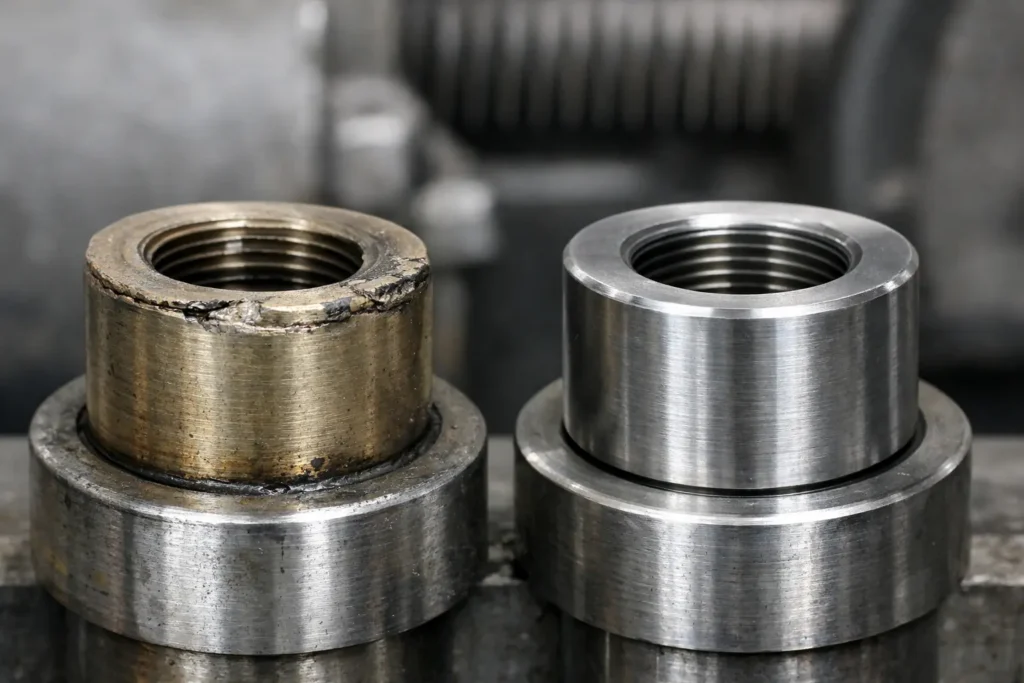
Why Material Selection and Surface Engineering Work Together
Material selection does not operate in isolation. In many applications, surface condition plays an equally important role in performance.
Surface treatments can enhance:
- corrosion resistance
- wear resistance
- electrical conductivity
- surface hardness
For example, electroplating is commonly used to improve conductivity and protect against environmental degradation in electrical and high-performance systems.
In practice, engineers are not just selecting a material. They are selecting a combination of base material and surface characteristics that together determine how a component performs.
Real-World Applications Across Engineering Sectors
Material selection in engineering becomes particularly critical in industries where failure is not an option.
Rail
Components must withstand continuous loading, environmental exposure and long service intervals. Materials must balance strength, durability and corrosion resistance.
Explore how these challenges apply in practice within the railway industry.
Aerospace and defence
Weight reduction is essential, but not at the expense of structural integrity or reliability. Materials must perform under extreme conditions, including temperature variation and high stress.
Energy and infrastructure
Components are often exposed to harsh environments, including moisture, chemicals and temperature extremes. Material selection directly affects maintenance cycles and asset lifespan.
Automotive and electrification
As systems become more electrified, materials must support both mechanical and electrical performance, often within increasingly compact designs.
Across all these sectors, the same principle applies: the wrong material choice introduces risk that cannot be corrected later in the process.
Why Material Selection in Engineering Requires Cross-Disciplinary Thinking
Material selection is not solely a design responsibility. It requires input from multiple disciplines.
Effective decision-making involves:
- design engineers understanding manufacturing constraints
- manufacturing teams advising on process limitations
- inspection teams validating real-world performance
- engineers considering lifecycle conditions, not just initial function
Organisations such as the National Physical Laboratory highlight the importance of measurement science and material behaviour in achieving consistent engineering outcomes.
Without this collaboration, material decisions are often made in isolation, increasing the risk of performance issues later.
How Better Material Decisions Improve Engineering Outcomes
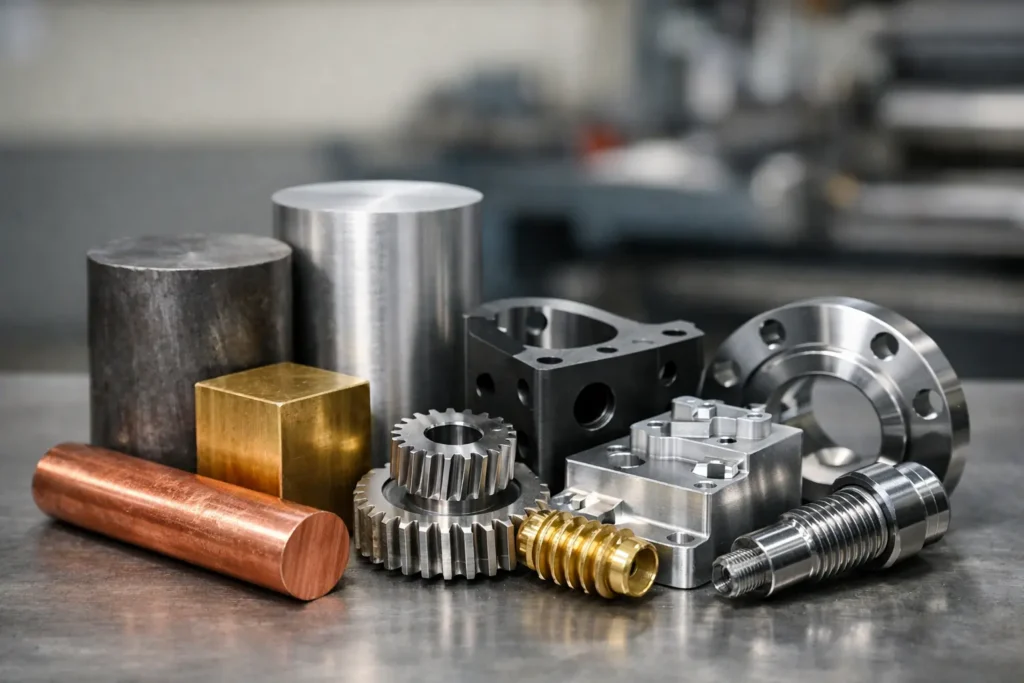
When material selection in engineering is approached correctly, the benefits extend beyond individual components.
Well-informed material decisions can:
- reduce maintenance requirements
- improve system efficiency
- extend operational lifespan
- minimise unexpected failures
- improve manufacturability
These improvements are not always immediately visible, but they contribute significantly to long-term performance and cost efficiency.
Final Thoughts on Material Selection in Engineering
Material selection in engineering is one of the few decisions that influences every stage of a component’s lifecycle.
It affects how something is manufactured, how it performs in operation and how long it lasts under real conditions.
While design geometry and tolerances define how components fit together, materials define how they behave over time.
In complex systems, that distinction matters.
Because when material selection is right, performance is predictable.
And when it is wrong, even the best designs can struggle to deliver what they were intended to do.
Recent Comments