
The State of Defence Manufacturing in Europe
Defence manufacturing in Europe is expanding but not always in the loud, headline-grabbing way people expect. Much of the growth is happening in procurement cycles, production lines, supply chain decisions, and capacity planning: more orders, more replenishment, more “can you deliver this faster?” conversations across the industrial base.
What’s driving it is a combination of rising defence budgets, NATO commitments, and the very real reality of rebuilding stockpiles while modernising equipment. And if there’s one consistent lesson in European defence right now, it’s this:
Defence doesn’t scale without manufacturing capacity, and manufacturing capacity doesn’t scale without subcontractors.
The Numbers Behind the Shift in Defence Manufacturing
A clear indicator is how quickly spending has moved.
- The EU Council’s “EU defence in numbers” notes EU member states’ defence expenditure reached €343bn in 2024, rising for the 10th consecutive year, and is estimated at €381bn in 2025. It also states defence spending rose to 1.9% of GDP in 2024 (from 1.6% in 2023) and is expected to reach 2.1% in 2025 (Source: Consilium)
- NATO reported in February 2024 that it expected 18 Allies to spend 2% of GDP on defence in 2024 (a major increase versus 2014).
- SIPRI’s 2024 military expenditure factsheet similarly highlights that 18 NATO members spent at least 2% of GDP in 2024 (up from 11 in 2023), and puts European NATO members’ total spending at $454bn. (Source: SIPRI)
Spending isn’t the whole story but it’s the fuel. The next question is what that fuel is being used for.
What the Ramp-up is Actually Funding
When people hear “defence spending,” they often picture new jets or big-ticket platforms. In reality, a sizeable portion of the current European push is focused on more practical industrial priorities:
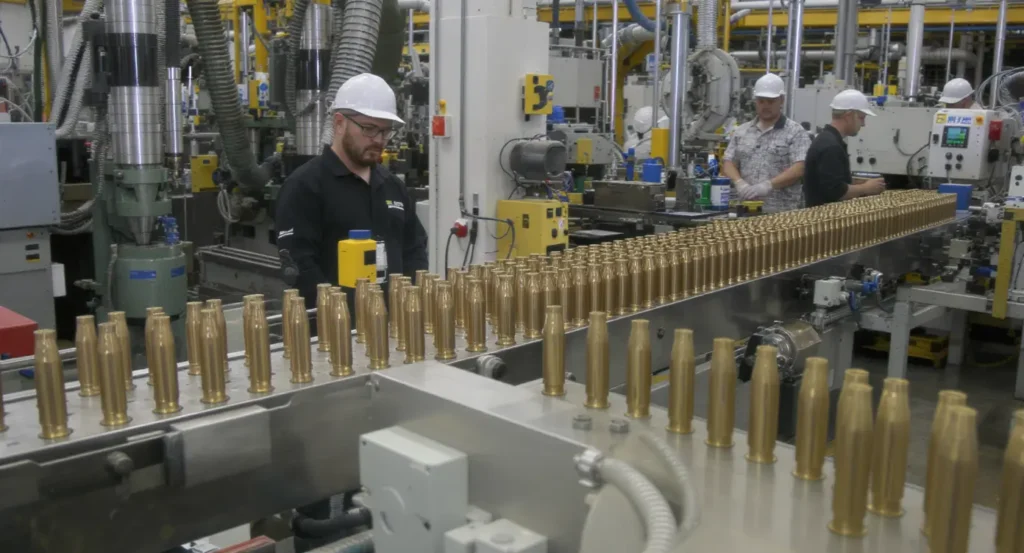
1. Stockpile replenishment and ammunition capacity
Europe has been trying to rebuild ammunition stockpiles while also supporting Ukraine. The European Commission, for example, announced allocation of €500m under ASAP (Act in Support of Ammunition Production) to ramp up production, within a wider €2bn framework to strengthen the EU defence industry.
This matters because ammunition production is one of the clearest indicators of “industrial tempo.” When ammunition supply is tight, everything else gets constrained, from training to readiness.
2. Vehicle upgrades, repair and sustainment
Armoured vehicles, mobility platforms, and ground systems create long supply chains of fabricated structures, machined components, specialist coatings, and rebuild programmes. Even when procurement is slow, maintenance and life-extension work keeps moving.
3. Broader industrial resilience
A defence supply chain is only as strong as the “unsexy” layers: brackets, housings, structural assemblies, machined mounts, shielding, protection systems, and the finishing processes that keep parts working in harsh environments. That’s where many subcontractors sit—quietly, but critically.
Why Defence Manufacturing Subcontractors are Now a Limiting Factor
Here’s the uncomfortable truth for many primes and Tier 1s: even if the money is available, production can still stall due to capacity and capability bottlenecks.
The EU’s own narrative around ASAP explicitly talks about anticipating bottlenecks and shortages in defence supply chains. That’s not abstract. It shows up in day-to-day realities:
- long lead times for machined parts
- limited coating capacity
- overstretched welding and fabrication teams
- fewer suppliers willing to take on complex, low-volume defence work
- certification and traceability burdens that many general suppliers don’t want
In other words: the constraint is increasingly industrial, not just financial.
What “Defence Manufacturing Capacity” Really Means
If you strip away the slogans, defence manufacturing in Europe is scaling where three conditions meet:
- Speed: Can you deliver on compressed timelines—without cutting corners?
- Precision and repeatability: Can you manufacture to spec with consistent results, especially for tight-tolerance or safety-critical applications?
- Compliance and documentation: Can you support traceability, QA systems, and the quality expectations that come with defence work?
This is where specialist subcontract engineering firms add value; not by “making weapons,” but by making the underlying components and assemblies that defence programmes rely on.
Related: The Future of Aerospace Subcontractors in Europe’s Shifting Industry
The Capability Stack Defence Programmes Keep Pulling From
Defence manufacturing demand tends to cluster around a practical set of capabilities; exactly the sort of things that don’t always make headlines, but keep programmes moving:
- Machining and multi-axis capability for complex parts and repeatable precision
- Fabrication for structural assemblies, brackets, housings, frames, and support structures
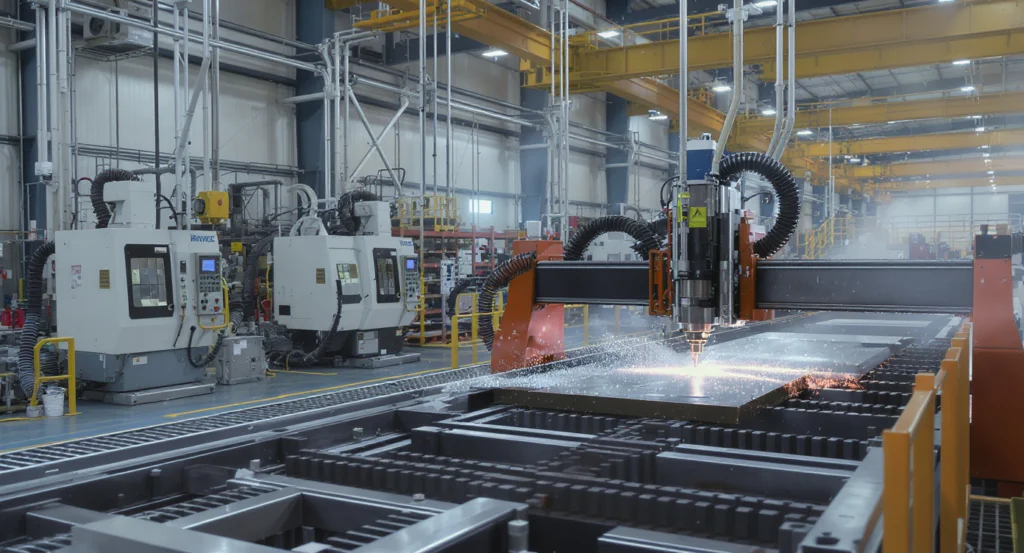
- Waterjet cutting for accurate profiles, reduced heat distortion, and flexible material handling
- Coatings and surface finishing for corrosion resistance, durability, and long-term reliability
- Electroplating and specialist finishing for conductivity, wear resistance, and performance in harsh environments
This is also where PRV’s capability set aligns naturally with defence-adjacent manufacturing requirements.
Where PRV Fits Into Defence Manufacturing
PRV Engineering supports defence-related manufacturing through a broad, integrated service base; covering the “real work” that defence supply chains need to scale output and maintain standards. Here are some of related engineering services at PRV:
- Defence sector engineering
- Precision machining capability: 5-axis machining
- Cutting capability relevant to complex profiles and materials: Hydro-abrasive waterjet cutting
- Protective finishing and surface prep: Spray painting, powder coating and shot blasting
- Specialist finishing: Electroplating
The point isn’t to claim involvement in any specific programme. It’s to demonstrate that PRV’s capability set matches what’s increasingly being demanded across European defence manufacturing: precision + capacity + finishing + delivery reliability.
Why This Trend is Likely to Continue
It’s tempting to see current defence spending as cyclical. But several indicators suggest the “manufacturing ramp-up” isn’t a short-term blip:
- NATO’s 2% threshold has become a baseline expectation, with more countries meeting it and political pressure remaining high.
- EU spending projections show continued growth into 2025, with an estimated €381bn total and 2.1% of GDP.
- EU programmes like ASAP exist specifically because industrial capacity has become a strategic concern.
Even if procurement priorities shift, the underlying drivers like stockpile rebuilding, modernisation cycles, and industrial resilience keep pressure on manufacturing.
The Practical Takeaway for UK and European Manufacturers
If you’re a prime, a Tier 1, or even a mid-tier supplier, the question is no longer “Is defence growing?” The question is:
Can your supply chain actually deliver at the pace and quality now expected?
That’s where engineering subcontractors become a competitive advantage. The companies that win in this environment will be the ones that can:
- source reliable manufacturing partners
- reduce lead times without reducing quality
- avoid bottlenecks in finishing and surface treatment
- maintain documentation and compliance standards
- scale output without chaos
Final Thoughts on Defence Manufacturing in Europe
Defence manufacturing in Europe is scaling again because the strategic environment has changed and governments are translating that into budgets, targets, and industrial initiatives. The biggest constraint is increasingly not intent, but industrial capacity.
And industrial capacity is built on real capability: machining, fabrication, cutting, coatings, plating, and on-the-ground engineering support. If Europe is serious about readiness and resilience, then subcontract engineering firms won’t be a side note. They’ll be one of the main levers that make “scale” possible.
Recent Comments