Tag Archives: defence engineering

25 Sep 2026
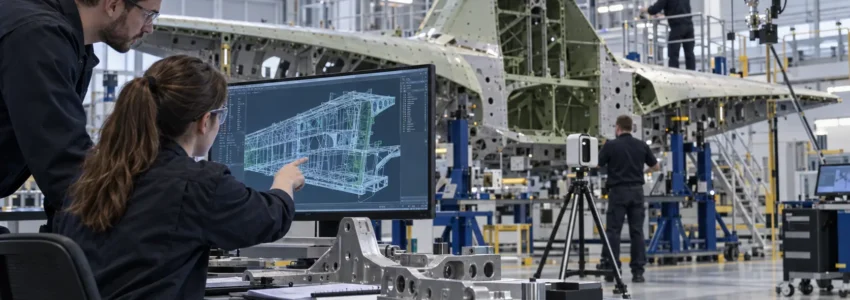
Aerospace engineers compare a digital aircraft structure model with manufactured components in an assembly facility.

How Britain’s Next Fighter Is Changing the Way Complex Engineering Is Manufactured

The latest investment in Britain’s future combat-air capability is not only funding the development of a new aircraft. It is also supporting a different engineering model in which design, testing, production and through-life support are connected through shared digital information.

On 22 July 2026, the Ministry of Defence announced a £708 million contract extension to accelerate the development of advanced technologies for the UK’s Future Combat Air System or FCAS. The wider system will include the next-generation aircraft being developed by the UK, Italy and Japan through the Global Combat Air Programme known as GCAP.

The distinction matters because FCAS describes the UK’s broader future combat-air capability, while GCAP is the international programme responsible for developing its core aircraft platform. Together, they provide a useful case study in how Future Combat Air System manufacturing could connect digital engineering with physical production.

The central question is therefore bigger than how the aircraft will perform. If it is engineered digitally from the outset, what changes in the factories, supplier networks and physical processes required to manufacture it?
11 Sep 2026
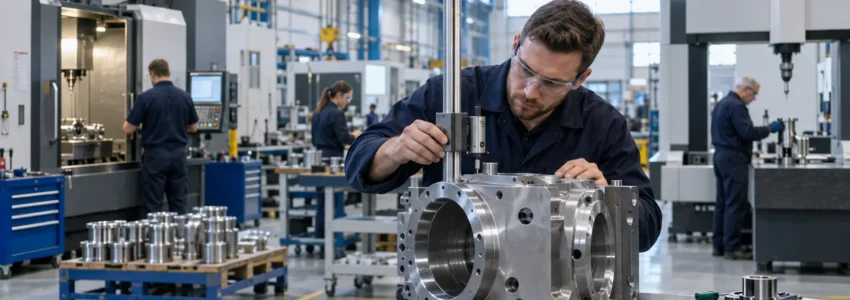
Engineer inspecting a precision-machined metal component in a modern UK manufacturing facility.

Britain Is Rebuilding Defence Manufacturing. Can the Supply Chain Keep Up?

Jobs supported by defence expenditure in UK weapons and ammunition manufacturing rose by 51% in 2024/25, according to figures published by the Ministry of Defence.

The MOD’s estimates also point to a wider year-on-year increase of 26,000 defence-supported roles across UK industry. That broader figure includes direct manufacturing employment and indirect jobs throughout the supply chain.

These numbers suggest growing industrial activity, but they also raise a more difficult question. Does the UK defence manufacturing supply chain have the depth, capability and control needed to meet the demand now being placed upon it?

Increased expenditure only becomes useful capability when equipment can be engineered, manufactured, integrated, inspected, tested and delivered. That work extends far beyond major defence contractors. It depends on direct suppliers, subcontractors and specialist engineering businesses working together.

Available production capacity will matter as demand grows. But capacity without repeatability, traceability, documentation and dependable delivery will not be enough.

1 Apr 2026
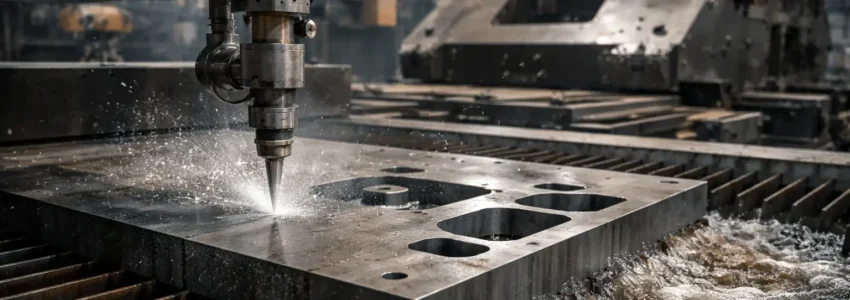
Hydro-abrasive waterjet cutting thick armour-grade steel plate in a defence engineering facility, with partially assembled armoured vehicle structure in the background

How Waterjet Cutting Services Support Modern Defence Engineering

Waterjet cutting services have become increasingly important in defence-related engineering because they eliminate one of the most common and underestimated risks in manufacturing: heat-induced material distortion. For contractors, project directors and procurement teams, this has direct implications for reliability, compliance, and long-term cost.

In defence manufacturing, the margin for error is effectively zero. Components are expected to perform under extreme conditions, over long operational lifecycles, and often within tightly controlled tolerances. In this environment, the choice of cutting process is not just a production decision but a performance decision.

16 Dec 2025
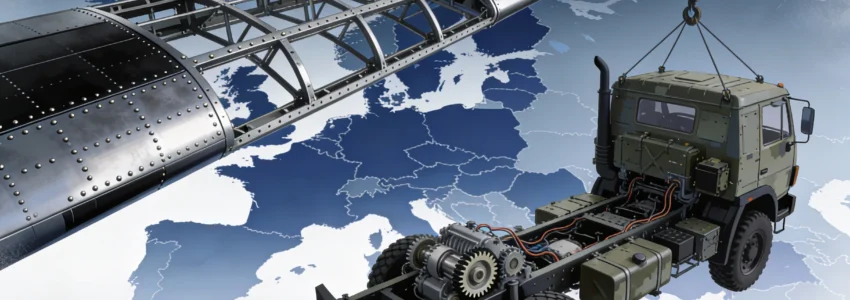
European supply chain image with aircraft wing frame and military vehicle chassis representing defence manufacturing networks

The State of Defence Manufacturing in Europe

Defence manufacturing in Europe is expanding but not always in the loud, headline-grabbing way people expect. Much of the growth is happening in procurement cycles, production lines, supply chain decisions, and capacity planning: more orders, more replenishment, more “can you deliver this faster?” conversations across the industrial base.

What’s driving it is a combination of rising defence budgets, NATO commitments, and the very real reality of rebuilding stockpiles while modernising equipment. And if there’s one consistent lesson in European defence right now, it’s this:

Defence doesn’t scale without manufacturing capacity, and manufacturing capacity doesn’t scale without subcontractors.

29 Oct 2024
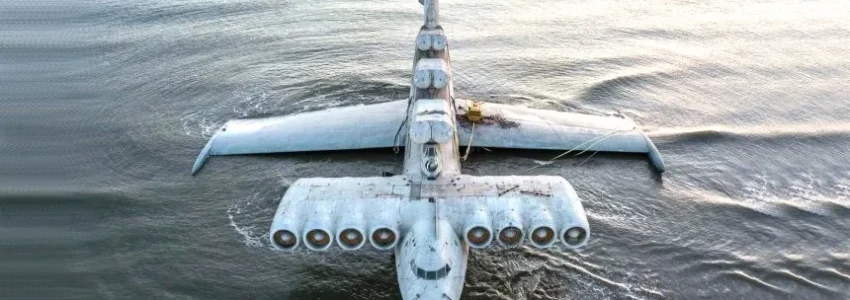
Ekranoplan Project

The Ekranoplan, sometimes known as the “Caspian Sea Monster,” is a unique Soviet creation that straddles the line between ship and aircraft. Developed during the Cold War, this remarkable craft symbolises the bold ambitions of Soviet engineering and showcases innovative applications in military vehicles designed for coastal defence. With its incredible size, powerful weaponry, and stealthy, low-altitude operation, the Ekranoplan remains a fascinating testament to a bygone era of military ingenuity.

3 Jun 2024

The Importance of Manufacturing for Defence

When it comes to national security, manufacturing for defence is crucial. High-quality, reliable components are vital for the effective functioning of military systems. Defence engineering spans a broad spectrum of activities, from designing and producing weapons systems to developing advanced technologies that safeguard national security. The precision and dependability of these components are paramount, as even minor defects can have serious consequences.

Recent Comments

    Events

    September 2026
    M T W T F S S
     123456
    78910111213
    14151617181920
    21222324252627
    282930