
Earlier this year TU Delft successfully launched a scale model of its Flying V jetliner. This new future-ready aeroplane is the epitome of next-gen aerospace engineering showing better fuel efficiency and an interesting design.
21
Dec
2020

22
May
2020
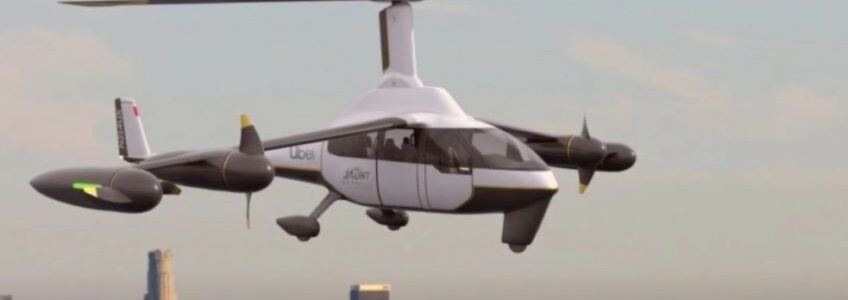
Image Credit: Jaunt Air Mobility
For some time, we’ve seen countless concepts of what an eVTOL air taxi may look like but this is not what you’d typically expect. Introducing Jaunt Air Mobility’s Reduced Rotor Operating Speed Aircraft, or ROSA for short.
This particular eVTOL air taxi seems to combine a helicopter and small aeroplane but it does seem to be the real deal. If you consider that safety and certification are the biggest obstacles the flying car market has to face, this eVTOL air taxi seems to be on the right track, or is it?
6
Apr
2020


The aviation industry may be experiencing a lull in light of COVID-19 flight restrictions but that hasn’t stopped the world’s largest aircraft. Aviation enthusiasts now have something to be excited about as the Antonov AN-225 cargo plane took to the skies over Ukraine. Flightradar24 tracked the Antonov AN-225 flying from its hub at Antonov Airport in Kiev, Ukraine.
31
Mar
2020

Back in October 2019, NASA took delivery of its first electric plane, called the X-57 Maxwell X-Plane. Based on the four-seater Tecnam P2006T conventional light aircraft, when the X-57 electric plane is fully developed, it is expected to be 500% more efficient in high-speed cruising. Also, it will produce no in-flight carbon dioxide emissions while being much quieter than most conventional aircraft.
28
Feb
2020

The aerospace sector wouldn’t exist today without outsourced, precision engineering services and components. While the majority of land vehicles are designed, constructed and tested in-house, the same does not apply to most aircraft.
Considering the number and diversity of aeroplane, spacecraft, satellite and helicopter components, aerospace engineering relies heavily on production chains and outsourced projects. It’s a complex process as each part or component must be designed and built to fit in with the overall plan.
17
Feb
2020
In a world dominated by air travel and global concerns around emissions, engineering innovation needs to be at the forefront. Airbus has done just that as they revealed a new aircraft design that could revolutionise the aviation industry.
16
Dec
2019

A 62-year-old seaplane was transformed into the world’s first fully electric commercial aircraft. The debut flight took place earlier this month over Vancouver. This modified six-seater DHC-2 de Havilland Beaver took off from the Fraser River at Harbour Air Seaplanes terminal in Richmond, British Columbia, just south of the international airport.
Greg McDougall, CEO and founder of Harbour Air Seaplanes, was at the helm taking the electric commercial aircraft on a 15-minute flight. The 750-horsepower magni500 propulsion system was developed by Australian electric motor manufacturer, magniX.
10
Sep
2019

With growing concerns around global warming and the increased usage of sustainable energy resources, hybrid aircraft could play a bigger role in the future. The aerospace sector has undoubtedly made impressive strides since the 1950s in terms of increased power and efficiency of engines. However, more recent studies indicate that engine technology could reach thermodynamic limits.
This means a more reasonable investment in the amount of energy we can extract from carbon-based fuel. More air travel and more aircraft in the sky will lead to increased fuel consumption and greenhouse gas emissions unless we find a suitable fossil fuel substitute.
26
Aug
2019

A new flying car has been unveiled in Japan by NEC Corp. While it is essentially a drone with four propellers, the company says it will be capable of carrying people. Even though the prototype only hovered for a minute, it did fly and marks another impressive development in the hotly debated area of future transport.
Over the last few years in Japan, a number of small, passionate flying car communities have emerged. They believe that Japan has the engineering knowledge and the right environment to succeed (and lead) a global flying car industry. Venture capitalists in Japan have set up a fund called the ‘Drone Fund’ which is purely for investing purposes into autonomous aircraft and flying car companies.
29
Jul
2019
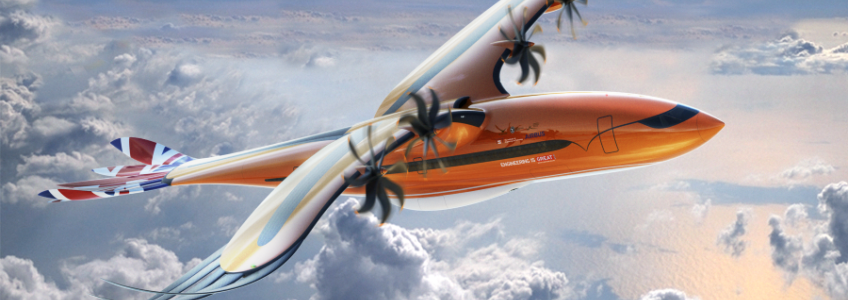
Image Credit: Airbus
Animals have long-inspired innovative engineering designs as they’ve evolved perfectly, as nature intended. This provides the ideal solution to environmental challenges, something European manufacturer, Airbus, hopes to achieve as they revealed a brand new concept hybrid-electric aircraft.
Liam Fox, UK Secretary of State for International Trade, unveiled the “Bird of Prey” concept at the Royal International Air Tattoo air show last month. At first glance, it is evident that this new hybrid-electric aircraft got its inspiration eagles, hawks and other aerial predators. Airbus revealed this new concept aircraft with the intention of inspiring the next-generation of aeronautical engineers.
Recent Comments