
Artificial Intelligence is expected to become the next technological frontier, according to most of the current studies and surveys across the world. Many of these investigations, and even experts, have gone so far as to claim that AI has not yet reached its maximum potential in the construction industry. They believe that by employing more Artificial Intelligence solutions, the construction sector may discover new ways to improve productivity. This would likely bring about an increase in resources dedicated to developing capabilities and AI playing a significant role in the construction process.
13
May
2022

27
Apr
2018

It’s always only a matter of time before countries explore each other’s successes (or failures) and this is no different. Combat drones, powered by advanced technology like artificial intelligence, are the new ‘wingmen’ to Chinese carrier-based fighter jets. Essentially, it appears to be an attempt to compete with the prowess of the United States’ unmanned aerial vehicle (UAV) programs. Some believe that it’s China’s version of the US Navy’s Unmanned Carrier Launched Airborne Surveillance and Strike (UCLASS).
According to Shi Wen, chief engineer and designer of China’s Caihong (CH), or Rainbow UAV series, “The joint operations of manned military aircraft, like fighter jets, and UAVs is the drone’s future. We are making efforts to promote artificial intelligence (AI) for UAVs to allow manned aircraft to co-pilot UAVs.”
23
Feb
2018
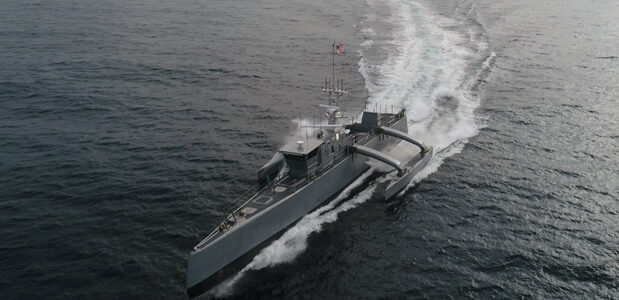
Naval warfare could be on the brink of a total makeover through cutting-edge technology and innovation. Making waves at the center is the Sea Hunter – a new breed of unmanned, autonomous vessels launched in 2016. It forms part of the DARPA Anti-Submarine Warfare Continuous Trail Unmanned Vessel (ACTUV) program. DARPA has already completed trials of a prototype unmanned submarine hunter and claims it could lead to a new class military vessel.
11
Aug
2017

The correlation between manufacturing trends and our economic growth is crucial. But how do we ensure innovation, competitiveness, higher income and improved quality of life? No surprise here as the answer lies in manufacturing. Investments in this sector impact the economy through job creation and career growth in other industries as well.
16
Jun
2017
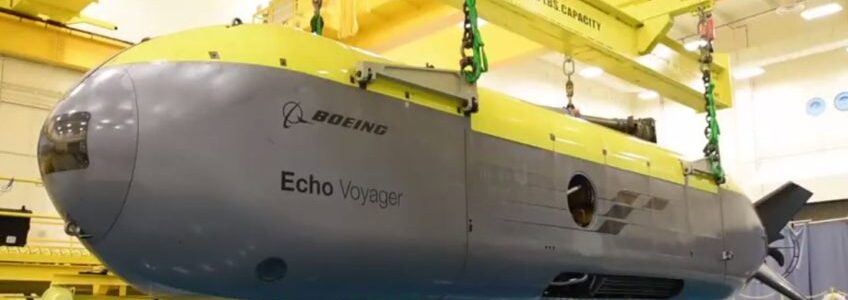
From Tesla’s self-driving cars to an autonomous unmanned underwater vehicle called the Echo Voyager. This is where we are at the moment. Technology, human ingenuity and curiosity are what make these projects a reality.
Early adaptations of what lies beneath the big blue have been around for decades. Our interest and curiosity about ocean life and underwater technology were inspired by movies like 20 000 Leagues under the sea, James Bond’s submarine car to more recent deep sea documentaries.
It is a fact that we’ve only discovered about 5% of the world’s oceans. So why are we so focused on space travel if we haven’t even explored most our own planet? Maybe Boeing has the answer with
12
May
2017

Military Technology: Applications of Autonomous Systems
Whether it’s conspiracy theories, Hollywood or reality; there’s certainly no shortage of newsworthy mentions of new military technology being developed. Autonomous systems, for example, is vital to solve many of the most difficult problems we currently face. These include exploring uncharted oceans, deep space, providing aid in emergency situations and probably more applications in the defense industry.
Already we have Apple’s Siri, Amazon’s Alexa and Microsoft with Cortana. These systems all operate on autonomous technology and the demand
- 1
- 2
Recent Comments