
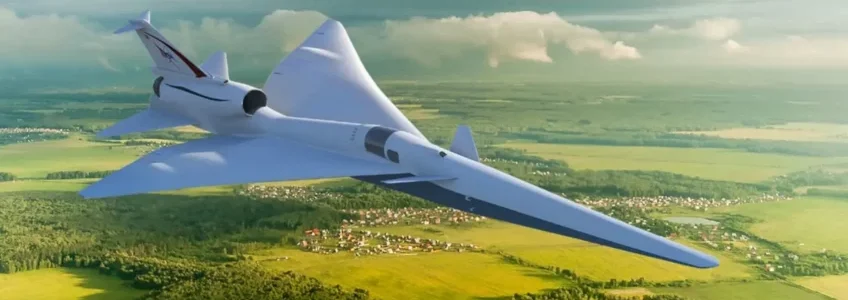
The dawn of a new era in aviation is on the horizon. One that promises the thrills of supersonic flight, but without those deafening sonic booms. How, you ask? Enter the X-59 QueSST supersonic jet, an experimental marvel from NASA.
1
Sep
2023
27
Oct
2022
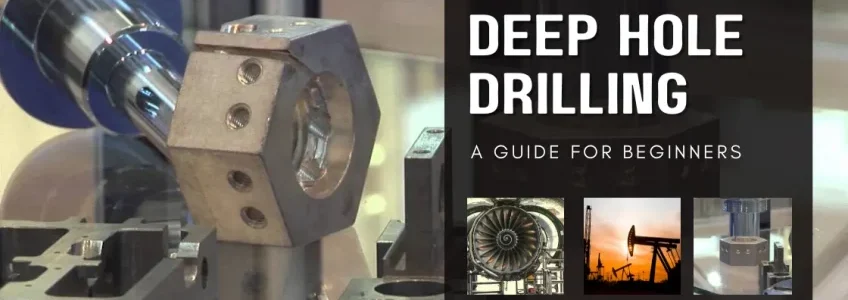
Deep hole drilling is a machining process that can produce holes up to ten times deeper than the diameter of the hole and is suitable for a variety of metals, including the strongest of superalloys. Deep hole drilling services require special tools and setups to deliver high-pressure coolant, cleanly evacuate chips and reach the depth-to-diameter. Deep hole drilling, also known as gun drilling, is a highly-specialised machining operation that only a few engineering companies can perform, including PRV Engineering. Here is a closer look at some of the processes, applications and pros and cons.
9
Sep
2022

British aerospace giant Rolls-Royce and Air China are entering into a new Joint Venture to build a maintenance, repair and overhaul (MRO) facility. The new facility, Beijing Aero Engine Services Company Limited, will provide essential MRO support on several engines. This Joint Venture between Rolls-Royce and Air China is a result of the United States increasingly implementing export restrictions on advanced technology and limited international travel.
6
Apr
2022

With all the talk about more sustainability in the aviation sector, it turns out old cooking oil could power the world’s largest passenger airliner. That is exactly what happened on the 28th of March 2022 when an Airbus A380 performed a first flight powered by 100% sustainable fuel.
24
Feb
2022

With all the hype around sustainability and decarbonisation in the transportation sector, everything is pointing to achieving net-zero. However, it’s not an easy feat since there are many moving parts but there are some fascinating aviation innovations that could turn the industry on its head.
18
Jan
2022

The new Boeing hypersonic aircraft concept could be a spiritual successor to the Mach 3 SR-71 Blackbird. At the AIAA SciTech aerospace forum, Boeing presented an artist’s rendering of the hypersonic aircraft concept delta-wing jet where it received a lot of attention.
12
Aug
2021

Solar power seems the most likely renewable energy solution when looking into the future. This conversion of energy turns sunlight into electricity, either directly through photovoltaics (PV), indirectly using concentrated solar power or a combination. But now, Caltech is taking this a step further by collecting solar power in space and sending it to Earth but before we get into Caltech’s Space Solar Power Project (SSPP), let’s take a quick look at what solar power is.
19
May
2021
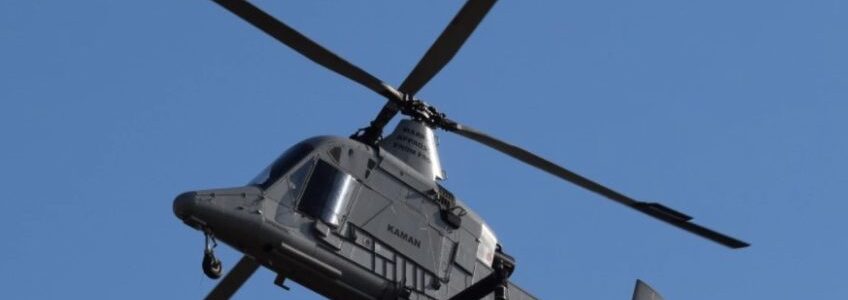
We are in for an exciting time in aviation as the world’s first unmanned helicopter has taken flight. Introducing the K-MAX TITAN from Kaman Air Vehicles, a division of Kaman Aerospace Corporation. They’ve successfully launched a maiden flight of the world’s first heavy-lift unmanned helicopter for the commercial market. Keep reading as you’ll want to watch the fascinating video from Kaman.
12
May
2021

Decarbonising The Aviation Sector: Electric vs Hydrogen Aircraft
We harnessed the power of flight more than a century ago when Wilbur and Orville Wright achieved the first powered, sustained and controlled aeroplane flight. Over time, this technology advanced allowing people to connect from all over the world fast than ever. However, this form of transport relies entirely on fossil fuels and that’s not a sustainable, long-term solution. If we are to succeed in decarbonising the aviation sector, we need another plan but will it be electric planes or hydrogen aircraft?
17
Mar
2021

There hasn’t been much to celebrate in the aviation sector since the pandemic grounded flights across the world, almost bringing it to a standstill. However, there is something to look forward to in a post-Covid world and that is supersonic passenger aircraft.
Recent Comments