Archives

New Technology

16 Apr 2016

Back in February we were talking about the developments in pharmaceutical engineering which allowed the production of the A-Gear robotic arm. The device was the work of a team of people from 4 universities and was the first prototype of a device that allowed independent operation of the arms for Duchenne muscular dystrophy sufferers. Better mechanics and thinner, more flexible materials allow the wearer to use the supports discreetly underneath clothes and without stigma.

Last month news of further research in the area of pharmaceuticals and prosthesis development hit the headlines with a report on a new prosthesis. One that has been connected directly to bone, nerves and muscles, allowing the patient to have free mobility of the limb.
19 Feb 2016

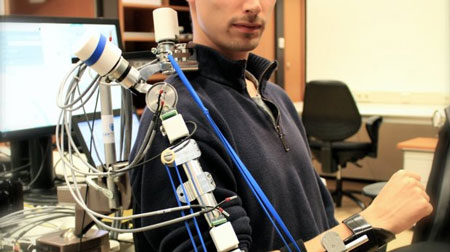
Researchers in the Netherlands have developed a robotic arm that improves the lives of people with Duchenne Muscular Dystrophy.

The A-Gear robotic arm is the result of development work by a team of people from 4 different universities; the University of Twente’s MIRA research centre, the VU University Medical Centre Amsterdam, Delft University of Technology and Radboud University Medical Centre. It is the first prototype that can support independent operation of the arm whilst still being discreet and body connected. The A-Gear can easily be worn under clothing and so there is less stigma attached to its use.

5 Feb 2016

Back at the end of 2014, the world was amazed to hear from NASA about the final test phase of a 3D printer in space. The printer, which had been used on the ground prior to its launch into space, went to the International Space Station on a resupply vessel in September of 2014. A ratchet wrench printed from a design file transmitted from the ground was completed in December. The wrench along with a number of other things printed was then sent back to earth in 2015 for rigorous testing.

In December 2015 another resupply vessel went up to the International Space Station and on board this time was the European contribution to 3D printing in space – a Portable on Board 3D printer. The printer, measuring 25cm on each side and weighing just 5,5kg prints objects made from polylactic acid (PLA). PLA is a plastic that is made from renewable resources and is also biocompatible and biodegradable. It was built by Altran Italia in partnership with Thales Alenia Space and the Italian Institute of Technology under the direction of the Italian Space Agency, ASI.

30 Oct 2015

Back in 2014 we were talking about the experimental 3D printed joints being tested by the Airbus Group. The Rotite Fastener, was being tested on bicycles before being progressed into aircraft, but it was hoped that the technology could be developed and progressed into the aero industry making the attachment of electrical and mechanical components easier.

Additive manufacturing (the process of building components layer by layer) started off being used just for building prototype parts, but has now moved on to producing in flight components in the aero industry.

In March this year 3D printed parts got the go ahead from the FAA to be used in flight and as a result Boeing have used additive manufacturing to install over 20,000 non metallic 3D printed parts in their planes. They are using 3D printed parts in military and commercial aircraft.

21 Aug 2015

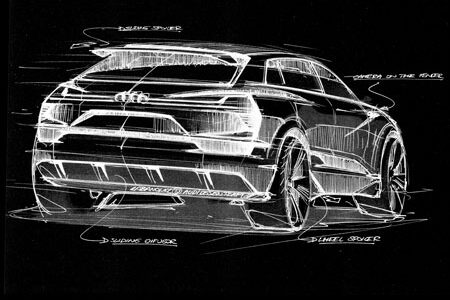
Audi’s all electric SUV is destined for production following its unveiling at the IAA 2015. The vehicle, which it is hoped will be in production in 2018 will have a range of 310 miles and is expected to be one of the stars at next month’s IAA in Frankfurt.

The Audi etron Quattro benefits from the expertise in developing the R8 etron and will be the brands first large series electric car.

17 Jul 2015

Self driving cars, whilst once a novel and entertaining idea have now become a regular news feature. The design and rigorous testing they are going through is all in an effort to see road safety improved by eliminating driving error.

In fact a recent report in manufacturing.net stated that in the 6 years and 1.9 million miles of testing by Google there have only been 14 accidents involving their self driving cars. Google say that none of the accidents were caused by their self driving cars. In 11 of the 14 accidents, the self driving car was rear ended, by distracted drivers.

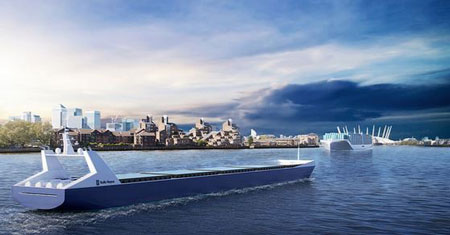
So, could autonomous applications be applied to ships to improve efficiencies and also the level of CO2 emissions, which are twice that of the aviation industry? Could we see autonomous ships at sea?  Rolls Royce think so.

10 Jul 2015

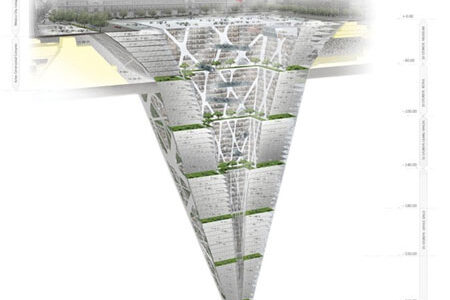
Will this be the way to solve overcrowding in big cities?

For years there has been concern over the space available for new buildings, whether it’s housing or industrial. Skyscrapers have got taller and taller and the space between buildings has reduced. But still, this isn’t solving the problem of overcrowding and in some countries planning authorities are becoming uncomfortable with the higher structures.

Living like the fictional Wombles, ‘underground’ is increasingly looking as though it could become a reality at some point in the future. We travel underground regularly, even using tunnels to get to other countries, so why not take that next step?

19 Jun 2015

All areas of engineering are evolving and developing and we like to keep an eye on what’s going on, reporting from time to time on innovative and sometimes controversial developments.

When it comes to robotics most of the things we’ve written about have been ground breaking developments that have meant that safety can be increased or that major improvements in quality of life can be achieved.

We even wrote about whether increased automation means that less skill will be required in the future. It seems the answer is no – operators still need to understand what they’re doing, why they’re doing it and what could go wrong. However, automation can and does help improve efficiency.

3 Jun 2015

The constant mission to reduce pollution and produce more fuel efficient vehicles led to major research and development in the auto industry. Now all major car manufacturers have a hybrid vehicle in their suite of offerings.

With air traffic forecast to continue to increase there are demands for additional runways and extra services. This, of course causes conflict. Flight companies want to meet the needs of the consumers, but plans for increasing runways and flight services are meeting opposition due to the anticipated increase in noise and pollution.

Could there be a solution? Can we ever have quieter runways and less pollution? Siemens and Airbus think we can!

1 May 2015

Being involved in the rail industry, we at PRV like to keep an eye on the latest developments and innovations coming over the horizon, whether it’s to do with passenger travel, the moving of freight or the development of the trains of the future. So the recent headline about a UK company winning funding to develop a solution for passenger travel and the movement of freight for the future caught our eye.

A St Ives based company has won a share of £2.2m through the Tomorrow’s Train Design Today (TTDT) programme.

Their train carriage design, where passenger carriages can be reconfigured to carry freight or passengers at different times, is one of 3 designs that won a share of the funds to develop the rolling stock of the future.

Events

May 2026
M T W T F S S
 123
45678910
11121314151617
18192021222324
25262728293031