Archives

New Technology

6 Feb 2017

After a year of various design stages the SpaceX Hyperloop competition weekend took place at the end of January.

Hyperloop, the project to revolutionise the future of travel is some way off but the involvement of SpaceX CEO Elon Musk continues to fuel the excitement around the project, keeping it very clearly on the agenda of engineers worldwide. Pods gliding through low pressure tubes delivering people and cargo from A to B at speed and with no turbulence, may seem like something from a sci-fi movie, but with some systems tested last year and more scheduled for this year, that future could become a reality in the next 5 years.

21 Jan 2017

Vehicles from those old sci fi films are increasingly becoming a reality. Driverless cars, autonomous boats and all sorts of drones are regularly in the news. The latest to hit the headlines is the Hoverbike.

The Hoverbike (which is in fact a quad copter) started life way back in 2014 and was funded by a Kickstarter campaign. Development on the Hoverbike, continued into 2015 and following a test flight of their prototype at the Paris air show, UK company Malloy Aeronautics paired up with American engineering company SURVICE to deliver a Hoverbike for the US Department of Defence.

14 Jan 2017

Nearly 2 years after the project confirmed equity funding, the Swansea Bay Tidal Lagoon has just been backed by a government commission review.

Former UK energy minister Charles Hendry has been gathering evidence for the independent enquiry for almost a year and as part of that review has visited all the potential sites and held various discussions with the industry. That report says that the project would make a strong contribution to the UK’s energy supply.

There were a host of other conclusions in the report, but some of the headline ones were:

23 Dec 2016

As we approach the year end we thought we’d take a look back at some of the new and innovative engineering stories and reports that came out this year.

There were some astounding breakthroughs in the medical and healthcare sectors as well as enhancements in the more run of the mill procedures.

Osseo integration (the practice of using pins to implant directly into the bone) has been in the news throughout the year. Despite many successful surgeries overseas, growth in the use of the procedure has been relatively slow. A UK pilot of the procedure for military personnel who have lost limbs launched in September this year. If successful it is hoped the use of the procedure can be adopted more widely.

26 Nov 2016

Innovative engineering developments make for good news and when those developments include medical improvements it makes for even happier headlines. In the defence sector, however, the headlines are sometimes more muted, yet there are massive innovations and developments taking place.

Whatever your personal opinion about budgets and spending in the defence sector, the simple fact is that we need military vehicles and equipment on land, in the sea and in the air and they need to be equipped with up to date, modern technology and materials if they are to do their job. And it’s not just vehicles and equipment that matter. Developments in fabrics and communication methods also help personnel to do their jobs as safely as possible. Some of those innovations, while being piloted for military use, may also have huge benefits in other sectors.

18 Nov 2016

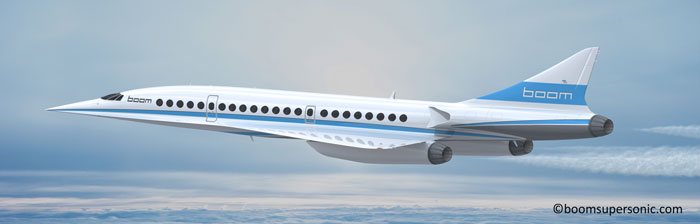
Since the withdrawal of Concorde, there has been little news of any supersonic flight service to replace it. In fact development in supersonic passenger aircraft appeared to have stalled with cost and economic viability seeming to be one of the reasons. Concorde, despite being a beautiful aircraft was, after all, a flight service used only by the wealthier in society. But that could be set to change with the unveiling of the Boom supersonic passenger aircraft.

The Boom supersonic passenger aircraft is promising flights from London to New York in 3.5 hours with a return ticket price of $5000 – a similar price to the cost of a current business class flight. Whilst for many of us, this may still be unaffordable, when the flight time is more than halved, it’s a cost many businesses will be more than happy to pay.

The aircraft will have just 40 – 50 seats and the technological and material advancements since Concorde, mean that aircraft can be produced and maintained more cost effectively and those savings can be passed on through the lower ticket price.

23 Sep 2016

British motorsport company Prodrive announced this week that testing of the Hummingbird folding lightweight bike would begin in October, with anticipated production and sales starting early in 2017.

The Hummingbird is the concept of London based designer Petre Cracuin. Petre along with co-founder Ligia Stan has a passion for bikes and the project was born out of their desire to have a lightweight folding bike that was not only a pleasure to ride but was also easy to carry around and looked good. Despite having multiple bikes themselves, they realised there was nothing out there that fitted the bill so Petre set to work to solve the problem and the Hummingbird was born. A folding bike that is comfortable to ride, looks good, is easy to fold and carry and weighs in at an astounding 6.7kg. To put that in perspective, that’s the same as two normal weight domestic cats!

5 Aug 2016

Back in March this year London was set to see the introduction of 5 all electric double decker buses capable of driving up to 190 miles in day on one 4 hour overnight charge. The 5 buses joined a fleet of single deck electric, hydrogen and hybrid buses as part of the effort to reduce emissions in the city centre.

At the other end of the country Stagecoach are operating all electric bus services in Inverness and having worked with manufacturer Optare have managed to extend the range of miles the vehicles can do. In addition to running on electricity, these buses also feature electric heating systems rather than the standard diesel ones. This makes them the UKs’ most efficient electric buses in terms of kWh per mile and they fist of their kind.

1 Jul 2016
There are many advantages of waterjet cutting compared to other methods, but if we had to try and summarise them neatly into a few words we’d say;

The ability to cold cut almost any material in any direction with less waste and a superior finish.

But really that’s not enough of an explanation, so let’s expand a little on that statement and address some of the areas of improvement over more traditional cutting methods.

Omni-directional cutting
Waterjet cutting allows omni-directional cutting – the ability to cut in any direction which gives much greater cutting flexibility. In most cases starting holes are not required as the water jet is able to perforate the material. It is now much easier to cut more complex shapes and designs into all sorts of materials.

3 Jun 2016

At the end of April the Bloodhound Education team, combined with the BBC micro:bit project launched a huge competition for secondary school children; The Model Rocket Car Challenge.

Supported by the army and Microsoft among others, and forming part of the Guinness World record rocket car challenge, school teams are challenged to make foam rocket cars and race them through approved tracks; the aim of course, to be the fastest!

The races are being organised through the network of Bloodhound hubs and will see a series of regional heats that will lead up to a final at the end of June at the Santa Pod Raceway in Northamptonshire. The winners will spend a day watching Bloodhound test runs as well as securing a financial prize for their school.

Events

May 2026
M T W T F S S
 123
45678910
11121314151617
18192021222324
25262728293031