Archives

Defence

26 Feb 2019

Image Credit: Rolls-Royce

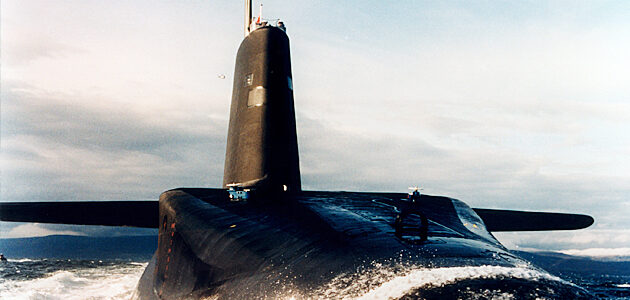
The UK Government, with Defence Secretary Gavin Williamson, has awarded Rolls-Royce Submarines with a £235m contract to support nuclear propulsion systems for the Royal Navy’s nuclear-powered submarines. They have also revealed the name of the third Dreadnought submarine that will add to their already powerful naval defence. It is called HMS Warspite in memory of the last ‘great ship’ built during the reign of Queen Elizabeth I.

As the contract stipulates, Rolls-Royce will deliver the required support, advice and materials to ensure the safety of the propulsion systems. The multi-million-pound deal relates to the current Trafalgar, Vanguard and Astute class submarine fleet until 2022. The contract will also help sustain approximately 500 jobs in the UK mainly in Derby, HMNB Clyde and HMNB Devonport.

20 Feb 2019

Image Credit: Boeing

Back in 2017 we reported on the Boeing Echo Voyager autonomous unmanned submarines and now, big brother is here. It comes in the form of the Orca Extra Large Unmanned Undersea Vehicles (XLUUVs) built for a host of applications.

The US Navy awarded Boeing with a US$43 million contract to build four Orca’s and the support gear. Boeing partnered with Huntington Ingalls Industries to develop the 51-ft (15.5 m) long unmanned undersea vehicles which will operate in the open ocean. This is largely thanks to next-level autonomous navigation systems and a fuel module that gives the Orca an incredible range of 6,500 nm (7,480 mi / 12,038 km).

But to get a real idea of the engineering ingenuity of the Orca, let’s recap on the Boeing Echo Voyager.

11 Jan 2019

Image Credit: IDF

The defence sector is a demanding industry as companies from all over the world compete for new innovations and technologies. From tanks and armoured personnel carriers to autonomous vehicles and helicopters, countries are always looking to expand their defence forces.

We’ve recently covered some really interesting defence technologies ranging from micro drones to UAVs and military robots. Looking at some of the developments from 2018, the Israeli Defence Force springs to mind.

30 Dec 2018

Image Credit: Sikorsky/Boeing

When it comes to military aircraft, vehicles and other emerging technologies, the Sikorsky-Boeing SB>1 Defiant is the future. This next-generation military helicopter shows just what today’s technologies and advanced systems are capable of. After years of research and development, Sikorsky and Boeing have revealed their master plan for the latest in military aircraft.

14 Dec 2018

Img credit: sputniknews.com

The defence sector is forever changing and Russia’s new Peresvet laser weapon gives a terrifying glimpse into the future. Russia announced the launch amidst some controversy after the US threatened to withdraw from an arms treaty between the two military powerhouses. Could this be a coincidence? Many people think not. Chances are that it probably fits perfectly with Russia’s plans as tensions between the two countries have increased in recent times.

President Vladimir Putin already promised to deploy several high-tech weapons in the near future when he made his annual address to Russia’s Federal Assembly in March 2018. He wants the West to know that Russia is developing new weapons and should be considered a real force if a New Cold War erupts.

16 Nov 2018

Img Credit: Yahoo News Singapore

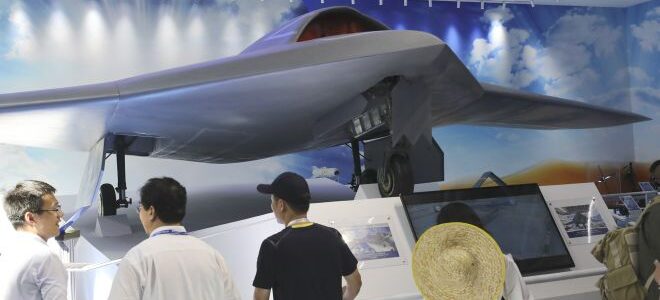
China continues to impress with their latest innovation, new stealth combat drones known as Tian Ying (CH-7). It featured at the air show in Zhuhai, a biannual event that showcases China’s latest developments in military and civilian aviation. There were several Chinese state-owned arms companies also displaying their drones. It appears China is investing heavily in unmanned aircraft with plans to develop drones capable of flying from one of its future aircraft carriers. Could this be a role for the CH-7 to fulfil?

According to China’s Ministry of Industry and Information Technology, more than 350 private Chinese firms are now capable of making unmanned aerial, surface or ground vehicles.

9 Nov 2018

Military vehicles and robots date as far back as WWI with small, remote-controlled and tracked, disposable explosive devices. WWII saw even more innovative designs with the Soviet Army developing full-sized remote-controlled tanks between 1930 and 1940. Even the Brits had a hand in remote controlled tanks with their Matilda MK2 Infantry tank, the ‘Black Prince’.

While nothing compares to modern day military vehicles and autonomous systems, our history is filled with incredible engineering feats. With so many different autonomous military vehicles and systems, we’re only focusing on a few of the standouts.

12 Oct 2018

The Farnborough Air Show in July 2018 featured several new projects, concepts and prototypes but one that stood out was the Tempest, UK’s new combat aircraft. A number of companies are involved with this project including BAE Systems, Rolls-Royce, Italy’s Leonardo and missiles expert MBDA. Reports suggests that the UK will invest £2bn in the project with the aim of a first flight in 2035.

There is no denying that the UK has been a leader in aerial combat for over a century with a wide range of skills and technology. This latest project sends a clear message that they are determined to make sure they remain at the top.

5 Oct 2018

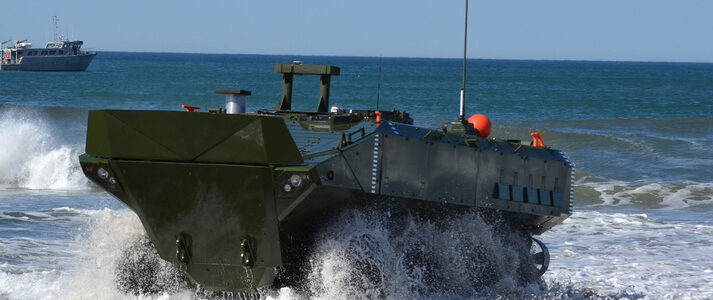
BAE Systems has been a trusted supplier to the US Marine Corps for more than 70 years. Their most recent engineering accomplishment is the next-gen ACV 1.1 Amphibious Combat Vehicle. Set to replace the current range of Amphibious Assault Vehicles (AAVs), the new vehicle offers improved survivability.

This particular combat vehicle was designed from scratch to meet the real mission challenges of deploying Marines from ship to shore. The ACV 1.1 is a combination of the long history between BAE Systems’ amphibious legacy and Iveco Defence Vehicles’. Together, they have produced more than 30 000 multi-purpose armoured vehicles with the latest variant a certain standout.

21 Sep 2018

3D printing, often referred to as Additive Manufacturing (AM) is the sequential layering of materials using computers to create three-dimensional shapes. The process appears relatively simple as a 3D digital model of the item is created. This is done either through computer aided design (CAD) or using a 3D scanner.

The printer reads the design and “prints” successive layers of a medium, either liquid, powder, or sheet material. These are joined together or fused to create the final product or item. While the 3d printing process can sometimes be slow, it can create almost any shape which is particularly useful for geometrically complex components.

The future of construction lies with robots getting down and dirty while implementing 3D printing technology. And now, 3D printing has found yet another purpose with the US military building barracks using a large 3D printer.

Events

February 2026
M T W T F S S
 1
2345678
9101112131415
16171819202122
232425262728