
The steel industry is a significant contributor to global carbon emissions, accounting for around 7% of all emissions. As such, decarbonising steel production is crucial for achieving global climate goals and reducing the impact of human activity on the environment. There are several ways to decarbonise the steel industry, including the use of alternative raw materials, such as recycled steel and iron ore, as well as the adoption of new technologies and processes that reduce carbon emissions during the steel-making process. In this article, we explore some of the challenges, benefits and processes of decarbonising steel production.
14
Dec
2022

5
Dec
2022

With space exploration advancing at a rapid pace, it won’t be long before we see humanity’s first home in another world using advanced off-world construction technologies.
To further develop efforts for building on the Moon, NASA has awarded ICON, a construction technologies company based in Austin, a contract to find practical off-world construction solutions for building on the lunar surface and on Mars. The primary objective of this partnership is to build infrastructures using 3D printing technology, including landing pads, habitats, and roads.
1
Dec
2022

As construction technology advances, it’s important for companies to keep up as new methods and materials are being developed to make construction faster, easier, more efficient and sustainable. With more companies transitioning to digital platforms and embracing new technologies, the future of construction is sure to be an exciting one. Here are some of the most prominent technologies to consider now and in the future.
22
Nov
2022

Structural steel fabrication is the process of transforming raw steel into structures, products or components that can be used in construction or other industrial applications. Structural steel fabricators create a variety of steel beams, girders, decks and columns, among other things, that are used in a wide range of construction projects. So, if you are looking to get involved in the construction industry or just want to know more about steel beam fabrication, then this article is for you.
18
Nov
2022

The tallest skyscraper in Singapore is currently the Guoco Tower, measuring 284 m or 931 ft but that could change as Skidmore, Owings & Merrill (SOM) has revealed plans for a new mixed-use building that would reach 305 m or 1,000 ft. It will be more than just a building as this proposed skyscraper is inspired by bamboo forests with ambitions for a healthier work environment using special materials while reducing its carbon footprint.
8
Nov
2022

Effective structural design is challenging as the process requires an engineer to carefully consider loads, stresses, and forces at every step. They must also think about the environment in which it will be built and how it might affect other nearby structures. In this article, we share a few of the most important structural design considerations an engineer should keep in mind at all times. But first, let’s recap what exactly is meant by structural design.
1
Nov
2022

Whether it’s wind power, hydrogen or electric vessels, decarbonising efforts in the maritime sector are reaching new heights. Among the latest developments is the new Alte Volare electric hydrofoil concept from British superyacht tender specialists, Cockwells. Here’s what we know.
27
Oct
2022
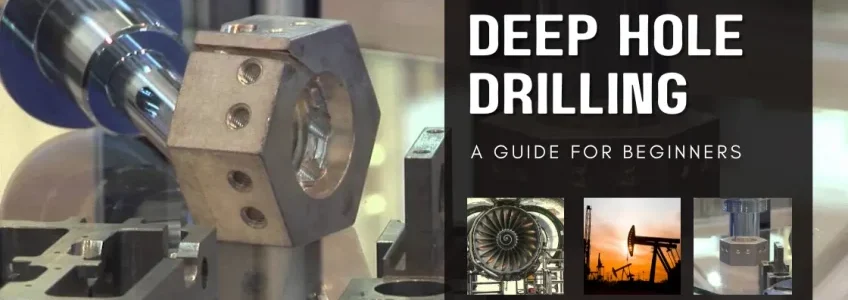
Deep hole drilling is a machining process that can produce holes up to ten times deeper than the diameter of the hole and is suitable for a variety of metals, including the strongest of superalloys. Deep hole drilling services require special tools and setups to deliver high-pressure coolant, cleanly evacuate chips and reach the depth-to-diameter. Deep hole drilling, also known as gun drilling, is a highly-specialised machining operation that only a few engineering companies can perform, including PRV Engineering. Here is a closer look at some of the processes, applications and pros and cons.
21
Oct
2022

General Dynamics Land Systems (GDLS) unveiled its impressive AbramsX battle tank technology demonstrator at the AUSA 2022. According to former military officials, it is the most significant upgrade of American military tank technology since the early days of the Cold War. While the AbramsX battle tank refers to the Abrams tank family, it’s more of a concept of the future generation of the main battle tank to nullify new threats the modern battlefield brings.
13
Oct
2022

Is fusion energy the future? Based on recent developments from organisations across the world, it is certainly more of a possibility than just a few years ago. A nuclear fusion reactor that generates more energy than it consumes could pave the way for large-scale clean energy production. After all, that’s what defines a nuclear fusion plant, according to CFS. Let’s take a quick look at STEP and ARC fusion reactors with a brief overview of the SPARC project.
STEP Reactor For Fusion Energy
Spherical Tokamak for Energy Production, STEP for short, is an ambitious programme initiated by the UK government to design and construct a prototype fusion power plant. The goal is to create a reactor that could generate carbon-free fusion energy within two decades.
The STEP reactor is a variant of the basic tokamak reactor using magnetic fields to confine and heat a plasma of hydrogen atoms until they fuse together, releasing huge amounts of energy. Using a process called electron cyclotron resonance heating, it would also be more efficient than current designs as microwaves heat the plasma directly which means lower energy loss as heat.
While earlier fusion reactors were large and expensive, the STEP design has a diameter of around 10 m, making it relatively small compared to ITER (International Thermonuclear Experimental Reactor). This greatly reduces the cost but also puts higher stress on the applied materials.
ARC Reactor For Fusion Energy
The ARC (Affordable, Robust, Compact) reactor is a smaller and simpler design than STEP. It is being developed by a team of scientists from MIT (Massachusetts Institute of Technology) and Commonwealth Fusion Systems. The name and design were inspired by the fictional Arc Reactor built by Tony Stark, Marvel’s Iron Man, who attended MIT in the comic book series.
The ARC reactor is based on the tokamak design, which uses magnetic fields to confine a plasma of hydrogen atoms. They are working on the way to generate magnetic fields using rare-earth barium copper oxide (REBCO) high-temperature superconductor magnets This material enables higher magnetic field strength to contain heated plasma in a smaller volume.
The ARC reactor would also be more efficient than current tokamaks thanks to its innovative design, which would allow it to operate at higher temperatures. The first machine planned for this project is a scaled-down demonstrator called SPARC (as Soon as Possible ARC). If successful, SPARC would be the first device capable of “burning plasma” where heat from all the fusion reactions provides continuous fusion energy without adding extra energy.
Achieving “Burning Plasma” With SPARC
The inner workings verifying that SPARC will achieve net fusion energy have been peer-reviewed and published in the Journal of Plasma Physics. These are the first peer-reviewed papers from a private commercial fusion venture demonstrating that a small fusion device will produce net energy during an operation where the plasma produces more fusion power than it needs to start and maintain the process.
A major benefit of SPARC over ITER is that SPARC’s plasma will be confined by high-temperature superconducting magnets which have only become commercially available in recent years, long after ITER was first conceived. These magnets can produce significantly more powerful magnetic fields than ITER’s — 21 teslas from SPARC compared to ITER’s 12. To put that into perspective, the Earth’s magnetic field ranges from 30 millionths to 60 millionths of a tesla.
Nuclear Fusion Could Help Meet Global Climate Targets
Fusion energy has the potential to provide an abundant, safe and clean source of energy. The STEP and ARC reactors are two promising designs for making fusion energy a reality. If successful, these reactors could help to meet global climate targets and provide a major boost to the fight against climate change.
In case you missed it, we published an interesting article recently about the UK government planning to build a new nuclear fusion plant at West Burton, Nottinghamshire. It highlights how the plant will work, the benefits of fusion energy and whether it is safe. For more industry news and the latest updates in engineering, manufacturing and technology, follow our blog and join the conversation on social media using the hashtag #PRVtech.
References:
- Wikipedia.org
- Plasma Science and Fusion Center
- Commonwealth Fusion Systems
- UK Atomic Energy Authority (UKAEA)
Recent Comments