
The world is advancing at a rapid pace with innovations coming from all sides and robotic exoskeletons are making headlines. Not too long ago these “power suits” were nothing more than science-fiction but not anymore. Thanks to enhanced technology and advanced engineering, exoskeletons are becoming increasingly popular across several sectors.
13
Jan
2020

19
Sep
2019
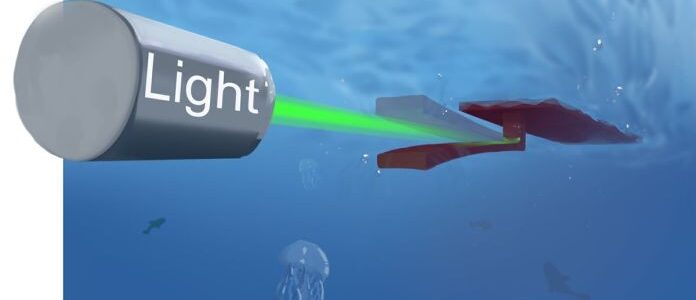
The robotics industry has advanced tremendously in recent years with several cutting edge developments. Now, researchers have created a hydrogel-based, light-powered robot that swims in response to a direct light source.
This particular robot, the OsciBot, is attracted to and only powered by a constant visible light source. It doesn’t require a battery pack or power tether of any kind. This type of technology could revolutionise the maritime industry in terms of energy harvesting and propulsion in the future.
13
Aug
2019

Robotics of all types and sizes with various applications have made headlines around the world adding fuel to the innovation fire. The oil and gas industry has always been a leader in pushing the boundaries of disruptive technologies. Now, with rising interest and investment, subsea robotics has the potential and power to transform the oil and gas sector as a whole.
Technological advancements and the continued race for innovation in nearly every industry is evident across the globe. For some time now, oil companies have turned to robots and drones to perform dangerous activities in the harshest environments. While some of the ‘oil and gas tech toys’ help save costs, many of them greatly improve performance and safety. This is as a result of fewer people being exposed to dangerous tasks and situations.
20
Feb
2019

Image Credit: Boeing
Back in 2017 we reported on the Boeing Echo Voyager autonomous unmanned submarines and now, big brother is here. It comes in the form of the Orca Extra Large Unmanned Undersea Vehicles (XLUUVs) built for a host of applications.
The US Navy awarded Boeing with a US$43 million contract to build four Orca’s and the support gear. Boeing partnered with Huntington Ingalls Industries to develop the 51-ft (15.5 m) long unmanned undersea vehicles which will operate in the open ocean. This is largely thanks to next-level autonomous navigation systems and a fuel module that gives the Orca an incredible range of 6,500 nm (7,480 mi / 12,038 km).
But to get a real idea of the engineering ingenuity of the Orca, let’s recap on the Boeing Echo Voyager.
6
Jul
2018
While Industry 4.0 is all about automation and digitisation, the future of manufacturing is in personalisation. Manufacturing 5-0, or the Fifth Industrial Revolution, will focus on the co-operation between humans and robots. Although the focus remains on automation and advanced manufacturing, the human element is more important than ever. We’ll take a closer look at what this means for manufacturing but first, let’s recap our journey up to now.
20
Apr
2018
Construction is a $10 trillion global industry and robots are set to revolutionise the industry by 2020. Productivity in manufacturing, retail and agriculture has grown exponentially since 1945 but it has barely gone up in construction. How will robots be used to increase productivity and if they do, how will it impact the workforce?
29
Dec
2017

Reflecting back on 2017 we saw a number of engineering trends making their mark in a big way. Some include advanced robotics, additive manufacturing, IIoT, quantum computing and big data. Even though it’s possible to identify hundreds of minor developments, what are the major engineering trends to follow in 2018? Take a look at these top trends we put together to end the year on a positive note.
11
Aug
2017

The correlation between manufacturing trends and our economic growth is crucial. But how do we ensure innovation, competitiveness, higher income and improved quality of life? No surprise here as the answer lies in manufacturing. Investments in this sector impact the economy through job creation and career growth in other industries as well.
2
Apr
2017

The Future of Mini Drones or MAV’s (Micro Air Vehicles)
Drones have been around for some time but the on-going technological development in advanced engineering is astonishing. Can you imagine a swarm of robotic and autonomous insects?
When you think of mosquitoes, there really aren’t many good things to say. They often carry potentially lethal diseases such as malaria. Mosquitoes are annoying and their bites can be really painful, itchy and irritating.
This is not what Zoologists from the University of Oxford and the Royal Veterinary Hospital in Japan are focusing on though. In fact, they’ve discovered something very interesting.
19
Feb
2016
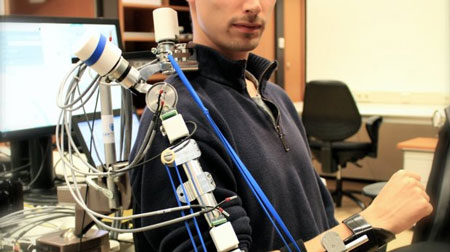
Researchers in the Netherlands have developed a robotic arm that improves the lives of people with Duchenne Muscular Dystrophy.
The A-Gear robotic arm is the result of development work by a team of people from 4 different universities; the University of Twente’s MIRA research centre, the VU University Medical Centre Amsterdam, Delft University of Technology and Radboud University Medical Centre. It is the first prototype that can support independent operation of the arm whilst still being discreet and body connected. The A-Gear can easily be worn under clothing and so there is less stigma attached to its use.
Recent Comments