Tag Archives: New technology

5 Feb 2016

Back at the end of 2014, the world was amazed to hear from NASA about the final test phase of a 3D printer in space. The printer, which had been used on the ground prior to its launch into space, went to the International Space Station on a resupply vessel in September of 2014. A ratchet wrench printed from a design file transmitted from the ground was completed in December. The wrench along with a number of other things printed was then sent back to earth in 2015 for rigorous testing.

In December 2015 another resupply vessel went up to the International Space Station and on board this time was the European contribution to 3D printing in space – a Portable on Board 3D printer. The printer, measuring 25cm on each side and weighing just 5,5kg prints objects made from polylactic acid (PLA). PLA is a plastic that is made from renewable resources and is also biocompatible and biodegradable. It was built by Altran Italia in partnership with Thales Alenia Space and the Italian Institute of Technology under the direction of the Italian Space Agency, ASI.

30 Oct 2015

Back in 2014 we were talking about the experimental 3D printed joints being tested by the Airbus Group. The Rotite Fastener, was being tested on bicycles before being progressed into aircraft, but it was hoped that the technology could be developed and progressed into the aero industry making the attachment of electrical and mechanical components easier.

Additive manufacturing (the process of building components layer by layer) started off being used just for building prototype parts, but has now moved on to producing in flight components in the aero industry.

In March this year 3D printed parts got the go ahead from the FAA to be used in flight and as a result Boeing have used additive manufacturing to install over 20,000 non metallic 3D printed parts in their planes. They are using 3D printed parts in military and commercial aircraft.

16 Oct 2015

First came driverless cars, then came research into autonomous ships to help with transport freight emissions. Earlier this month Mercedes Benz tested an autonomous big rig on a public road and this week the news is of a pilotless helicopter being tested to help in the battles with wildfires in the United States. Autonomous and remote controlled vehicles are being used more and more in the battle for improved efficiency, safety and sustainability.

Earlier this week a Lockheed Martin helicopter capable of flying autonomously was launched in Idaho. Whilst the helicopter is capable of flying without a pilot, there was a safety pilot on board during the testing. The helicopter completed multiple drops of water that it had scooped up and then delivered to a demonstration ridge.

Why a pilotless helicopter?

28 Sep 2015

Traditionally 3D printing, or ‘Additive Manufacture’ has been used mainly to create prototypes and showcase design ideas. The speed with which Additive Manufacture (AM) can take place along with the versatility of the manufacture method causes it to be the most obvious choice when creating new designs.

An example of where AM is still being used for it’s traditional versatility is the surgeons of Great Ormond Street Hospital using a 3D printer to create a model of a patients’ Trachea. The surgeons had to perform a delicate surgery on a child. They used a CT scanner to map the boys’ Trachea, 3D printed an exact model of it and then assessed which surgical instruments fit the tiny spaces best.

21 Aug 2015

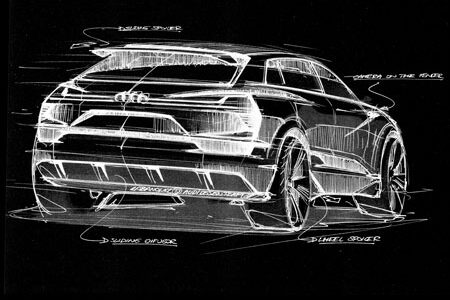
Audi’s all electric SUV is destined for production following its unveiling at the IAA 2015. The vehicle, which it is hoped will be in production in 2018 will have a range of 310 miles and is expected to be one of the stars at next month’s IAA in Frankfurt.

The Audi etron Quattro benefits from the expertise in developing the R8 etron and will be the brands first large series electric car.

31 Jul 2015

Over the years PRV Engineering has been pleased to be able to report our successes in investment, expansion and employment.

In 2014 Managing Director Simon Jones, reported on the success of the company, saying “With the machining facility, fabrication, deep hole drilling, presswork, paint and powder coating services already provided by the company, our £1million plus investment has reinforced PRV Engineering Ltd’s position as a true ‘One Stop Shop Facility’ capable of providing a whole host of components and services.”

PRV Engineering Ltd has developed through acquisition and constant Investment in new technology and 2015 is no different.

19 Jun 2015

All areas of engineering are evolving and developing and we like to keep an eye on what’s going on, reporting from time to time on innovative and sometimes controversial developments.

When it comes to robotics most of the things we’ve written about have been ground breaking developments that have meant that safety can be increased or that major improvements in quality of life can be achieved.

We even wrote about whether increased automation means that less skill will be required in the future. It seems the answer is no – operators still need to understand what they’re doing, why they’re doing it and what could go wrong. However, automation can and does help improve efficiency.

16 Feb 2015

At a time when development within the rail industry is gathering pace, battery powered trains are poised to make a comeback. Battery powered trains have been used for around 100 years, but expanded use has been held back by battery technologies.

Now, the first passenger train of its kind in over 50 years has recently undergone a five-week trial in a bid to prove the viability of more eco-friendly alternatives to diesel-powered locomotives.

Back in 2013, The Independently Powered Electric Multiple Unit (IPEMU) came into force. It draws power from overhead lines and then lowers its pantograph to allow it to run on its batteries instead, so enabling it to run over non electrified lines. The challenge was in finding an effective energy storage system or battery.

2 years and much development later,  the IPEMU will now run a weekday service between Harwich International and Manningtree stations in Essex.

9 Feb 2015

There was further good news for The Swansea Bay Tidal Lagoon plan this week.

The £1billion tidal lagoon plan now has full equity funding following a decision by InfraRed Capital Partners to pump up to £100m into the project.

Led by Tidal Lagoon Power Ltd, the project is expected to generate around 500GWh of electricity every year for 120 years, helping to save more than 236,000 tonnes of CO2 annually.

The project will also create almost 2000 jobs.

Werner von Guionneau, chief executive, InfraRed Capital Partners, said: “We are proud to be playing a key role in securing the future of this world-leading renewable energy project.

“The power station is unique in that it not only leverages the estuary’s second highest tidal range in the world, but it will also make a material contribution towards both the local economy in South Wales and the long term stability of sustainable energy supply in the UK.”

It is the second piece of positive news for the tidal lagoon project, within the space of three months. At the end of 2014, the plan was named in the National Infrastructure Plan published ahead of the chancellor’s Autumn Statement.

12 Dec 2014

When plans for the state-of-the-art Driverless Cars were first mooted, there were plenty of raised eyebrows and an equal number of genuine sceptics. However, the plans went ahead with experts claiming that driverless car would be an important step for road safety.

They could take over driving on roads, just like autopilots take control of airplanes, while the pilot often has nothing to do but just sit and wait for landing. There would be fewer car accidents and road fatalities.

Experts also believe cars that drive themselves would represent the most significant transformation in road travel since the introduction of the internal combustion engine.

Five years on and four sites in England have been earmarked for trials of driverless cars. The process will begin in the New Year. The trials have been made possible with £10m of funding from Innovate UK, the government’s Technology Strategy Board.

Recent Comments

    Events

    August 2026
    M T W T F S S
     12
    3456789
    10111213141516
    17181920212223
    24252627282930
    31