
The construction industry is a diverse one, with steel being used in many different ways. Architectural steelwork is an essential part of this and falls into two categories: structural steel and non-structural steel. In this article, we take a quick look at the differences, processes and how PRV Engineering works.
3
Feb
2022

30
Dec
2021

With another pandemic-laden year drawing to a close, we take a look at some of the best engineering blogs of 2021. As a leading provider of precision engineering services, we strive to bring you the latest news and updates from around the world. Our goal is to keep you up to date with all things engineering, manufacturing and new technologies.
For those of you who already know PRV Engineering, we publish new content every week across various sectors, from defence and aerospace to construction, rail, automotive and renewable energy among many others. With Christmas already behind us and the New Year celebrations just around the corner, here’s a look at some of the top stories from our blog this year.
5
Oct
2021
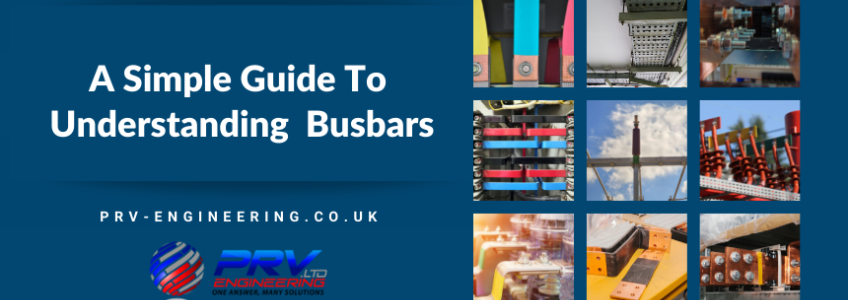
Busbars, or buss bars, are also known as busbar trunking systems that distribute electricity with greater ease and flexibility. They are often metallic strips made from copper, brass, or aluminium that ground and conduct electricity better than other more permanent forms of installation and distribution.
An electrical bus bar can be defined as a conductor or group of conductors that collect incoming electricity and distribute it to an outgoing feeder circuit. The choice of bus bar depends on different factors such as reliability, flexibility, costs and time. Here is everything you need to know.
Where Are Busbars Used?
Rather than branching the main supply at one location, busbars allow new circuits to branch off anywhere along the route of the busway. A busbar is used to connect high voltage equipment at electrical switchyards, and low voltage equipment in battery banks but it is also prominent in the automotive and defence sectors.
What Is A Copper Busbar?
Copper is a highly versatile material known for its low electrical and thermal resistance as well as superior mechanical strength. It also has a higher resistance to fatigue failure properties which makes copper a key component in busbars of electrical utilities. This includes switchgear, panel boards, and busway enclosures for local high current power distribution. However, it can be used for nearly any application within specification.
Is An Aluminium Busbar As Good As Copper?
When compared to copper, aluminium busbars are manufactured using a lighter material which makes it more cost-effective to mass-produce. It offers a great solution for companies where budget, maximum weight and ease of installation are major considerations. Although aluminium is lighter, it must have a larger surface area than copper as it is not as conductive as copper. To match the same criteria of a copper bus bar, the size of the conductor must be larger and that is not always practical or feasible. While aluminium is the main alternative to copper and has many positive attributes, it’s been shown that in almost every practical aspect, copper is the better choice.
What Are Laminated Busbars?
Laminated busbars have layers of fabricated copper that are separated by thin dielectric materials which are laminated into a unified structure. The layers are heated and compressed into an integrated component that offers several performance advantages over single-layer bus bar and cable conductors. The size and application vary from surface mounted busbars smaller than a coin to multilayer busbars several feet in length.
Why Are U-shaped Busbars Popular?
The reason why U-shaped busbars are popular is due to their ability to deliver continuous and reliable connections while maximising the potential locations. Here are a few more benefits to take note of:
- The U-shape has a better weight distribution that mitigates distortion from excessive force
- It enables simple expansion, reconfiguration, or relocation operations
- The shape applies continuous pressure to every joint
- U-shape busbars create a solid connection and eliminate the need for routine maintenance
Is Using A Busbar System Really More Energy Efficient?
People are always looking for ways to increase energy efficiency to cope with fluctuations in demand and busbar systems are often the solution. They not only reduce system costs while improving reliability but also increase capacitance and help eliminate wiring errors and lower inductance. The physical structure of a bus bar is a benefit in itself as it offers unique features in mechanical design. Multilayer busbars, for example, provide better structural integrity compared to other wiring methods. You can use busbars to conduct any form of electrical current from any type of grid. Recommended: Guidance for Design and Installation Of A Copper Bus bar
The Importance Of Monitoring Power Usage For Better Efficiency
Energy efficiency remains one of the top concerns in industrial organisations and the corporate world. However, you can’t improve energy efficiency if you are not measuring it properly and without a baseline. If you don’t continuously measure performance and evaluate results, it is almost impossible to identify areas for improvement.
Some busbars do offer power monitoring as a standalone system mounted to electrical panels, or incorporated into a busway and branch-circuit applications. If you monitor power usage, you will be able to achieve the following:
- Identify current power costs which will help set a baseline
- Determine potential cost savings and set consumption goals
- Implement certain projects to further improve energy efficiency
- Continuously measure usage for more accurate results and optimisation efforts
Why Are Busbars Coated?
Busbars are made from corrosion-resistant copper, brass or aluminium in solid or hollow tubes. The shape and size are either flat strips, solid bars or rods that allow for more efficient heat dissipation due to the high surface area to cross-sectional area ratio. Even though copper oxidises over time, it remains conductive but it requires more power to move electricity along the surface. While it cannot completely prevent oxidising over long periods, it greatly reduces the effects. Bus bar coatings typically serve three main purposes, namely:
- Inhibit corrosion
- Increase conductivity
- For cosmetic purposes
Recommended: All The Reasons For Coating Bus Bars
Conclusion
As part of PRV’s electrical busbar manufacturing services, we provide several specialist coatings for additional insulative or conductive properties. We’ve been supplying the industry with quality busbars, conductors, contacts and connectors for many years. We use copper to manufacture all components for low, medium and high voltage industries such as rail rolling stock and trackside electrical components.
Our copper busbars offer the perfect balance between cost and application, especially with projects requiring higher levels of performance, versatility and reliability. Some of the services we offer our clients in the electrical industry include punching and folding, forging and pressing, complete machined castings and stampings, busbar fabrication, plating and heat shrink sleeving.
Find out more about PRV Engineering, busbars, deep hole drilling and other specialist engineering services on our website and our dedicated YouTube channel.
6
Jul
2021

The British Army is home to some of the world’s most advanced technologies and now, new armoured vehicles are next on the list. This is a historic event for the UK Defence industry as it’s the first time in several years that any new armoured vehicles will be manufactured in the UK.
3
Jun
2021
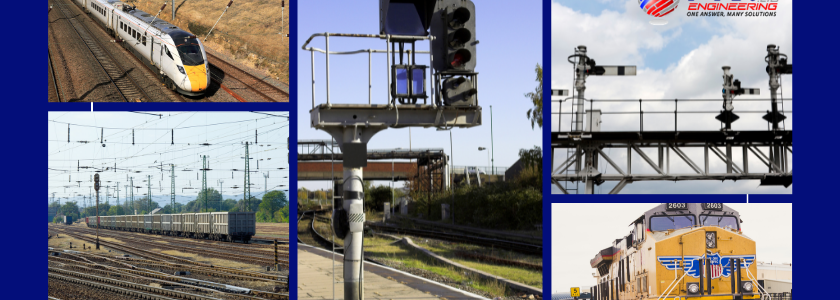
Working Closely With The UK Rail Industry
For many years, PRV Engineering has been a supplier of precision engineering and custom fabrication services to several sectors, including the UK rail industry, defence, aerospace, oil and gas, construction and automotive. We’ve worked with numerous rail companies, such as Transport for London and the Underground Rail Network, to provide specialist services. Here, we share a brief history of how PRV started and why so many customers trust us to deliver the product they need.
23
Jan
2020
28
Oct
2019

Welding flux is crucial as a prime anti-oxidising agent most commonly associated with arc welding. Choosing the right one will play an important role in the final quality of the weld. As anyone in the industry knows, becoming a welder is no easy feat as they are put to the test with extensive training. Welders must familiarise themselves with the various weld types, practices and the components for each welding method.
Did you know that flux core welding is known as one of the oldest arc welding methods? In this case, age has no bearing as is it remains one of the most effective and widely used methods for joining metal. The way it works is pretty straightforward as flux prevents welds from interacting with the environment, including air. Without flux, the base and filler material will interact with the atmosphere forming oxides or other unwanted compounds.
24
Jul
2019

The construction industry has evolved significantly with many new and improved methods such as structural steel fabrication. This process, along with welding, is demanding and you should only consult experienced fabricators as it requires expert knowledge, skills and resources.
For a successful project, from manufacturing structural steel beams and steel balustrades to components and equipment, every good fabricator should follow a specific process. A less experienced company may not be able to perform the necessary tasks which could compromise product viability.
19
Jun
2019

The term “fabrication” means to make something from raw materials whether it’s wood, plastic or certain types of metals. Several industries currently benefit from aluminium fabrication which refers mostly to the construction of metal structures. Choosing a material is a critical decision in all aspects of the production but so is the finishing process.
Although you can fabricate any metal, aluminium is considered one of the most common resulting in big demand for aluminium fabrication services across the world. It’s not surprising if you consider that aluminium is all around us in our homes and office buildings. Some of the most common are aluminium gates and aluminium frameworks used for doors, windows and even showers.
12
Jun
2019
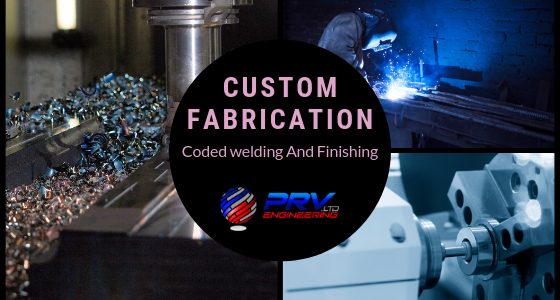
An engineering company can only be successful with high-quality custom fabrication coupled with expert knowledge, experience and continuous investment. We’re not only talking about investing in equipment but also staff training and hiring. In order to provide the quality and service excellence customers deserve, equipment and staff must be of the highest level.
There are three core factors that determine success in manufacturing and that includes production cost, quality and speed. While each component plays a crucial role, manufacturers must fully commit to all three to reach and remain within the top tier.
Let’s take a look at some of the recent fabrication projects at PRV Engineering and find out more about coded welding and finishing.
Recent Comments