

Climate Change, Carbon Taxes, and the Perspective Not Many Talk About
Climate change is no longer just a scientific discussion, it’s an economic weapon, a political tool, and a personal cost for many.
At PRV Engineering, we don’t take sides in ideological debates. We do, however, deal in facts, systems, and solutions but when the facts are being manipulated, or profit is being prioritised over people, it’s time we all take things a little more seriously.
Because yes, the climate is changing.
And yes, humans have made it worse.
But no, the current response isn’t entirely about saving the planet.
It’s also about controlling the narrative, taxing the symptoms, and engineering a new economy based on fear.
The Earth Has Always Warmed and Cooled
Let’s start with something both sides agree on: Climate change has always happened. Over millions of years, Earth has gone through:
- Ice ages and warm periods
- Rising and falling sea levels
- Vast glacial movements and retreats
All without human interference. These shifts are driven by Milankovitch cycles, long-term changes in Earth’s orbit and tilt that affect climate patterns. You can read about that from NASA’s Earth Observatory: Milankovitch Cycles and Climate Change – NASA
In short: nature has always been in flux but never at this speed.
What’s Different Now? Humans, Growth, and the Speed of Climate Change
Over the last 150 years, atmospheric CO₂ levels have skyrocketed by over 50%, from pre-industrial levels of ~280 ppm to over 420 ppm today. (Source: NOAA Global Monitoring Laboratory – CO₂ Trends)
This spike correlates with one thing: human industrial activity—fossil fuel combustion, deforestation, and mass production. And unlike natural cycles that unfold over thousands of years, this warming is happening in decades. The IPCC (Intergovernmental Panel on Climate Change) makes it clear:
“It is unequivocal that human influence has warmed the atmosphere, ocean and land.”
The problem isn’t that we use CO₂.
The problem is how fast we’re pumping it into the system and why.
Carbon Taxes: Climate Solution or Economic Control?
Let’s get real: most people aren’t arguing about the science. They’re arguing about how it’s being used.
Carbon taxes, ULEZ charges, emissions trading schemes are all sold as essential tools for change. But here’s the reality:
- ULEZ in London charges £12.50 per day to drive older vehicles, even if you’re commuting to work or caring for family.
- Carbon taxes often hit consumers harder than corporations.
- Many carbon offset schemes have been exposed for fraud or double-counting.
- Even the World Bank admits there’s no universal framework ensuring that carbon taxes are effectively reinvested into climate solutions (World Bank Carbon Pricing Dashboard)
In other words: we’re often taxed for basic living like driving to work and heating our homes without clear proof those funds are solving the problem.

The Proposed Solution?
In response to public backlash over rising carbon taxes and ULEZ-style schemes, policymakers have often proposed a carrot to go with the stick by offering financial incentives or behavioural nudges to promote greener choices.
Here are some of the headline proposals seen over recent years:
Vehicle Scrappage Schemes
In the UK, several government-backed scrappage schemes have offered up to £2,000–£2,500 to drivers willing to scrap older, more polluting vehicles in favour of electric or hybrid models. The London ULEZ scrappage scheme (2023–2024) offered up to £2,000 per car or £5,000 for wheelchair-accessible vehicles
A national scrappage scheme was proposed in 2020 as part of a “green recovery” plan, suggesting £6,000 per driver to swap petrol/diesel cars for EVs, but it was later scrapped itself due to cost concerns. Now imagine how the average person feels who now have to find a way to buy a “greener” car without breaking the bank. (Source: BBC News – UK car scrappage scheme shelved)
Push for Public Transport and Ride-Sharing
Alongside taxes, campaigns have encouraged:
- Public transport use — though fares in some regions have continued to rise.
- Carpooling and ride-sharing — promoted through workplace schemes or urban incentives.
- Cycling infrastructure and e-bike grants — increased funding for active travel options in cities like Manchester, Bristol, and London.
However, uptake has been limited in rural or commuter areas, where public transport is unreliable or impractical.
So, Has It Worked?
While the intention was to ease the financial impact and incentivise greener choices, reality paints a mixed picture:
- Scrappage funds ran out quickly, with long waiting lists and limited eligibility.
- Not all households can afford a new electric car, even with a £2,000 incentive, especially amid cost-of-living pressures.
- Public transport remains patchy outside major cities, with few realistic alternatives for drivers.
- Meanwhile, ULEZ charges and carbon taxes continue to rise, hitting those with the least flexibility the hardest.
Unfortunately, in many cases, the promises of support haven’t matched the pace or pressure of policy enforcement.
If Climate Change Is Real, Why Are Billionaires Buying Coastal Property?
Some conspiracy theorists have asked an interesting question, but the answer may not be a simple one.
“If the seas are rising, why are billionaires still building beach homes?”
Real estate investment near coastlines isn’t slowing down. In fact, high-value developments in places like Miami, Dubai, and London’s Docklands are booming.
That’s not proof climate change is fake. It’s proof that those in power don’t expect to suffer the consequences, or maybe, they’re simply confident they can adapt, outspend the risk or capitalise on it.
A recent article in The Atlantic reveals how insurance companies, banks, and real estate investors are mis-pricing climate risk or ignoring it altogether. (Source: The Climate Crisis Is Just Getting Started – The Atlantic)
Meanwhile, you pay extra for petrol, electricity, and flights.
Green Energy: Necessary, But Not Without Its Own Problems
We support renewable energy. PRV has worked with energy sector partners across traditional and alternative systems. But let’s not pretend green energy is clean and simple.
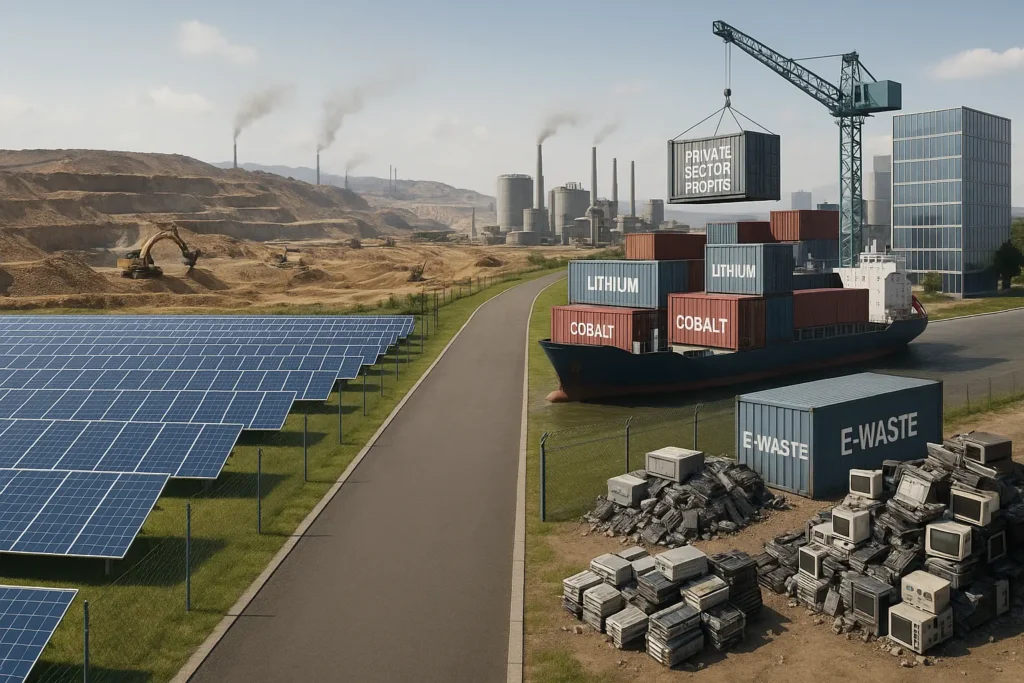
The transition to solar and wind relies on:
- Rare earth mining (often under poor labour/environmental conditions)
- Massive battery storage (using lithium, cobalt, etc.)
- Global shipping and tech manufacturing
Yes, solar and wind are now among the cheapest electricity sources globally, as stated in the Lazard Levelized Cost of Energy Report 2023.
But the shift is being dominated by large tech and energy firms who are making billions while still extracting from the Earth and contributing to e-waste.
It’s not a moral revolution.
It’s a new industrial boom.
So What’s the Engineering Truth?
At PRV, we work across energy, defence, rail, aerospace, and construction. We’ve seen both sides: the legacy industries that built the modern world, and the new industries reshaping it.
We understand the dangers of climate change and that engineering and industry contributed to the problem. We now have a responsibility to help fix it but not by following bad policies blindly.
Instead, we advocate for:
- Real investment in infrastructure resilience
- Sustainable innovation that’s practical, not performative
- Honest conversation about trade-offs and ethics in tech
- Transparency in how environmental policies are funded, applied, and enforced
Final Thoughts on Solving Climate Change
You don’t have to be a climate denier to be sceptical of the system. You don’t have to reject renewables to question who profits. And you definitely don’t have to accept endless taxation to demand better leadership, policy, and engineering.
PRV Engineering will continue doing what we’ve always done: delivering real solutions, not slogans. Because solving the climate crisis isn’t about punishing people but rather about designing a future that works for everyone. We won’t “solve” climate change through fear or with fines; it will be solved when we all work together on practical, sustainable solutions.
Recent Comments