Archives

Waterjet Cutting

26 Dec 2018

Another year has gone by and what better way to end it off than reflecting on the last 12 months. As a specialist engineering company, we work with a wide array of industries and our experience has enabled us to deliver interesting, relevant and informative articles. From engineering and manufacturing to new technologies, defence updates and future combat vehicles, we publish new content every week. After all, you can’t grow unless you learn something new every day.

With Christmas behind us and the focus shifting to the New Year, let’s take a look at some of the PRV Engineering blog highlights from 2018. Most articles focus on PRV Engineering services but we also added a few very interesting developments from around the world.

28 Sep 2018

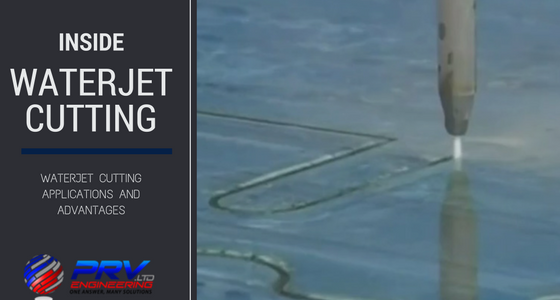
The evolution of hydro-abrasive waterjet cutting has been remarkable and is one of the most effective methods of machining. There is no heat affected zone (HAZ), the small cutting widths and omni-directional cutting means we can machine virtually any material with high precision and accuracy. As a result, waterjet cutting produces a much-improved product finish with little to no secondary processing needed.

Advanced technology and methods make waterjet cutting far more environmentally friendly. So much so that the dust, chippings or gas produced with other cutting methods do not occur. There is also no need to change tool heads, blades or lubricants for each type of material which means machining time is greatly reduced.

This highly versatile cutting method produces much less waste than other forms of cutting which allows for more diverse design. The ability to cut more intricate designs and patterns offers

24 Jul 2018

We can all agree that there aren’t many products we use in everyday life that does not involve CNC machining. From cars, planes, household machines and appliances to medical parts and toys, all go through a CNC machine at some point during production.

Computer Numerically Controlled or CNC machining has become more versatile then ever. The number of axis has increased and the types of machines now available mean that increasingly smaller and more intricate parts are manufactured using a CNC machine. The development of CNC Machining has truly revolutionised the manufacturing industry.

It’s not just CNC machines making waves, further advances like

8 Sep 2017

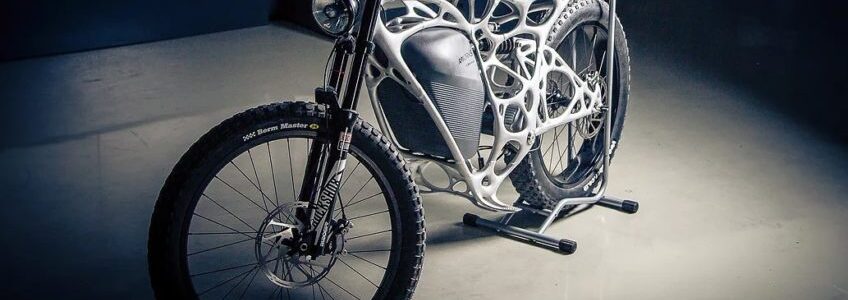
In case you missed it, last year saw a great number of technological innovations with 3D Printing heavy on everyone’s lips. None more so than Airbus and APWorks’ Light Rider. They claimed in early 2016 that they were working on the world’s first 3D Printed motorcycle. Using their 3D printing expertise, they’ve recently produced the first prototype 3D Printed electric motorcycle and it looks fantastic.

28 Jul 2017

Over the past few decades, abrasive waterjet cutting have evolved significantly. From a relatively crude cutting tool in the early 1980’s to a more sophisticated machine tool used in various sectors ranging from aerospace, mining to the food industry. This evolution is mainly due to better material development, more efficient system design, improved control of the waterjet tool and the progression to achieve higher pressure.

2 Jun 2017

History of Waterjet cutting

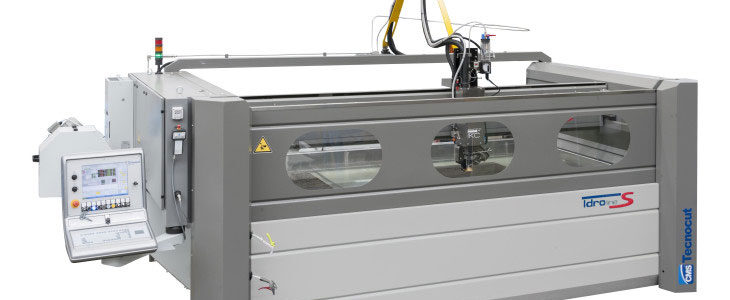
Waterjet cutting is often used during the fabrication process of machine parts. A waterjet cutter, also known as a waterjet, is an industrial tool capable of cutting a wide variety of materials using a very high-pressure jet or stream of water. A mixture of water and an abrasive substance is also used in many applications.

Early waterjet machines could only cut softer materials as they had low pressure and could not handle harder materials and metals. They added an abrasive to the waterjet cutting nozzle in an attempt

4 Mar 2017

Waterjet cutting is one of the most effective methods of machining materials. With no heat affected zone, small cutting widths and omni directional cutting, virtually any material can be cut with precision and accuracy. Because of this, waterjet cutting results in better product finish with little or no secondary processing needed. In addition, waterjet cutting is more environmentally friendly as the dust, chippings or gas produced by other cutting methods does not occur. In addition, as there is no need to change tool heads, blades or lubricants for each material, machining time is also reduced.

Plastic, rubber, wood, glass, metals and composite materials can all be cut using a pure waterjet or hydro abrasive waterjet cutting. For some materials the addition of an abrasive agent is needed to aid effective cutting. Below is an overview of the types of materials that can be cut.

9 Dec 2016

When we say the beauty of waterjet cutting, we don’t just mean it’s a great, effective cutting process – we do actually mean the beauty that can be created with a waterjet. It’s a highly versatile cutting method that produces much less waste than other forms of cutting, which in turn allows for more diverse design. The ability to cut more intricate designs and patterns allows for more artistic license to be given to designers. More complex, artistic design often leads to a more beautiful end product.

So, we genuinely mean beauty in more than one sense.

The ability to cold cut means that almost any material can be cut without the adverse impact of heat; there is no heat affected zone. Multiple small cuts, swirls and channels can be made without the material bending, warping, burning or having any sort of reaction.
In addition to having no heat affected zone, what else makes waterjet cutting so versatile and effective in creating complex and diverse patterns and designs?

28 Oct 2016

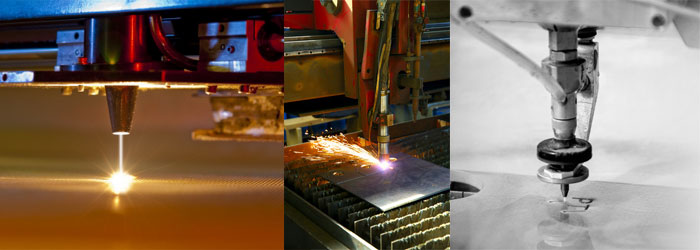
When you work in manufacturing you have a decision to make; laser, plasma or waterjet cutting? ‘Which one is best?’ is the first question that many people ask. The most up to date and technologically advanced must be the best, surely? Well that’s not the case. In fact there could be a case for using any or all 3 of the manufacturing processes depending upon your needs and what you value most from the machine.

Each has its own advantages and disadvantages, from speed to cost and even waste. So let’s take a look at each option.

7 Oct 2016

The recent approval for the new nuclear plant at Hinckley Point had businesses across the region breathing a sigh of relief. Hundreds of companies locally and further afield pre-registered to become part of the supply chain solution for EDF Energy and its contractors with the aim of securing long term work in the region. With 90 major tier 1 contractors requiring further supply chain contracts of their own, the opportunities for businesses in and around the region are huge.

Many smaller local businesses took the step to improve their own staff development and training and internal processes with the aim of being ready and able to meet the demands of the project. The project which will take approximately 10 years to complete will provide more than 25000 jobs and have more than 5000 people working on site at any time. It is anticipated that it will provide 900 permanent jobs on completion.

Events

December 2025
M T W T F S S
1234567
891011121314
15161718192021
22232425262728
293031