Blog

31 Jul 2015

Over the years PRV Engineering has been pleased to be able to report our successes in investment, expansion and employment.

In 2014 Managing Director Simon Jones, reported on the success of the company, saying “With the machining facility, fabrication, deep hole drilling, presswork, paint and powder coating services already provided by the company, our £1million plus investment has reinforced PRV Engineering Ltd’s position as a true ‘One Stop Shop Facility’ capable of providing a whole host of components and services.”

PRV Engineering Ltd has developed through acquisition and constant Investment in new technology and 2015 is no different.

24 Jul 2015

As one marathon amount of tunnelling is just completing another is about to begin.

The 26 miles of crossrail tunnelling, linking rail services from Reading and Heathrow in the West to Shenfield and Abbey wood in the East finished in June after 3 years of constant tunnelling. 8 giant tunnelling machines were used constantly to make the network of new rail tunnels, and whilst there are still stations and platforms to construct it is hoped the civil engineering work will be complete in 2017 with the new rail services starting from 2018.

The new services will allow an extra 24 trains an hour to run during peak services and will increase rail capacity by 10% carrying 72,000 passengers per hour through the new tunnels. 1.5 million more people will be able travel to within 45 minutes of central London.

However, as one feat of tunnelling engineering ends another is about to begin. The Thames Tideway Project preliminary construction works begin in 2016, with the proposed 4 years of tunnelling beginning in 2017.

17 Jul 2015

Self driving cars, whilst once a novel and entertaining idea have now become a regular news feature. The design and rigorous testing they are going through is all in an effort to see road safety improved by eliminating driving error.

In fact a recent report in manufacturing.net stated that in the 6 years and 1.9 million miles of testing by Google there have only been 14 accidents involving their self driving cars. Google say that none of the accidents were caused by their self driving cars. In 11 of the 14 accidents, the self driving car was rear ended, by distracted drivers.

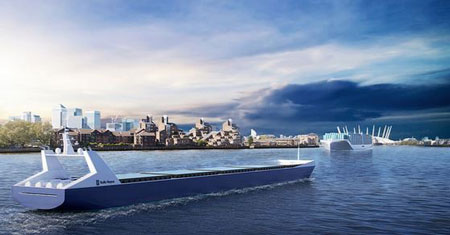
So, could autonomous applications be applied to ships to improve efficiencies and also the level of CO2 emissions, which are twice that of the aviation industry? Could we see autonomous ships at sea?  Rolls Royce think so.

10 Jul 2015

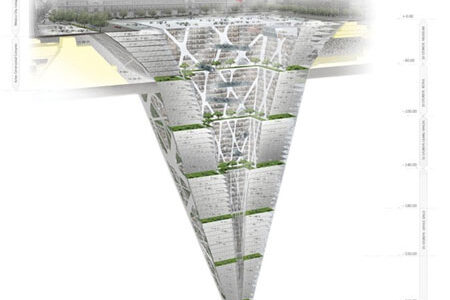
Will this be the way to solve overcrowding in big cities?

For years there has been concern over the space available for new buildings, whether it’s housing or industrial. Skyscrapers have got taller and taller and the space between buildings has reduced. But still, this isn’t solving the problem of overcrowding and in some countries planning authorities are becoming uncomfortable with the higher structures.

Living like the fictional Wombles, ‘underground’ is increasingly looking as though it could become a reality at some point in the future. We travel underground regularly, even using tunnels to get to other countries, so why not take that next step?

3 Jul 2015

BAE Systems test pilot Pete Wilson became the first pilot to test the launch of the F35B from a ski jump last week.

The launch, which took place at a Naval Air Station in Maryland is only the start of testing which is expected to last two weeks and is a big step towards the implementation of the ski launch on UK aircraft carriers.

The F35B is designed for short and vertical take-off and the trials demonstrate the ability to take off and land safely and effectively from a ski-jump ramp.

26 Jun 2015

Airbus signed a partnership agreement with the University of Bristol last week, formalising their commitment to build on training, education and diversity. The agreement was signed at the International Air Show in Paris last week.

Talking about the partnership Thierry Baril, Chief Human Resources Officer of Airbus Group, said: “These partnership agreements underline our commitment to work hand-in-hand with academics and engineering education leaders to develop and secure the competences that the aerospace industry will need in the future.”

19 Jun 2015

All areas of engineering are evolving and developing and we like to keep an eye on what’s going on, reporting from time to time on innovative and sometimes controversial developments.

When it comes to robotics most of the things we’ve written about have been ground breaking developments that have meant that safety can be increased or that major improvements in quality of life can be achieved.

We even wrote about whether increased automation means that less skill will be required in the future. It seems the answer is no – operators still need to understand what they’re doing, why they’re doing it and what could go wrong. However, automation can and does help improve efficiency.

10 Jun 2015

Finishing image of industrial spray painting Finishing any engineering job properly is just as important as any other operation along the production cycle. And by finishing the engineering job, we’re not talking about tidying the file and completing the invoicing. We are talking about the paint or powder coating finish to the product

The appearance of a finished product will always have an impact on the saleability. After all, if something looks rough and unfinished it’s less likely to sell. In addition, there’s the safety impact to consider. Rough edges and burrs can not only put buyers off but can be a serious health and safety risk. So an important part of finishing is to remove those risks.

3 Jun 2015

The constant mission to reduce pollution and produce more fuel efficient vehicles led to major research and development in the auto industry. Now all major car manufacturers have a hybrid vehicle in their suite of offerings.

With air traffic forecast to continue to increase there are demands for additional runways and extra services. This, of course causes conflict. Flight companies want to meet the needs of the consumers, but plans for increasing runways and flight services are meeting opposition due to the anticipated increase in noise and pollution.

Could there be a solution? Can we ever have quieter runways and less pollution? Siemens and Airbus think we can!

27 May 2015

Rail switches or ’points’ are used in the rail industry to guide trains to their correct route. They work by using a tapered set of rails (points) lying between the outer rails that can be moved to direct the train travelling across them.

They make up less than 1% of the entire length of railway routes in the UK, yet they account for 20% of the expenditure on track maintenance. With a working life of approximately 3 years, frequent maintenance and replacement of rail switches is needed to avoid disruptions in services.

Events

June 2026
M T W T F S S
1234567
891011121314
15161718192021
22232425262728
2930