Blog

13 Aug 2016

When it comes to manufacturing parts or components the way each one is finished reflects the quality of workmanship. If you don’t finish a job properly, then it doesn’t matter how careful you’ve been with the initial production, cutting or moulding, the end product is not going to look good. And the way the end product looks will always have an impact on saleability.

There could, of course, also be an impact on your costs. If your customer is unhappy with the finish of an order, you may have to start all over again, meaning more waste and increased costs. And there’s the health and safety aspect of poor finishing. Rough or sharp edges won’t be acceptable to your customer and may also cause injuries to those working with them.

5 Aug 2016

Back in March this year London was set to see the introduction of 5 all electric double decker buses capable of driving up to 190 miles in day on one 4 hour overnight charge. The 5 buses joined a fleet of single deck electric, hydrogen and hybrid buses as part of the effort to reduce emissions in the city centre.

At the other end of the country Stagecoach are operating all electric bus services in Inverness and having worked with manufacturer Optare have managed to extend the range of miles the vehicles can do. In addition to running on electricity, these buses also feature electric heating systems rather than the standard diesel ones. This makes them the UKs’ most efficient electric buses in terms of kWh per mile and they fist of their kind.

1 Aug 2016

Even though waterjet cutting has only come into its own in recent years it may surprise you to know that it has been around since the 1930s. At that time it was used at a low pressure and only for cutting soft materials. Whilst things continued to develop after the war, waterjet cutting became much more effective in the 1970s, when the first reliable high pressure pump was developed.

Whilst the earlier waterjet machines could cut softer materials they could not handle harder materials and metals. The ability to cut harder materials like metal came about following the addition of an abrasive to the waterjet cutting nozzle. This was a technique first used in the 1930s, however early versions of the nozzle were not commercially viable. Further development of the nozzle and the availability of a reliable pump led to a more effective waterjet that could now cut through a bigger variety of materials.

23 Jul 2016

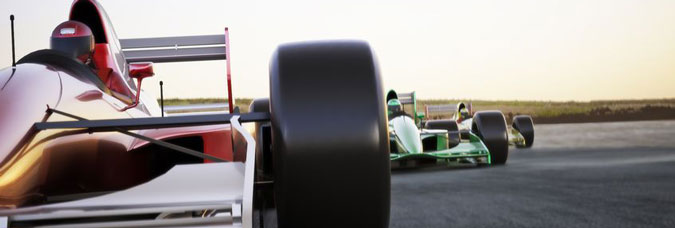
When we think of the technical developments in F1 and motorsport generally, we can all probably think of an area in the automotive industry where those developments have had an impact. But do you ever think about what or who else benefits of those developments?
If I was to say that the care of premature babies has been impacted by motorsport technical developments you’d probably wonder how. What about supermarkets? How could they possibly benefit from the motorsport industry?

These are only a couple of examples of where motorsport innovation is being used to solve challenges in other industrial sectors.

14 Jul 2016

Whilst the weather may have put a premature end to the day on Monday, the Farnborough International Air Show is back on track with attendance and business at the trade show thriving.

Statistics earlier in the year were predicting one of the most successful shows yet with increased numbers of international participants in the trade show and conferences, and more dedicated country pavilions. In addition to first time country pavilions for Austria, Brazil, Republic of Ireland and China, Boeing has a special pavilion celebrating their centenary which falls on the Friday of the show.

The show has become the UK’s shop window for all things aviation from the civilian, defence and space sectors

8 Jul 2016

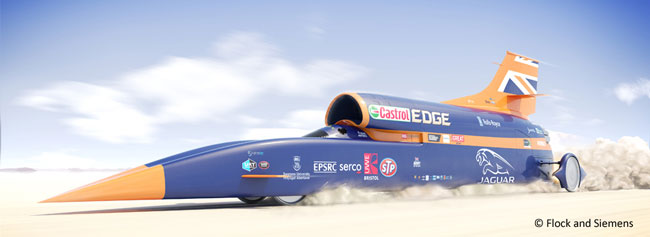
One month on from our last post about Bloodhound, the date for the first record attempt has been set. October 2017 will see the first land speed record attempt for 20 years.

The signing of a major deal means that the project has now secured funding to complete the car and start preparing for their testing in South Africa next year.

When Bloodhound went on display in 2015 it was as a trial build and without fluids. This was done to make sure that the 35,000 individual and bespoke parts actually fitted together. Brackets were checked to see if they were in the right places leaving enough room for service and maintenance activity as well as checking the tolerance of manufactured parts.

1 Jul 2016
There are many advantages of waterjet cutting compared to other methods, but if we had to try and summarise them neatly into a few words we’d say;

The ability to cold cut almost any material in any direction with less waste and a superior finish.

But really that’s not enough of an explanation, so let’s expand a little on that statement and address some of the areas of improvement over more traditional cutting methods.

Omni-directional cutting
Waterjet cutting allows omni-directional cutting – the ability to cut in any direction which gives much greater cutting flexibility. In most cases starting holes are not required as the water jet is able to perforate the material. It is now much easier to cut more complex shapes and designs into all sorts of materials.

24 Jun 2016

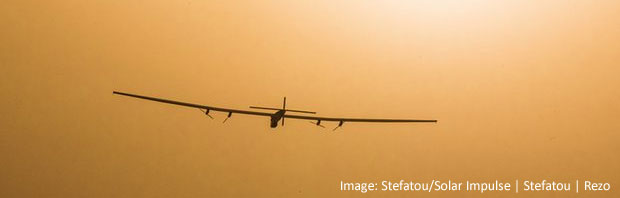
Solar Impulse 2 left New York on Monday 20th June and landed in Seville, Spain on 23rd June at 7.30 am. The total flight time was 71 hours and 8 minutes and now means that the aircraft has crossed both the Pacific and Atlantic oceans.

Solar Impulse 2 is attempting the first renewably powered circumnavigation of the globe and is now nearing the end of its 35,000km journey. The trip started in July 2015 and will finish back at the starting point in Abu Dhabi. The immediate next steps are to negotiate a route back to Abu Dhabi via Egypt or Greece.

Solar Impulse 2 has a wingspan of 72m and weighs more than 2 tons. It is powered by more than 17000 solar cells and achieves an average speed of 75 km/h.

Just like the Bloodhound project, the Solar Impulse 2 team are providing an educational platform around their project, giving resources to schools and universities as well as providing opportunities for live hangouts with members of the team.

17 Jun 2016

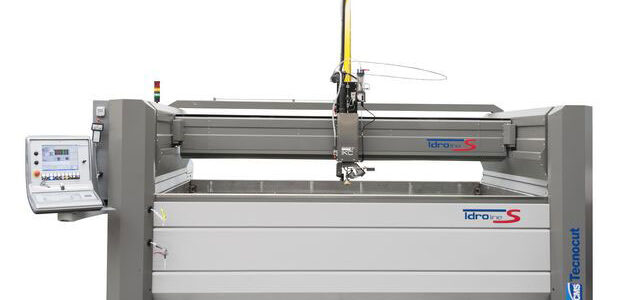
After a busy few days at the Subcon Show in Birmingham, it was all hands on deck to take delivery of our new Idroline S1730 Hydro-Abrasive Waterjet Cutting System from Selmach Machinery.

The system is the latest addition to our suite of state of the art CNC Multi Axis / Multi Discipline machining centres and will allow us to continue to improve and provide the best service possible to our clients.

The Idroline S1730 hydro-abrasive waterjet cutting system is an elite design which ensures superior technological and productive performance. It uses a very high pressure jet of water or a mix of water and abrasive to cut a wide variety of materials and allows greater control and precision when materials being cut are sensitive to high temperatures.

10 Jun 2016

After nearly 2 decades of construction work, the Gotthard Tunnel, the world’s longest and deepest rail tunnel opened in Switzerland earlier this month.

The tunnel is expected to revolutionise travel between northern and southern Europe by providing a high speed rail link underneath the Swiss Alps, moving freight traffic off the road and onto the rails. It is estimated that more than a million lorry loads of freight will move from road to rail.

Whilst the tunnels have been officially opened scheduled services will not begin until December 2016 when up to 265 freight trains and 65 passenger trains a day are expected to run.

Events

June 2026
M T W T F S S
1234567
891011121314
15161718192021
22232425262728
2930