
Blog

20 Feb 2026
Automotive editorial photograph of a narrow four-wheel tilting microcar driving on a Paris boulevard at golden hour

How the Tilting Microcar Is Redefining Urban Automotive Engineering

Most cars resist leaning. The tilting microcar does the opposite. Its engineered to lean on purpose.

In cities where road space is shrinking and emissions rules are tightening, simply making cars smaller is no longer enough. Stability becomes the limiting factor. A narrow vehicle can reduce congestion and improve efficiency, but narrow geometry increases rollover risk.

A tilting microcar solves that problem mechanically. It is a lightweight electric vehicle that leans into corners in a controlled manner, shifting its centre of gravity inward to maintain stability. It combines aspects of motorcycle dynamics with automotive structural engineering.

Developed by AEMotion in France, the AEMotion vehicle applies this leaning car design within Europe’s quadricycle category. As AutoEvolution reports, it represents a different way of approaching urban electric mobility, not by shrinking the conventional car, but by rethinking its balance.

This article examines how the tilting microcar works, the structural and control challenges behind it, and what it signals for European automotive engineering and supply chains.

13 Feb 2026
Waterjet Cutting Services from PRV Engineering | Close-up of a waterjet cutting machine

When Waterjet Cutting Services Are the Right Choice for Industrial Projects

Choosing the right cutting process is rarely about preference. It is about material behaviour, thickness, tolerances, finishing requirements, and downstream performance.

Waterjet cutting services are often selected when thermal cutting methods introduce risk. While laser and plasma systems have their place in modern manufacturing, hydro-abrasive waterjet cutting offers a fundamentally different approach; one that removes heat from the equation entirely.

Understanding when to choose waterjet cutting services over alternative methods can significantly influence cost, quality, and long-term performance.

5 Feb 2026
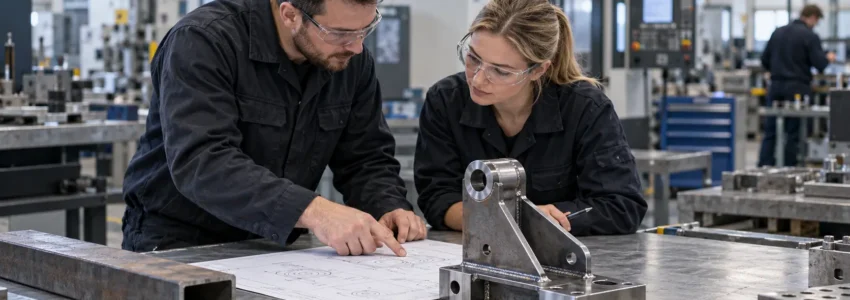
Senior engineers reviewing technical drawings inside a large industrial facility, representing high-stakes engineering decision-making in complex projects.

What’s Quietly Changing in Engineering Decision-Making in 2026

Engineering decision-making rarely changes overnight. Instead, it evolves gradually, shaped by delivery pressure, accumulated experience, and real-world project outcomes rather than by trend reports or industry announcements.

Yet across UK engineering and industrial projects, something is clearly shifting. Conversations that once centred on speed, price and capacity are quietly being replaced by different concerns. Not because buyers are explicitly changing strategy, but because the environment around them has changed.

What follows is not a prediction, nor a trends piece. It is an observation of how engineering decision-making is being recalibrated in practice.

29 Jan 2026
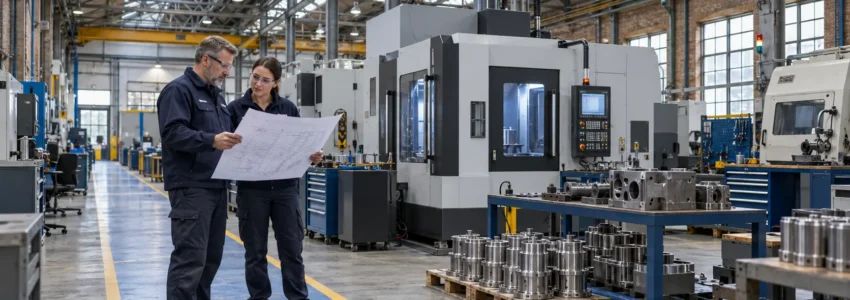
Illustrated engineering workflow highlighting critical stages where tolerance control, finishing, and inspection affect project outcomes.

Understanding Engineering Capability in Modern Industrial Projects

What increasingly determines whether projects deliver smoothly or unravel late is engineering capability. It specifically refers to the depth of technical understanding, process integration, and judgement applied across the full lifecycle of a job. This shift is subtle, but it is reshaping how experienced engineering buyers evaluate risk, reliability, and long-term value.

In many industrial sectors, project success is still too often judged by capacity: how quickly work can start, how many machines are available, or how short the quoted lead time appears on paper. Yet as engineering projects grow more complex, regulated, and interconnected, these surface-level indicators are proving unreliable.

19 Jan 2026
PRV Engineering Stand D190 at the Southern Manufacturing & Electronics 2026 Exhibition

Join PRV Engineering at Southern Manufacturing & Electronics 2026

PRV Engineering is pleased to announce that we will be attending Southern Manufacturing & Electronics 2026 in February 2026 at Farnborough International Exhibition Centre.

You can find us at Stand D190, alongside leading UK and international manufacturers, showcasing the breadth of its engineering capabilities and its role in supporting complex, high-value manufacturing projects across multiple sectors.

13 Jan 2026
Senior Engineer discussing Lead Times to a team of engineers

How Engineering Lead Times Are Reshaping Planning, Procurement, and Delivery

For many years, engineering lead times were treated as an operational detail. Something to be managed by production schedules, absorbed by buffers, or resolved with overtime when pressure increased.

That assumption no longer holds. Across manufacturing, infrastructure, defence, energy, and transport, engineering lead times are now a strategic risk—one that affects contracts, cash flow, compliance, and long-term competitiveness.

This article explores why lead times have become harder to predict, where risk is actually accumulating, and why organisations that understand this shift are better positioned to deliver reliably.

7 Jan 2026
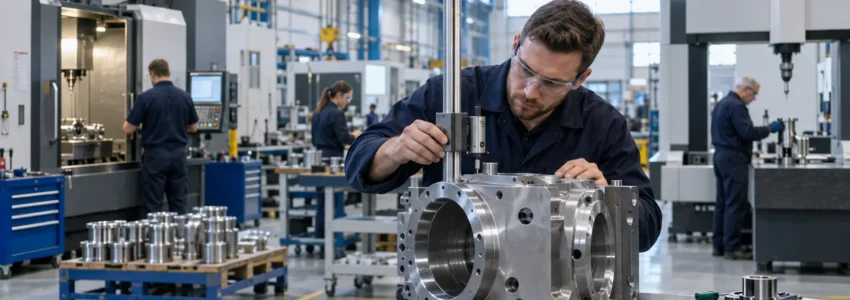
Collage image representing hidden engineering bottlenecks across manufacturing processes.

Why Engineering Bottlenecks Appear Long Before Machines Do

When projects fall behind, the cause is often assumed to be capacity. Not enough machines. Not enough people. Not enough hours in the day. In reality, many engineering bottlenecks emerge well after machining begins. Components are produced on time and to specification, yet progress slows, deadlines slip, and pressure builds late in the programme.

This article explores the hidden engineering bottlenecks that consistently disrupt delivery, why they are often underestimated, and how addressing them early can significantly improve predictability.

2 Jan 2026
Editorial image representing the continuity of engineering project and early decision-making in manufacturing

Why Early-Year Decisions Quietly Shape Engineering Projects

January often feels like a clean slate. Calendars reset, inboxes refill, and teams return with fresh momentum. But in reality, engineering projects rarely restart in January. They continue, carrying forward design decisions, lead times, procurement choices, and unresolved constraints from the previous year.

What does change at the start of the year is decision-making. Suppliers are reviewed. Assumptions are refreshed. Shortlists are quietly adjusted. And those early-year choices can have a disproportionate impact on how engineering projects perform months later.

This article looks at why January decisions matter, where engineering projects typically drift off course, and how early clarity reduces downstream risk without resorting to clichés or over-simplification.

24 Dec 2025
Editorial image representing a year-end review of modern engineering, featuring manufacturing equipment, technical diagrams and industrial processes | Popular Engineering Stories

Popular Engineering Stories of 2025

As the year comes to a close, it’s worth taking a step back from day-to-day projects to reflect on the engineering stories that captured attention, sparked discussion, and resonated most strongly with our readers.

Throughout the year, PRV Engineering has shared a wide range of engineering stories covering manufacturing innovation, emerging technologies, sustainability challenges, and the practical realities of modern engineering. Some explored future-facing concepts, others focused on real-world processes and services, but all reflected the questions and pressures shaping engineering today.

This year-in-review brings together the most read and shared engineering stories of the year, alongside popular articles focused on PRV Engineering’s services and expertise. Together, they highlight how diverse, complex, and interconnected modern engineering has become.

16 Dec 2025
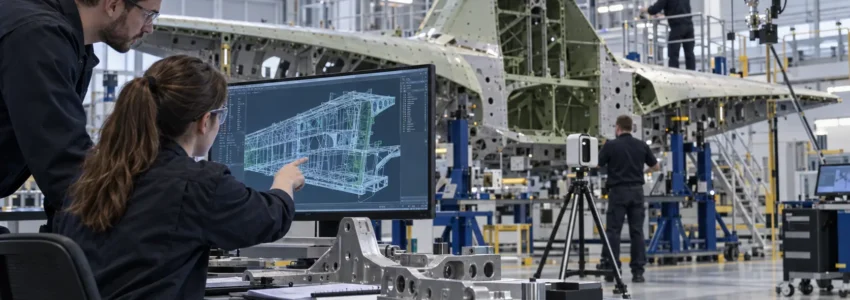
European supply chain image with aircraft wing frame and military vehicle chassis representing defence manufacturing networks

The State of Defence Manufacturing in Europe

Defence manufacturing in Europe is expanding but not always in the loud, headline-grabbing way people expect. Much of the growth is happening in procurement cycles, production lines, supply chain decisions, and capacity planning: more orders, more replenishment, more “can you deliver this faster?” conversations across the industrial base.

What’s driving it is a combination of rising defence budgets, NATO commitments, and the very real reality of rebuilding stockpiles while modernising equipment. And if there’s one consistent lesson in European defence right now, it’s this:

Defence doesn’t scale without manufacturing capacity, and manufacturing capacity doesn’t scale without subcontractors.

Events

February 2026
M T W T F S S
 1
2345678
9101112131415
16171819202122
232425262728