
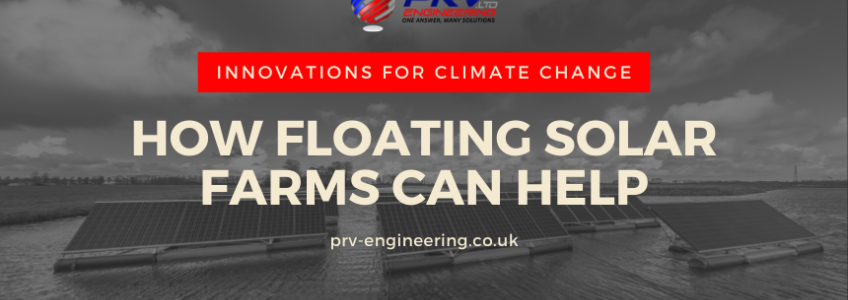
Floating solar farms are becoming increasingly popular, especially in countries with high population density and limited available land. Floating solar farms gained popularity in 2018 and continue to do so today with many countries taking the lead, including China, India, the Netherlands and Singapore which is the focus of this article.
8
Apr
2021
2
Dec
2020
Whatever your view might be on global warming or climate change, there’s no denying that there have been some fascinating sustainability innovations in recent years. If we were to show any of these to our younger selves a decade ago, you’d think we were mad.
Whichever way you look at it, change is coming as many innovators and businesses are moving toward building a greener future. With that, here are our top eight sustainability innovations that could make a significant impact on our environment.
21
Oct
2020
Over the years, Microsoft’s Bill Gates has been involved in many interesting projects but this one seems pretty special. He is backing a start-up which has recently made a breakthrough in concentrated solar power (CSP). This also means there could be massive potential for industrial green energy.
8
Oct
2019
The energy world is changing whether we like it or not but is solar power all that it’s cracked up to be? People want to save money, live a more sustainable life while enjoying a dependable source of electricity. While solar energy certainly ticks all of those boxes, nothing is ever that simple.
Before investing in a solar energy system for your home or business, there are a few things you should consider. First of all, ask yourself how cost-effective solar energy really is. What advancements are currently being made in solar power and what laws have been put into place?
We take a closer look at energy consumption, oil dependency and some of the advantages and disadvantages of solar power.
24
Apr
2019

Over the next few decades, the world’s energy landscape as we know it will change dramatically. One decisive change is the ever-growing demand for power which brings about the need for new and better energy innovations.
Wherever there is an increase in access to reliable and affordable energy, people want to enjoy a higher standard of living. While that is certainly a good thing, at the same time, many of the world’s population lack access to even the most basic energy services.
19
Jan
2018
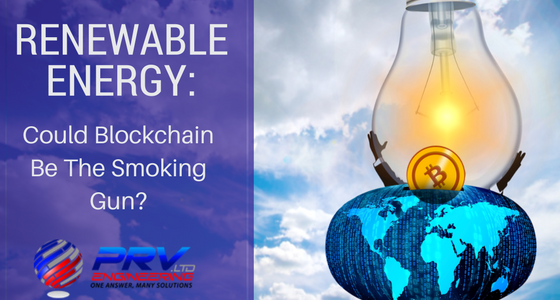
Our existing energy market has been in development for over a century and changing it to renewable energy is no easy feat. Among other factors, it requires incredibly large capital investments and thus far, renewable energy has reached 21.6%. It was further explained during the One Planet Summit in December 2017, when U.N. Secretary-General Antonio Guterres said: “Finance is the key to successful climate action.”
Even so, why is the adoption of renewable energy lacking on a global scale? It’s certainly not for a lack of wanting a cleaner life or to improve the world for future generations. Instead, market conditions slowing the development of
12
Jan
2018

The first ever electric plane was recently certified and flown in Australia marking an exciting frontier for electric aircraft. Australian sustainable aviation company, Electro.Aero, is at the forefront of electric aviation technology. They are responsible for the test flight after obtaining certification for the Alpha Electro from the Australian Civil Aviation Safety Authority late 2017.
29
Dec
2017

Reflecting back on 2017 we saw a number of engineering trends making their mark in a big way. Some include advanced robotics, additive manufacturing, IIoT, quantum computing and big data. Even though it’s possible to identify hundreds of minor developments, what are the major engineering trends to follow in 2018? Take a look at these top trends we put together to end the year on a positive note.
27
Oct
2017

Last week we covered electric hoverbikes in Dubai and today we’re continuing along that path but with a slight twist. What do you get when you cross a motorcycle with new technology and a mountain bike? The answer is simple – a hybrid electric motorcycle called the LMX 161-H. It resembles downhill bicycles and is described as a super-light electric motorcycle weighing in at just 42kg. Early reports suggest it’s ideal for off-road, freeride and enduro use but just as suitable for urban travel.
Two young French engineers and avid riders, Adam Mercier and Lucas Suteau, are responsible for this concept as they see a future for electric motorsport. Their vision turned prototype and the project has quickly become a crowdfunding campaign. Their aim is to get the worlds lightest freeride electric motorcycle to hit the streets all over the world. If all goes according to plan, the first deliveries will go out in May 2018.
22
Sep
2017

There are a number energy sources available in nature but solar energy is by far the most abundant. Our sun provides more solar energy in one hour than the entire world consumes in a year. The question is how do we collect and store this abundance of energy more effectively?
Recent Comments